A missing host, strangers on a balcony and a mysterious Colombian phone call

Weird things can happen when you go networking in Liverpool
by Lisa Rand
Last week, I was invited to a networking event at the Albert Dock. Not my usual scene, but something about an email sent from the organiser the day before had piqued my interest.
Strive Networking, which advertised the event on an online ticketing platform, had emailed to say there was a problem: the host was no longer available. Not to worry, though, ‘it’s all about the attendees’, so the event would still be going ahead.
Then came a little intrigue: they were looking for a volunteer from those who’d signed up to the event to step in last minute as host. Drop us a message if you’re interested, the email said, and we’ll call you back, from a +57 dialling code.
Why would a call be coming from Colombia?
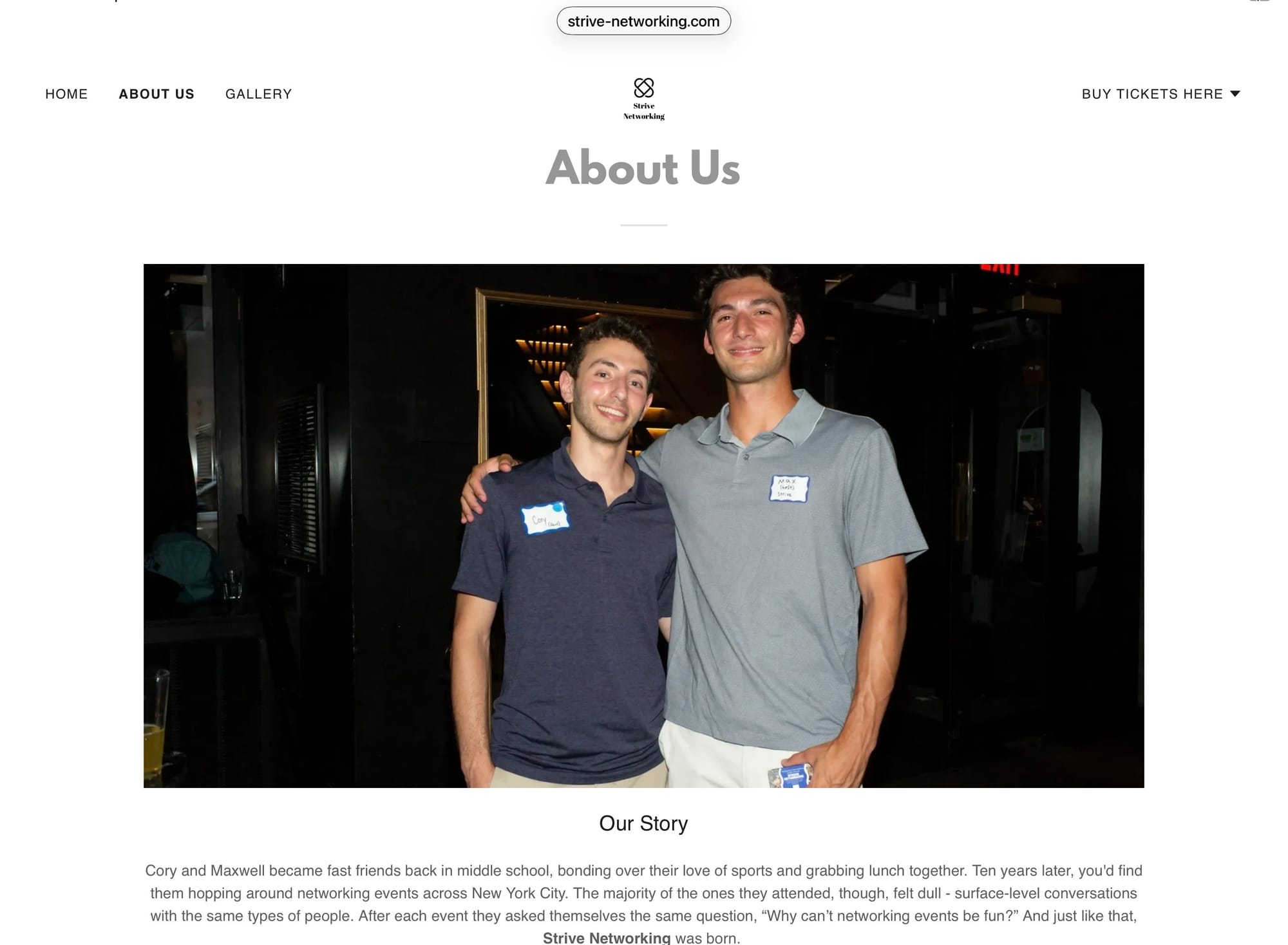
An online search reveals a company website and a North American origin story. The site says the founders started Strive Networking in New York in 2023 and grew it rapidly from there, with events now all over the world. It gives only the first names of the two founders: Cory and Maxwell. There are photos.
There’s also a mantra: ‘It’s not about who you know today, it’s who you‘ll know tomorrow.’ I’m none the wiser what connection, if any, there is to Colombia.
The following evening, a man turns up a little early at Revolution bar in the Albert Dock. Clutching business flyers, a packet of stickers and some felt tips, he stands on a narrow first floor balcony overlooking the bar below.
A couple in their twenties wander up and loiter nearby, making slightly awkward occasional eye contact. A few more people arrive. The man approaches, explaining he answered the request in the email and is now the stand-in host.
He starts ticking names off a list on his phone. There is brief mention of people putting on colour-coded name badges, followed by a long pause.
’Maybe not,’ says one.
The stickers and felt tips are placed on a nearby table and gently pushed away, where they remain for the rest of the evening.
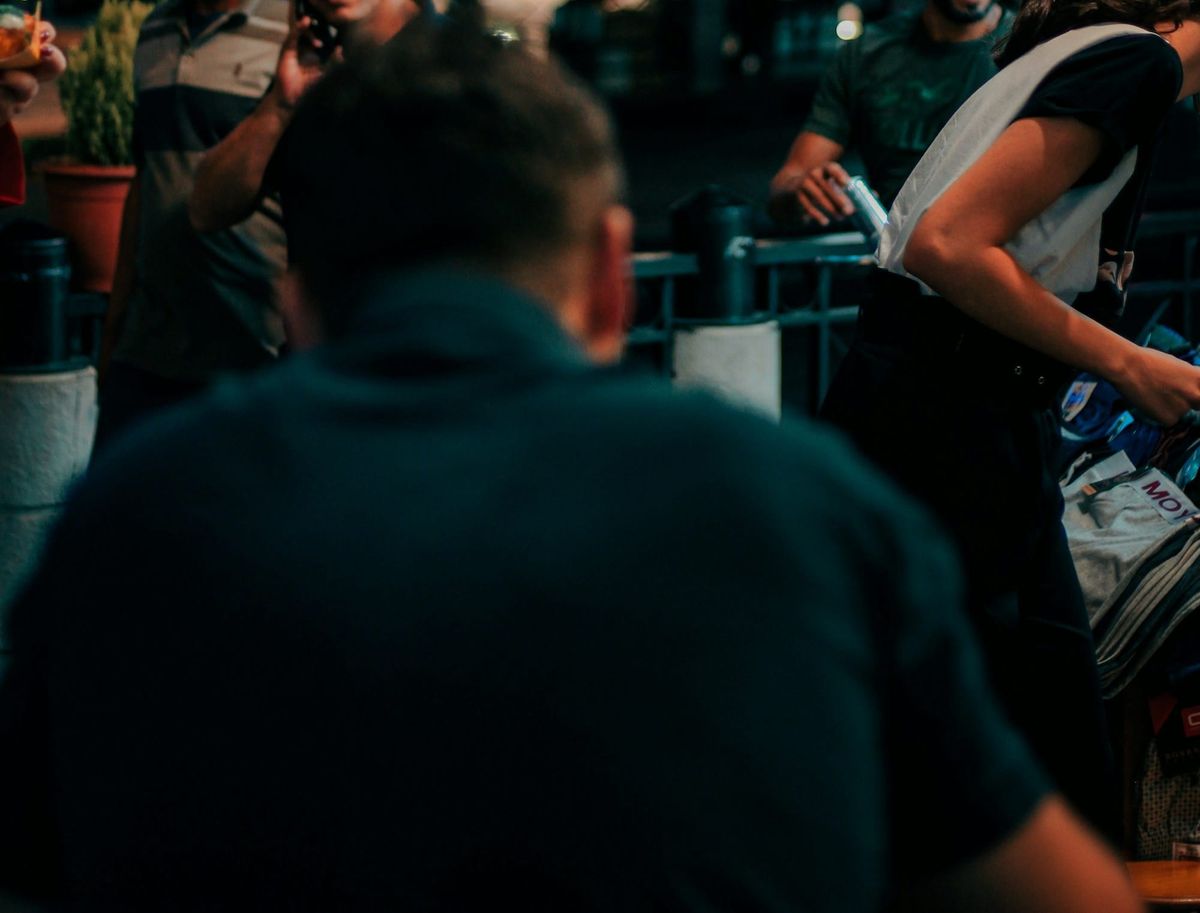
Soon, around two dozen strangers are standing together, a little squished, along the balcony. Although there are booths, nobody sits. They have each paid around £15 to be there and nearly everyone looks a bit baffled.
There is a good reason for that, although it takes a little of the evening for it to unravel: most had signed up for what had appeared to be a slightly different event.
On the ticketing platform, more than a dozen niche networking events had been advertised in the same place, on the same night, at the same time, all with identical branding. Politics. Blockchain. Hospitality. Property. General business, and much more.
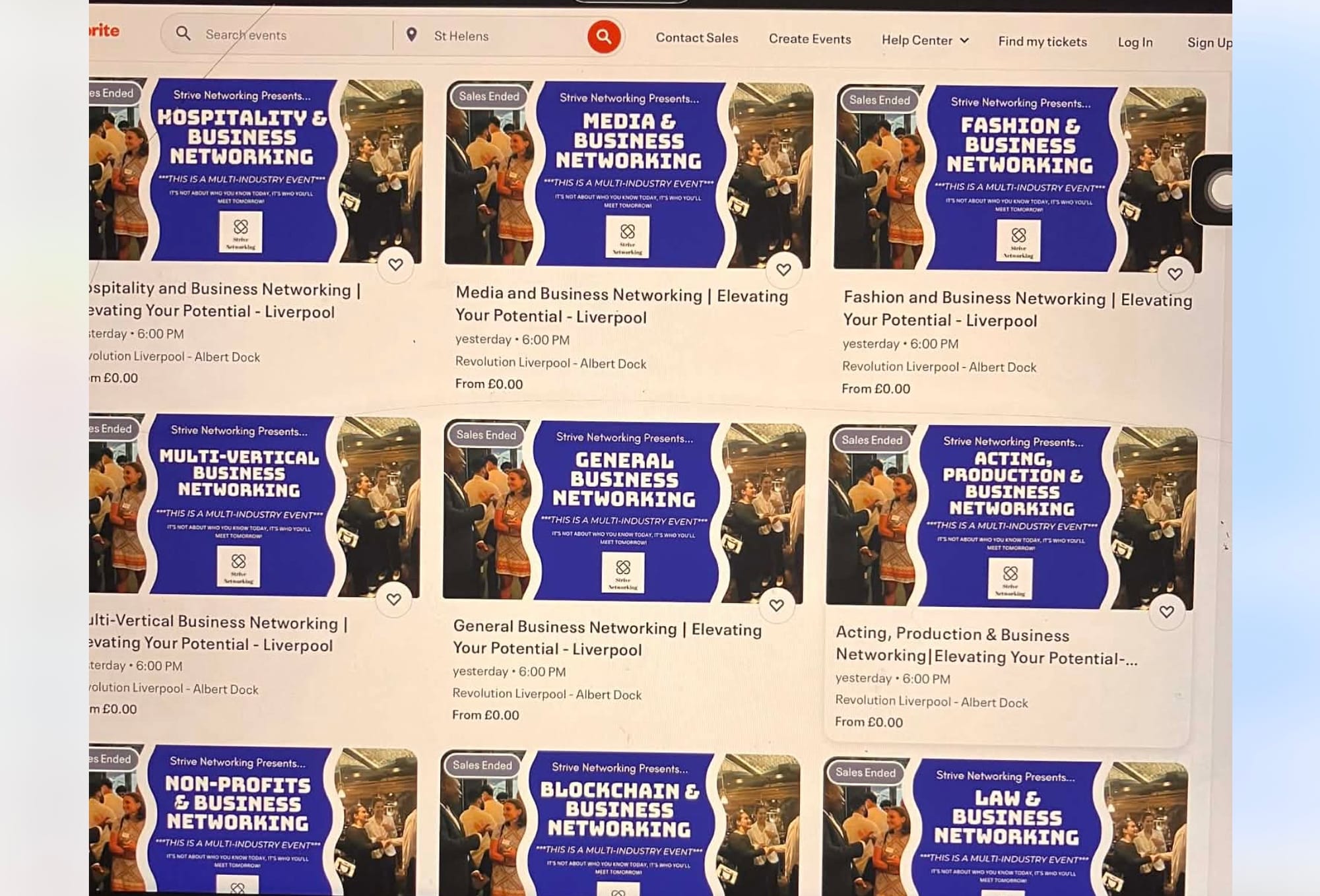
‘This is a multi-industry event’ is plastered across each listing, a phrase that somehow explains everything and nothing. You might have assumed there were multiple events happening in parallel. There were not.
What actually converges on the Albert Dock that night is a singular and slightly confused gathering of strangers, each with different expectations. ‘I’m after property developers’ one person says, scanning the group, apparently disappointed.
Another, a software engineer, had come from another city hoping to find others interested in blockchain. Instead, he was talking to me, who knew nothing about it but was game enough for a chat.
In between him trying to explain bitcoin, bandwidth farming and various computer languages, something else comes up that didn’t seem particularly important at the time: talk of an event organised almost entirely by AI. A journalist from The Guardian had written about it, a party generated entirely by AI with a few prompts to human employees and attended by dozens of people. It is suggested, jokingly, this might be something similar.
Later, thinking back on the strangeness of it all, the thought hits me again: could the event we had just attended been in some way generated by AI?
At the very least, it doesn’t feel impossible. The posters, the listings, the emails, even the booking of the tables would not have necessarily required much human input. Were we all corralled to the Albert Dock by an algorithm?
But of course there’s the phone call, the Colombian number, and the money. Chatbots don’t have bank accounts, so who exactly had got paid?
Back on the website, a closer look at the photos of the founders shows no immediately obvious AI distortions. A bit polished, perhaps. There are clearly events, we had just been to one.
On Meetup, mixed reviews of American events by the company include some reminiscent of the experience in Liverpool: a missing host and a stand-in working from a list of names. Another describes a solitary booth booked in a public bar, leading to what felt like an overcrowded event. One questioned what they had even paid for, given it was essentially just people chatting in a bar, while others spoke positively about a fun night of shared connection. The company had responded, politely, with explanations.
Strive Networking LLC was registered in New York in 2024, where the names of owners do not have to be publicly listed, and this is the case here. Cory and Maxwell’s names are not on the company’s public register, rather there is the name of an agent instead, which is pretty common over there.
The stand-in host doesn’t reply when approached. An email to the company initially receives no response. Some of those who had been there that night are contacted. Most said they’d never been to a networking event before, and not everyone had clocked the email prior to the event, although one noted it had seemed a little peculiar.
Most said they had enjoyed the evening, but one did describe a feeling they couldn’t quite put their finger on, a sort of gap between expectation and reality.
There was no suggestion the event was untoward in any way - it had clearly taken place and several had said they enjoyed it - but there was a sort of sense of perplexity at how it had all unfolded.
A response does eventually come from the company. ‘Mary C’ via a support address says the founders and their photos are indeed real, with surnames not included to avoid people reaching out.
Mary C says that the nature of the event had been made clear: ‘The events being multi-industry is noted on the cover page, in the description, as a required question where they must check off that they acknowledge it’s multi-industry before purchase, and we send an email following ticket purchase to let attendees know.’
They do call it a multi-industry event, and that is what it was. It is the way it had been presented across multiple listings that seems to have done the heavy work, a space where people may have made mistaken assumptions.
The stickers suddenly come back into focus: they were supposed to be colour-coded so people could ‘separate off by industry.’ Perhaps, in our reluctance to wear a badge, we had all missed a trick.
There are humans, Mary C assures me, although the company does use templates for its communications ‘if that’s what you were asking‘. What had I been asking?
Did I really just email this company to check if it was a chatbot? Had I spent too much time chatting with my new blockchain friend on the balcony?
Everyone on the balcony that night had also been looking for something very human: a conversation, a connection, possibly even an opportunity or two. In the midst of all the confusion around the listings, the stickers, the missing host and the phone call, they did find it.
For a couple of hours at least, a sort of temporary community had formed, and it could be argued it was made better, not worse, by the mix-up over the stickers. One person, talking about a similar networking event online, spoke of the joy of the unexpected: ‘it’s like going into a library and being handed a random book’. Except people are not books on a shelf.
Nor are people simply there to be funneled to a particular location with a click of a button and the rollout of a few templates onto online platforms, although it is food for thought that in general we live in a world now where this could be done almost entirely by AI and we may be simply none the wiser.
But, even if parts of our evening involved automated or templated processes at some point, there are still humans there behind it all. The company later confirms the full names of the two founders, Cory Halpert and Maxwell Shapiro, explaining they are not listed publicly for privacy reasons. Mystery solved.
There are also, of course, the people who sought out human connection in Liverpool that night, ending up with a bit of confusion and a ticket receipt, amidst the pleasant enough chatter.
I never did get an answer about the Colombian phone number.