Putting out the bins: a £350m council contract and plans to buy us all a depot


Why is Wirral Council buying the depot of a bin company it’s awarding a potential £350m contract to?
The bins in Wirral could soon be emptied by Biffa, the company that already does the bins in Wirral, after a contract worth £350m over 16 years cleared a major hurdle last night.
At a meeting of Wirral council’s environment committee at Wallasey Town Hall, councillors also agreed to recommend the council buy Biffa’s waste depot on Dock Road South, which they use for their current contract with Wirral council, for an undisclosed amount, to do it up and then rent it back to them to use to carry on emptying the bins.
But, why?
It all started three years ago when the council first got the ball rolling at looking into replacing Biffa’s current contract for the bins, which is due to expire in 2027 and had no further options to simply be extended.
Officers had looked at a range of options for the borough’s future waste management. One was to bring the bins in house, another was to set up a council-owned company to run the service, and there was also a possible hybrid model somewhere in between.
By January 2025, with help from consulting firm Eunomia, reports were submitted to councillors to approved a full business case recommending instead that the council continue outsourcing waste collection and street cleansing services.
The problem for all of the options under consideration, as reports produced at the time stated, was that the council didn’t have waste infrastructure of its own - either a depot or vehicles. The lack of infrastructure presented challenges whichever option was chosen. It also meant the competitive bidding process for a new contract was potentially at risk. With Biffa owning the depot, it effectively gave them an advantage over competitors, the council argued.
There were also issues with potential transfer of employee contracts should the council move the bins in-house, which could have generated significant extra cost for the local authority.
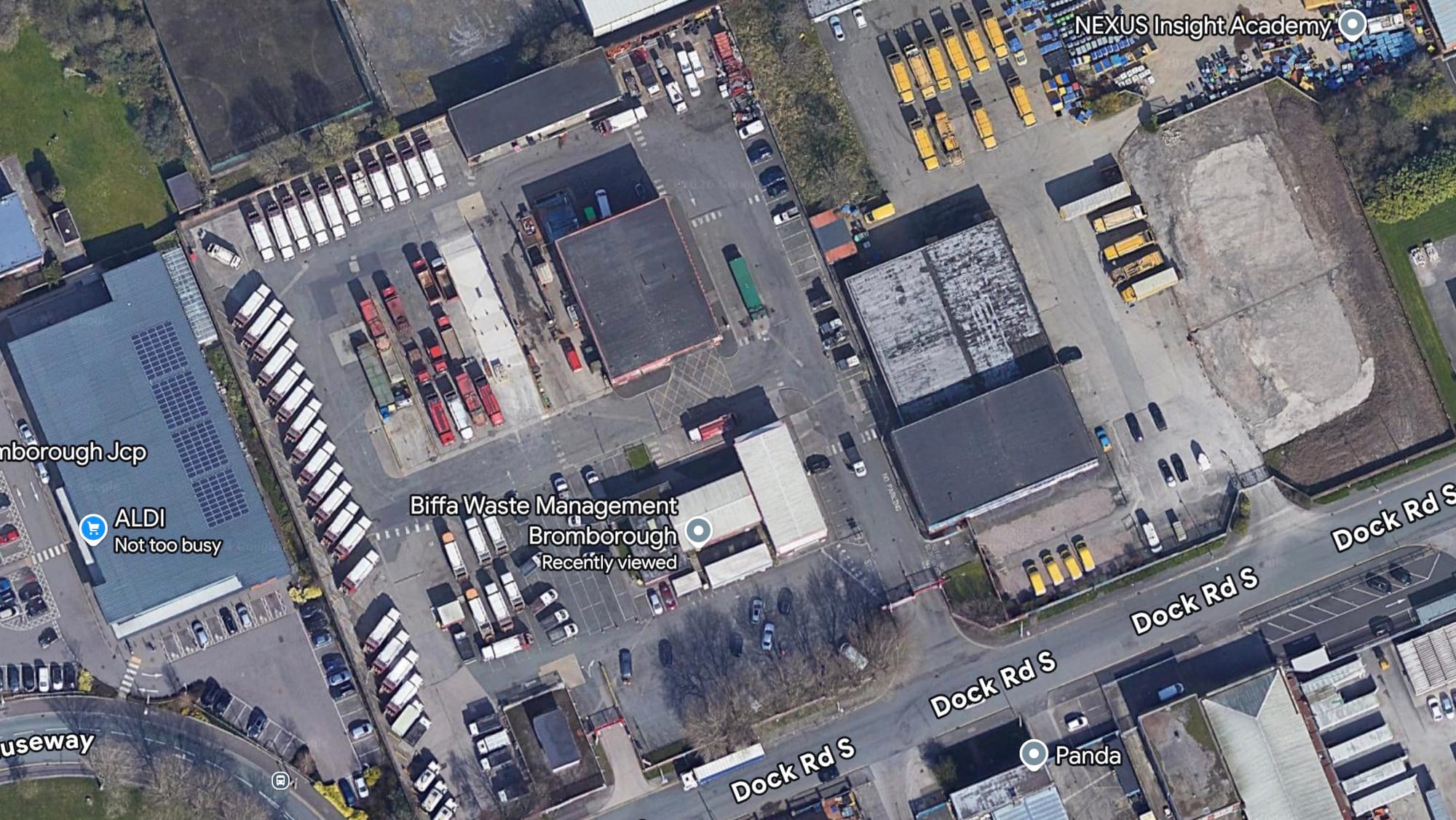
As part of the work leading up to that January 2025 business case, and largely as a result of a ‘soft market test’ with waste contractors carried out in 2024, the council developed the idea of taking the waste infrastructure out of the equation.
Buying the depot off Biffa and acquiring its own fleet of vehicles would mean that whoever got the contract would have council-owned facilities and equipment they could use. It levelled the playing field, as it were.
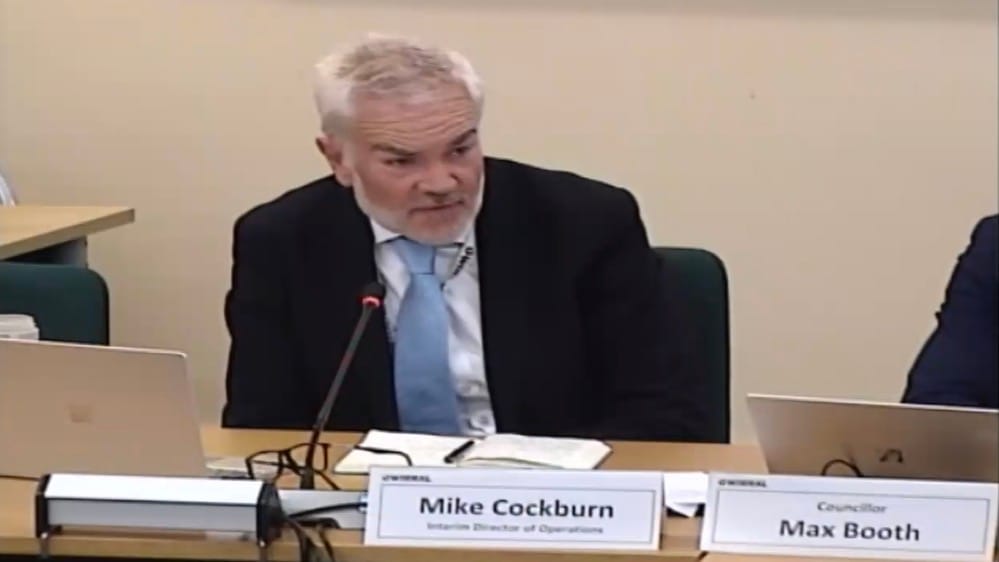
However, by summer 2025, there was only one player on the pitch. Lead environment commissioner and interim director of operations Mike Cockburn told councillors that one of the two remaining bidders left by that point withdrew from the process, leaving Biffa as the only company still in the running.
In the end, Biffa was indeed the only waste company to submit a final bid for the contract. Competitors who had initially shown interest had pulled out at various stages, focusing instead, Cockburn told councillors at last night’s meeting, on retaining contracts they already held in local authorities elsewhere.
Cockburn said the depot acquisition was still about giving the council greater long-term control over the service, describing the depot and planned vehicle purchases as ‘a desire for the council to take control of our own refuse collection and bin service’.
If the contractor failed, ‘we have something’, he said, adding, ‘we won’t be in this position in the next stage‘. Ownership of those assets would leave the council with options, including bringing the service back in house or adopting a different model in future.
The final negotiated contract being awarded to Biffa, once it clears all hurdles, is for an initial period of eight years with an option to extend for a further eight. The £350m figure refers to the potential maximum value if it runs for the full 16 years. Cockburn said it includes service innovations and improvements compared to the current contract.
Interestingly, it was not the depot purchase that seemed to concern councillors most at last night’s meeting.
A fair bit of the committee’s debate focused instead on whether a procurement process that had ended with a single bidder could still demonstrate value for money for a contract worth up to £350m.
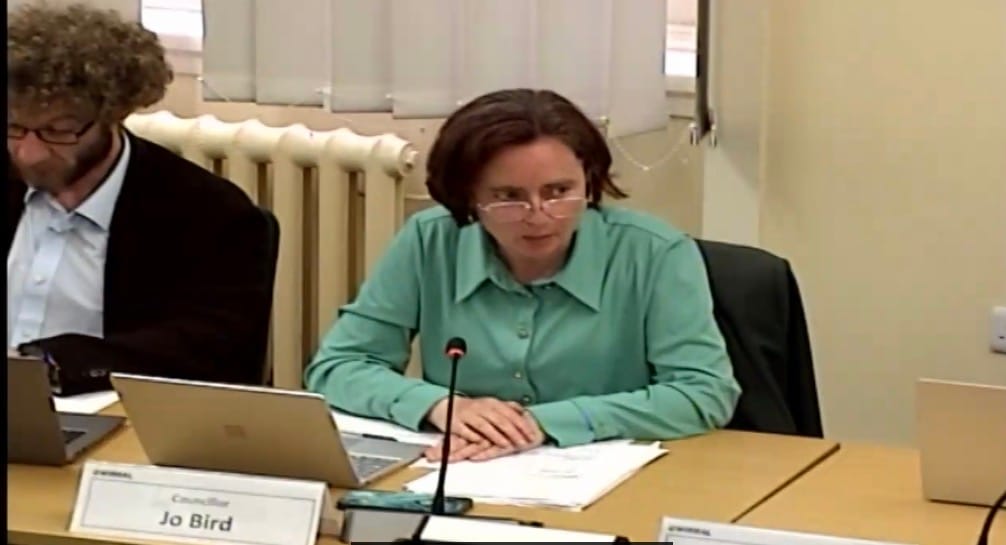
Green councillor Jo Bird argued that much of the work underpinning the procurement had been carried out on the assumption there would be competition and questioned whether value-for-money assurance still existed once only one bidder was left. She also asked whether a value-for-money assessment referred to by officers had been carried out by qualified auditors.
Cockburn had earlier told the committee there had been ‘no relaxation’ of the procurement process after the second bidder dropped out, speaking of how the process was undertaken by a contract review board, which was made up of a range of senior officers from across council departments.
He had also told councillors that Biffa had submitted its legally binding tender without being informed it was the only bidder remaining in the process. He even described how there was visible ‘surprise‘ when Biffa’s senior team were eventually informed they were the only bidder left in the running.
Responding to Bird, Cockburn said Biffa had ‘as far as I’m concerned‘ submitted the bid not knowing they were the only bidder and that legal advice was that the procurement could continue. He added that the value for money review had been carried out by Eunomia, which he described as market-leading experts in waste procurement.
Asked directly by Bird whether Eunomia were qualified auditors, Cockburn replied in the negative, adding ‘that wasn’t the instruction‘, saying they had instead compared the final bid against the wider market. He later clarified that the head of internal audit had been involved in overseeing the whole procurement process with Biffa, with senior legal officers also involved.
Labour Cllr Ann Ainsworth pointed out that ‘you can’t actually mandate that people bid’ and that ending up with a single bidder did not necessarily mean there had been a fault with the procurement process itself.
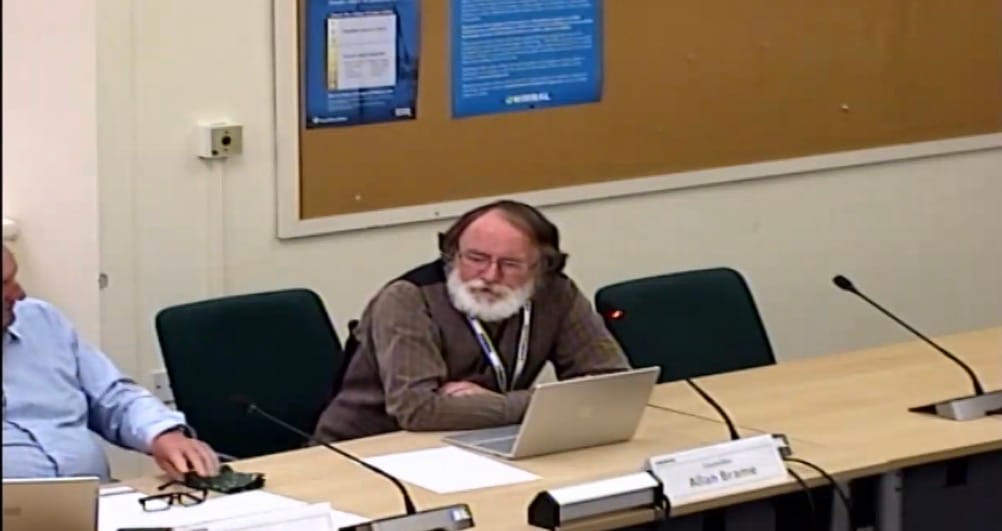
Liberal Democrat Cllr Allan Brame told the meeting that members had received extensive briefings throughout the process, describing it as ‘really transparent and really helpful’ with fortnightly update meetings. He argued that one of the underlying problems was a waste market increasingly dominated by a ‘handful of big players’ limiting the number of realistic bidders available to councils.
For many residents, though, procurement rules and depot ownership are probably not the first things that spring to mind when people think about bins.
Councillor Bird and others raised concerns about fly tipping, alleyway dumping, missed collections and recycling contamination.
Bird described alleyways that had been cleared only to become filled with dumped rubbish again shortly afterwards. She also raised concerns about locations which appeared to remain uncleared for longer than the scheduled four-week cleansing cycle and asked what mechanisms would exist in the new contract - and now - to ensure the contractor could be properly held to account.
Officers said as part of the new contract, a new technology system would allow crews to record and photograph completed work, giving the council better evidence when checking whether jobs had actually been carried out and allowing stronger enforcement of contractual standards. Fines could also be deployed as a measure to ensure Biffa upholds the contract under the new deal, although this can’t happen currently.
Questions were also raised about recycling contamination and proposals to reduce residual waste collections in future. Conservative councillor Helen Cameron pointed to examples such as nappies being placed in recycling bins, which can result in entire loads being rejected.
Officers responded that contamination rates had reduced and said new vehicles would provide better data on where contamination occurs. They also argued that future restrictions on residual waste could reduce costs while encouraging better recycling behaviour.
Not everybody was convinced the timing was ideal. Cllr Cameron noted that residents were still getting used to the borough’s new food waste collection service and questioned whether discussions about future changes to residual waste collections risked confusing matters further.
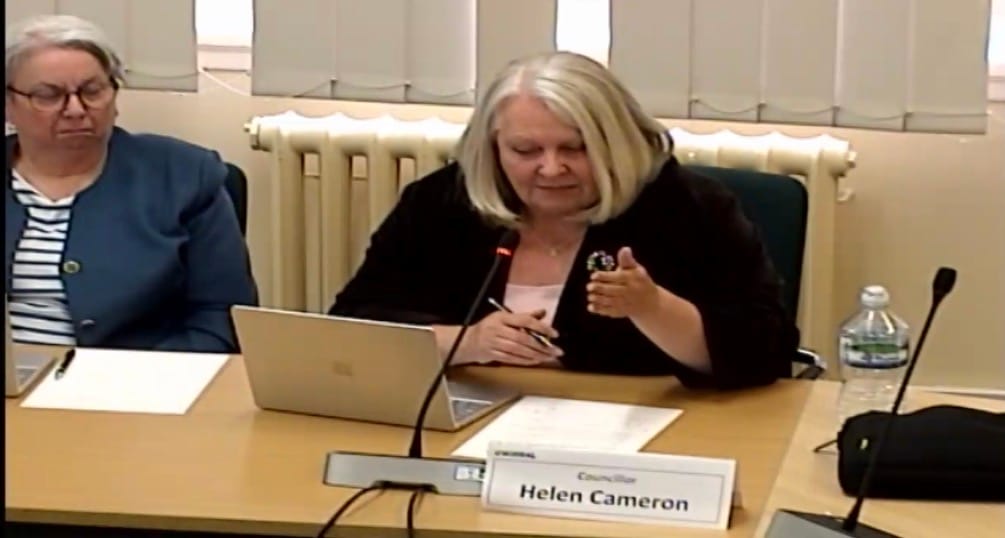
She argued that any communications campaign around a contract that could ultimately run for 16 years would have to be carefully handled, particularly while households were still adapting to the most significant changes to waste collections seen in decades.
The problem of contamination of recycling does not just affect what happens on a single street. Poorly sorted recycling can mean material has to be diverted elsewhere for processing, not just adding cost to a system already under pressure, but also, as Cllr Cameron pointed out, meaning more waste gets effectively bussed over the Pennines for incineration.
Several councillors also argued that enforcement and behaviour change remain just as important as collection arrangements, with a small number of repeat offenders often responsible for disproportionate levels of fly tipping and alleyway dumping. Cockburn spoke of the need for bringing stakeholders such as social housing providers more into play to help tackle the issue, along with covert and overt cameras and greater deterrents.
Back on the bin contract, Labour Cllr Steve Foulkes spoke of the high level of councillor engagement, saying that the process has been a ‘team effort’ and lauding the work done by the council for an issue of such importance to Wirral citizens.
‘Let’s be positive about this’ he said, ‘it’s an awful lot of money we’re spending, let’s demand the best and hopefully we’ll get the best’. This was a view echoed by the committee‘s chair Cllr Max Booth, who also described the whole process as something of an organised ‘plate of spaghetti’ before the issue was brought to a vote.
By the end of the meeting, the committee appeared broadly reassured, voting to recommend the plans move on to the next step - the Policy and Resources Committee, which is due to consider them in the coming weeks.
The Monitor will be keeping an eye on this and let you know if anything interesting turns up. In the meantime, you can watch last night’s meeting here.
before you put them bins out …
New to the Mersey Monitor? Welcome. We’re a tiny local independent public interest newsroom operating on a non profit basis.
Our aim is to keep you informed about the decisions that affect our lives on Merseyside. We don’t do paywalls here, all our content is open access, and you can sign up - it’s completely free - and get an email or two off us a week. It also means you can comment on the site.
What do you think about the council’s bin plans? Best of a tricky situation or symptom of wider issues? How do you feel about Biffa being back on the bins?
Let us know, we love to chat!
Ideas for stories we should be looking at? Drop us an email at themerseymonitor@outlook.com or message us on 07442 402 023.
The Monitor is entirely and only funded by our readers. If you can spare a quid or two, we’d love your support.
You can do that here: https://www.merseymonitor.com/#/portal/support
You can also set up a regular donation of any amount of your choosing, your own tailor-made subscription if you like, here: Donate
We have set the donation pages so we aren’t notified of who has donated and this is to help safeguard editorial independence. It also means we can’t individually thank you for your contributions to help keep the Monitor sustainable.
Please know your support means a lot, we massively appreciate you helping to sustain local public interest journalism on Merseyside