A long search for clarity in the heart of Granby
A multimillion-pound property deal, (former) council-owned houses and years spent trying to get answers out of Liverpool council

There are probably much easier ways to spend several years than trying to find out whether Liverpool Council ever recovered money it might have been owed from a property deal.
Local resident Ed Gommon would tell you he’s spent far more time than he ever meant to doing exactly that, over a series of connected land deals in Granby, in the heart of Liverpool 8.
His efforts have involved Freedom of Information requests (FOIs), challenges to the council’s responses and resulted in two interventions by the Information Commissioner’s Office (ICO). At one point, even the information watchdog struggled to get the council to answer its questions.
The story begins in 2017, when Liverpool Council arranged to transfer leases of around 50 former council-owned houses and plots to developer West Tree Estates, many for little or no money.
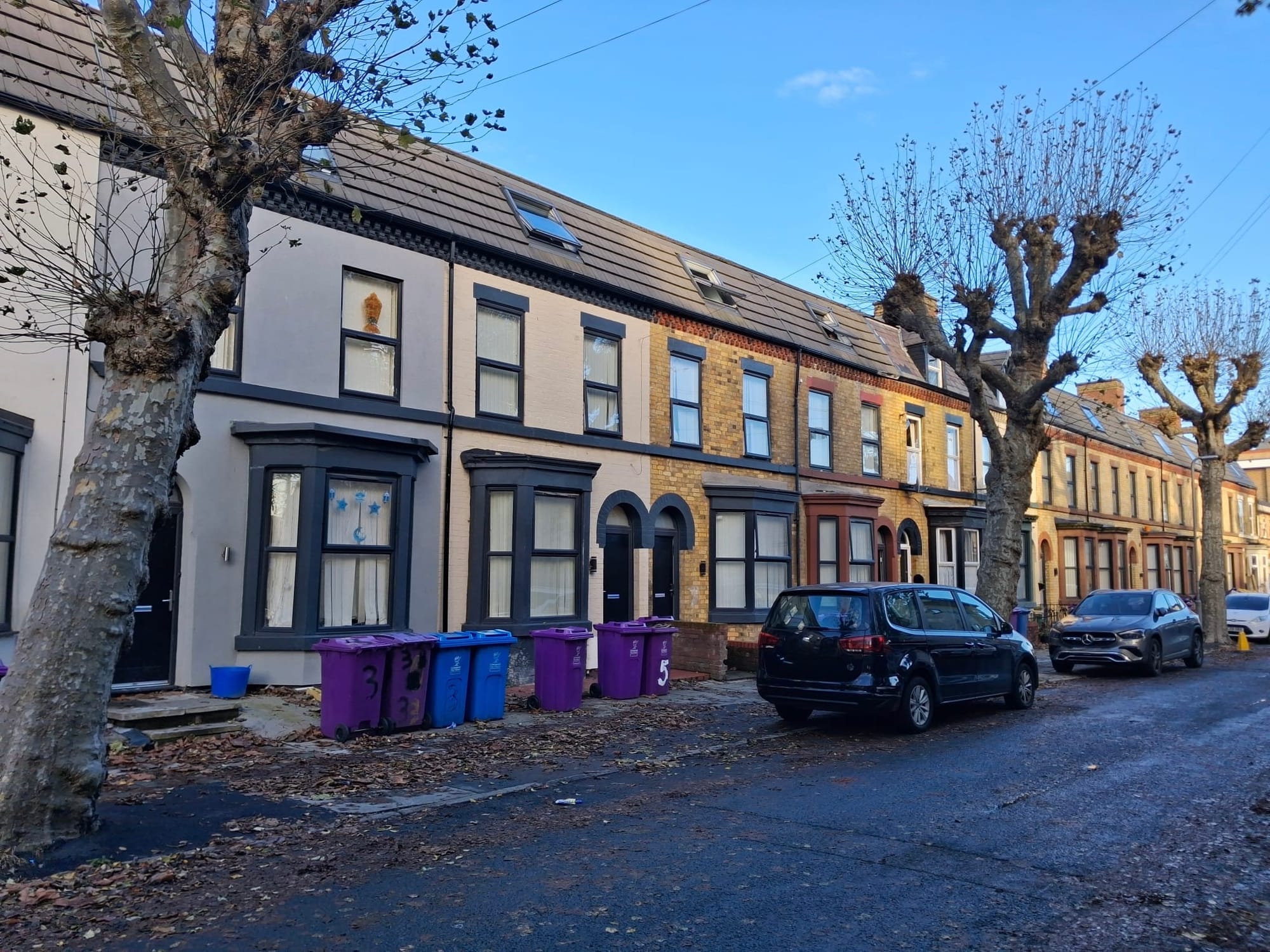
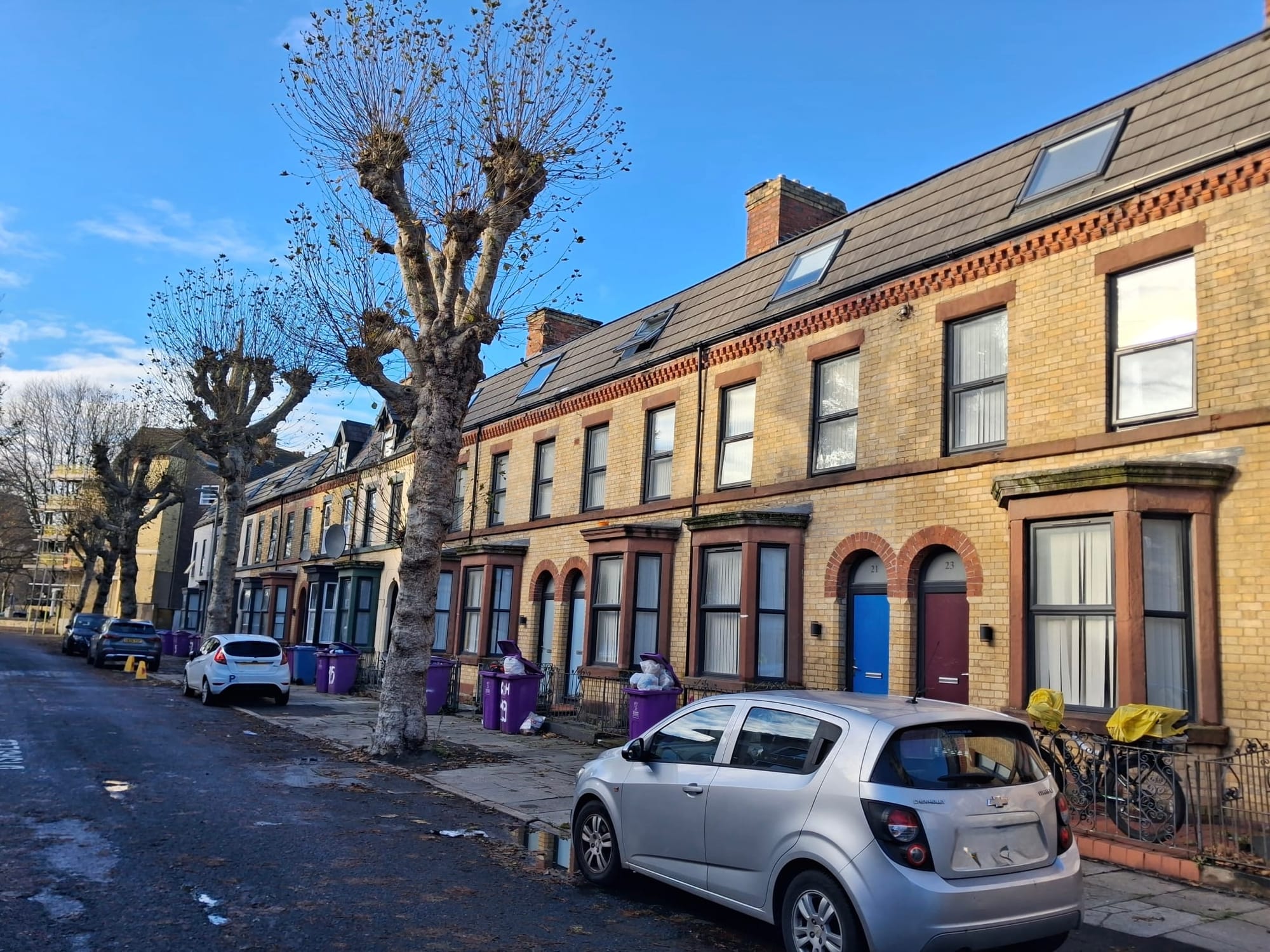
While some remain empty and deteriorating and others have been demolished, houses on Hatherley Street that were part of the deal were renovated and sold on. In 2022, the Sunday Times reported this involved £2.7m in transactions and companies linked to a Hong Kong billionaire.
The agreements, however, between West Tree and the council contained a provision that was intended to protect the public purse. Known as ‘overage’, it meant the council could receive additional money if the developments reached a specified stage.
Ed wanted to know whether that had happened, whether West Tree owed anything and, if so, whether it had paid. After years of correspondence, he still didn’t have a clear answer.
This week, responding to queries by the Monitor in relation to this story, a council spokesperson finally confirmed a crucial piece of that puzzle: ‘The Council has not received any overage payment from West Tree Estates relating to Hatherley Street.’
‘So there we go,’ Ed said when we shared the response with him. ‘Why did they not just tell people all this sooner?’ Given what it took to get this far, it’s a reasonable question.
To understand why he was asking, we need to go back a little further, because this is as much a story about what happened to Granby’s houses as it is about what it can take to get a straight answer out of Liverpool Council.
How did we get here?
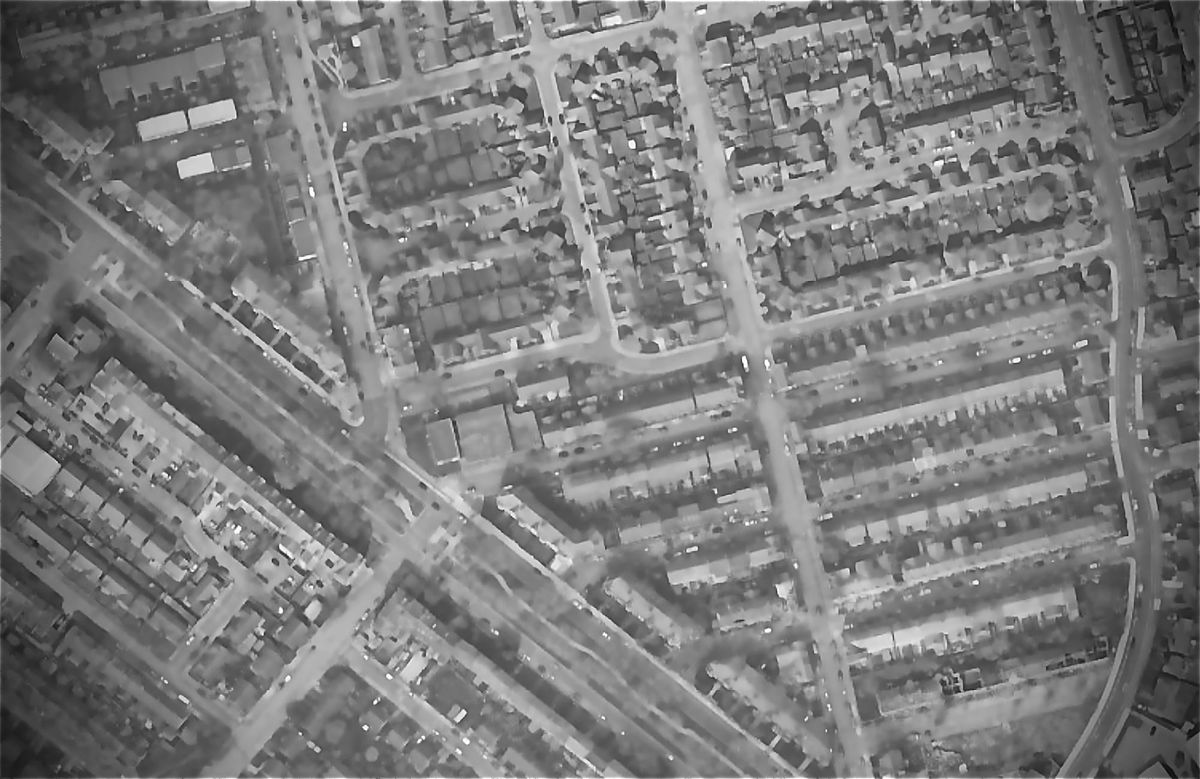
It’s probably an understatement to say Granby has a complicated history when it comes to housing. After decades of clearance programmes, dereliction and abandoned regeneration plans, residents had taken matters into their own hands, establishing the Granby Four Streets Community Land Trust (CLT) and bringing some of the abandoned Victorian terraces in the area back into use.
The regeneration attracted national attention in 2015 when architectural collective Assemble won the Turner Prize. Residents had demonstrated what could be achieved through community-led regeneration, but Ducie Street — in much poorer condition than the others that had benefited from such an approach — was seen as a job too big for the CLT.
Liverpool Council still owned houses left over from unsuccessful renewal initiatives not only on Ducie Street but Hatherley Street too, along with sites on Jermyn Street and Rosebery Street. Under a delegated decision involving then head of regeneration Nick Kavanagh, leases over many of them were transferred to West Tree for nominal or nil consideration (nothing, to you and me).
Back in 2019, I was a reporter for the Echo, covering Liverpool 8 as my patch. Ed, who’d already had an interest in community-led regeneration in the area for years, was among local residents who contacted me with concerns about West Tree’s plans to demolish much of Ducie Street’s remaining Victorian housing and replace it with 80 mostly one and two bedroom apartments.
Residents had objected to the prospect of losing houses where community-led regeneration had shown they could be saved, and also questioned the lack of family accommodation and what the apartments might be used for. The council eventually granted planning permission anyway.
By 2020, despite approval having been given, there was little movement evident at Ducie Street and concerns were growing as to where things might be headed. Local artist Isabel O’Rourke began repainting the boarded-up houses, echoing what she and other residents had done during Granby’s earlier regeneration.
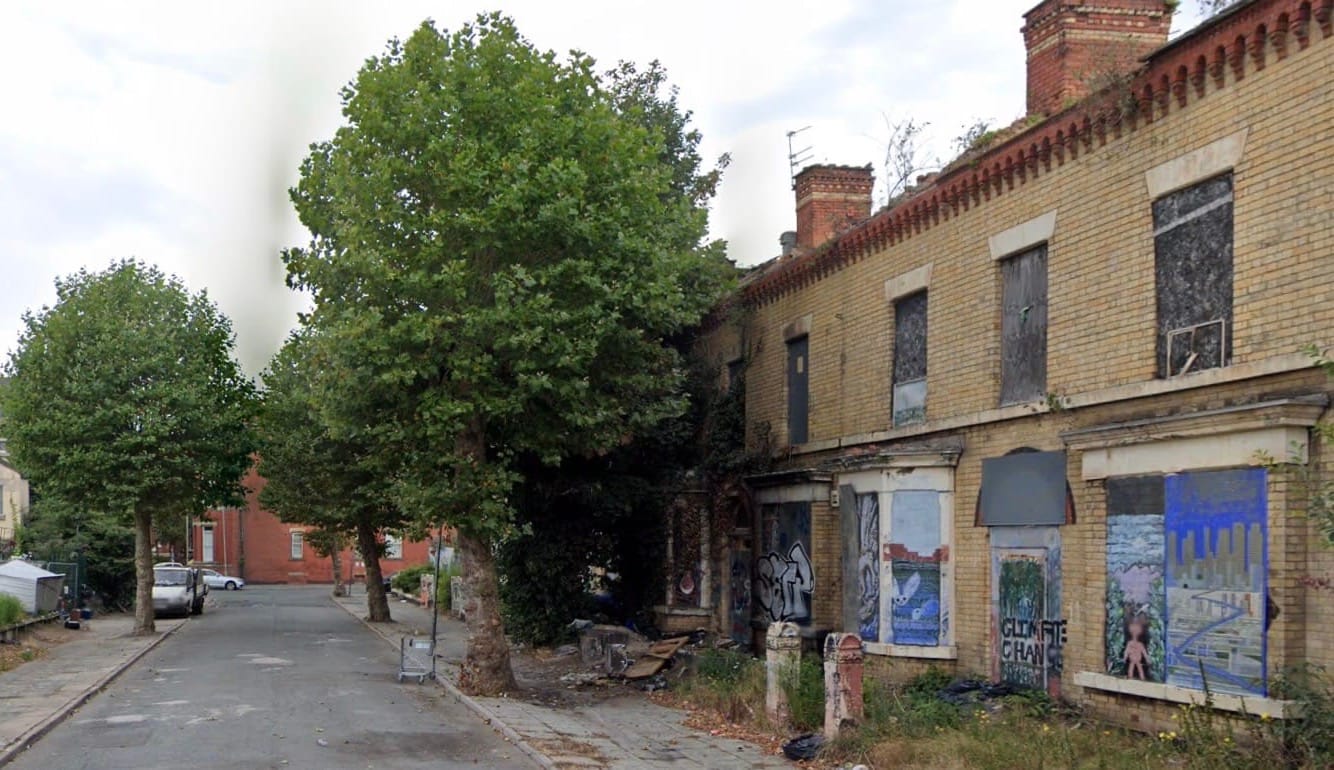
I started digging deeper into it all, along with concerned local residents, and discovered the council’s dealings with West Tree went considerably further than Ducie Street. The developer had been handed leases for a tranche of council-owned properties in the area as part of the deal for Ducie Street, many for little or no money, raising alarming questions about how the council was disposing of its housing assets and what it, and local residents, might expect in return.
This was also coming against a backdrop of increasing wider scrutiny at the time over Liverpool Council’s land and development deals - not the subjects, I’m sure you can understand, of this piece.
Revelations of the extent of the West Tree deal in Granby sparked an outcry, also prompting local campaigner Sonia Bassey to start a petition calling for Ducie Street to be handed to the community, attracting more than 5,000 signatures. The houses nevertheless remained in West Tree’s hands.
Meanwhile, on Hatherley Street, West Tree had been granted long leases over former council-owned houses there in May 2019. They were renovated and then sold on, with the Sunday Times reporting in August 2022 that a transaction involving the properties was connected to interests associated with Hong Kong billionaire Li Ka-shing, prompting further questions.
For Ed, it brought him back to the financial arrangements. The leases referred to an overage payment following ‘practical completion of the whole development’. While the sales didn’t automatically mean any money was owed, surely the council would have established whether the conditions had been met? Ed decided to find out.
Getting answers, the hard way
In February 2024, Ed submitted a Freedom of Information request asking how the Hatherley Street properties had been disposed of, what the council received and whether it could recover a share of any increase in value.
The council confirmed what my earlier reporting had established - that most leases had been granted for nowt - but it withheld the information requested about overage and payments, citing commercial sensitivity.
In April, Ed was trying to figure out how the council had decided to transfer the leases for nothing and requested the valuation reports behind the £0 figure. The council said valuations accounted for the properties’ condition, refurbishment costs and future value, but refused to release them, saying they were for internal use. He also asked whether the council had taken legal action to enforce overage.
Following an internal review, the council confirmed that the leases contained overage provisions, but said West Tree had not supplied the information needed to calculate what was owed. It subsequently said officers were discussing the matter with the developer, hoping to resolve it ‘without legal action’.
Ed had challenged the council’s refusal to release the valuations and in March 2025, the ICO ruled against the council, ordering disclosure of the valuation report and two records of delegated authority, copies of which the Monitor has seen.

Getting to that point had also proved troublesome for the Commissioner, as the council had ‘failed to respond to (or even acknowledge)’ his initial request. It failed to comply on time, too, with a formal information notice, eventually responding almost a month late after the Commissioner threatened contempt of court proceedings.
Even then, the council’s submissions were inadequate. The Commissioner noted Liverpool council had accepted the valuation report itself was not confidential, undermining its argument for withholding it.
Interestingly, the council also indicated it intended to make a public announcement, at an appropriate time, explaining the financial arrangements, what had gone wrong and how matters were being managed.
Ed ended up receiving the valuation report and delegated authority documents in April 2025, around a year after asking. They showed how the council had arrived at the nil valuations, deducting estimated refurbishment and development costs from the properties’ value.
The documents also showed that the Hatherley Street houses had originally been intended for refurbishment as family homes for local people, with an overage provision included to protect the council’s financial interests.
By then, he was already pursuing another question: what had the council done to recover any money?
In March, he had asked how many times two senior officers – the director of property and city solicitor – had contacted West Tree, directly or through legal representatives, about Hatherley Street overage payments between 2020 and September 2024. The officers had been named because another earlier FOI had stated they’d been the ones with ultimate responsibility for such a task.
The council said it had been ‘diligent’ and maintained ‘constant dialogue’, but didn’t provide the numbers of contacts requested. Following an unsuccessful internal review, Ed complained to the ICO again in August 2025. While he waited, there came a significant development.
On 31 October 2025, following ‘lengthy negotiations’ and forfeiture notices being issued by the local authority, Liverpool Council announced an agreement with West Tree covering houses on Ducie Street and Jermyn Street, land on Rosebery Street and 143 Granby Street.
West Tree voluntarily surrendered various leases and the council withdrew the forfeiture notices. Both described a ‘full and final settlement’ of all claims in L8, with confidential terms. In the joint announcement, West Tree wished the community ‘well for the future’.
The council said there would now be progress ‘at pace’ for the sites, with affordable housing for residents and greater transparency. But the announcement didn’t explain the Hatherley Street overage provisions or provide the public account of what had gone wrong that the council had previously indicated it intended to make.
Asked about the overage issue this week, the council told the Monitor: ‘Information was provided by West Tree Estates and reviewed by Council officers during the period between completion of the Hatherley Street scheme and that covered by the ICO ruling. There was an ongoing dispute in relation to overage and this was subsequently superceded by negotiation that culminated in the settlement agreement.’
The council said the settlement resolved all outstanding disputes relating to various properties in Liverpool 8, but that the terms of the agreement and the negotiations leading to it remained confidential.
Meanwhile, Ed’s second complaint continued through the ICO process. In June 2026, almost a year after he complained, the council acknowledged it hadn’t properly answered his request. It said it held no definitive record of telephone calls or meetings, and further argued that examining written correspondence would involve a ‘manifestly unreasonable’ amount of work.
An initial email search produced around 2,340 results for one of the two periods he asked about, the council said. Refining it reduced that to approximately 250, and taking into account the full timeframe Ed has asked about, the council said it would involve reviewing around 500 emails. It estimated this would take 84 hours — more than two full working weeks for one person, for context.
Remarkably, its estimate calculation had allowed for five minutes for each email to assess relevance, another five to retrieve each email and 15 minutes in total to count contacts. The Commissioner questioned why retrieving an email already examined should take another five minutes, finding ‘insufficient evidence’ for the estimates. In August 2026, the ICO rejected the council’s argument and ordered a fresh response.
On 7 September, almost 18 months after Ed’s request, the council finally supplied the numbers. Well, the number, to be precise: zero. No emails or letters had been identified as sent by the two specified officers, directly or through legal representatives, for the purpose of obtaining Hatherley Street overage payments during either period.
That didn’t rule out verbal contact or correspondence by other officers, or establish that no recovery efforts had been made. But, after the two ICO interventions, the extensive correspondence and FOI requests — and the baffling calculation suggesting counting emails could take more than two working weeks— Ed was left still unsure what had happened to the overage.
When asked about its handling of Ed’s FOI requests and any steps it has taken since, the council told the Monitor this week it accepted the March 2025 ICO ruling and had since improved its FOI performance, with 90 percent of responses meeting the deadline as of August 2026.
What now?
In February 2026, Liverpool Council’s cabinet approved a citywide programme for affordable housing on small council-owned sites, including properties recovered from West Tree. Six geographical groups were created, with Ducie Street, Jermyn Street, Rosebery Street and 143 Granby Street in the Princes Park group, alongside sites on Kingsley Road and Cairns Street.
Registered housing providers would bid for sites individually or in groups, assessed on proposed homes, affordability, timescales and financial offers. An indicative timetable envisaged marketing in April, bids closing in June, evaluation in July and providers selected by August 2026.
In April, while Ed continued to pursue answers about the original deal, local residents were consulted on the recovered properties and other Liverpool 8 sites. The council said their feedback would inform marketing information supplied to bidders.
The consultation attracted 846 survey responses and hundreds attended public sessions, but its findings revealed considerable mistrust. West Tree was repeatedly cited as an example of regeneration failure, described in the report as a ‘point of betrayal’. Residents wanted stricter deadlines and guarantees that land would return to the council if work wasn’t completed.
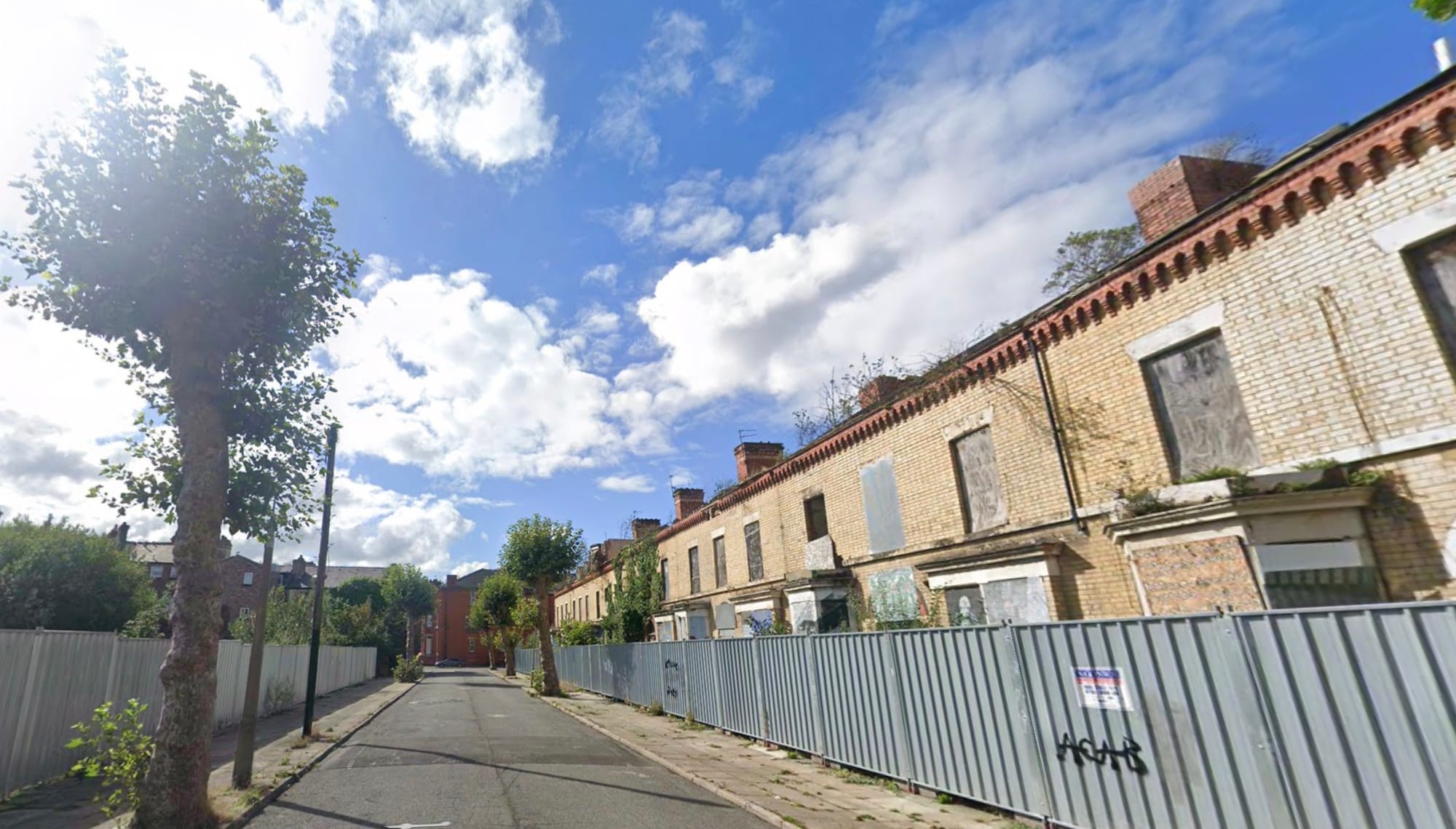
Summer came and went, and with winter approaching, no appointment has been publicly announced. Ducie Street’s Victorian houses remain derelict, although they have now been fenced off by the council. Ed says doors and windows have sometimes been unsecured, also referring to recurring fly-tipping, something which has led the council to carry out periodic clean-ups alongside members of the local community.
‘We’ve wasted a decade on those sites and houses,’ Ed said. ‘There could be families living in affordable housing that are stuck elsewhere now, and we’re left here with derelict streets.’
We asked the council for an update and a spokesperson told the Monitor: ‘An evaluation process associated with the bid proposals is nearing conclusion. It is anticipated that this will be completed by the end of the month and an announcement on the outcome of the bids will be provided following this.’
And so, after all that, some hope — and hopefully soon – but, still, also another announcement to wait for about the future of the remaining derelict houses. For now, at least, the long search for clarity in the heart of Granby continues.