Mirror mirror no more, but no affordable homes either?
The developer had argued the scheme wouldn’t be financially viable…

*A version of this article originally appeared in our Sunday newsletter ‘What links an aviary, Wirral’s bins, a Sefton hammer cage and a giant Liverpool mirror?’ on November 15th.
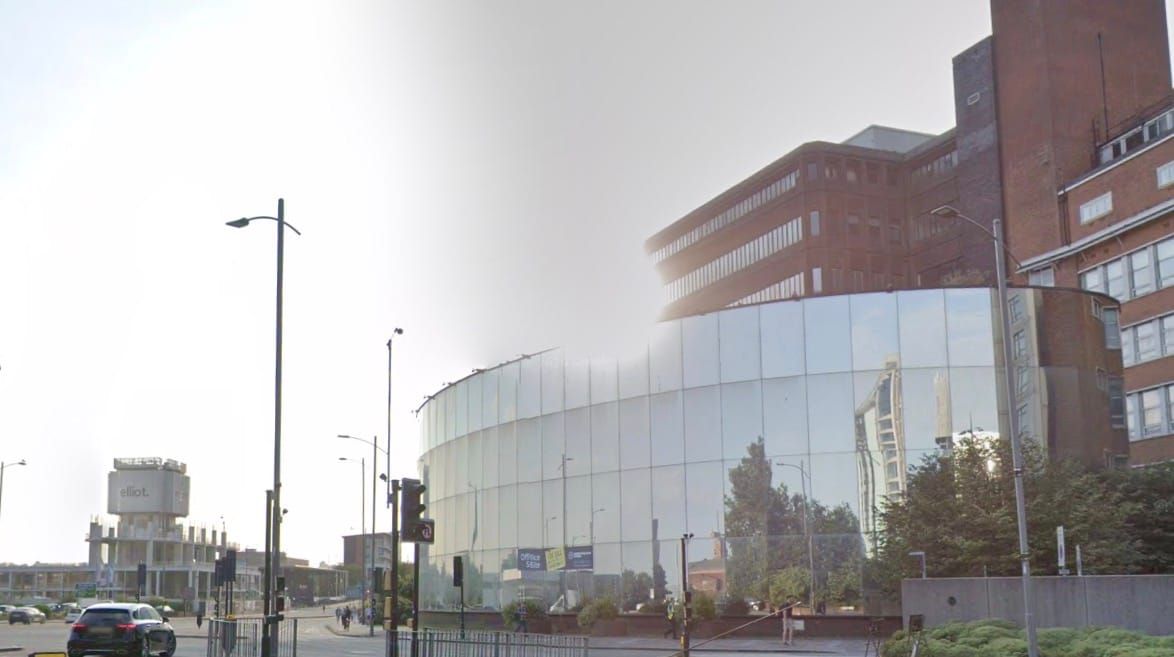
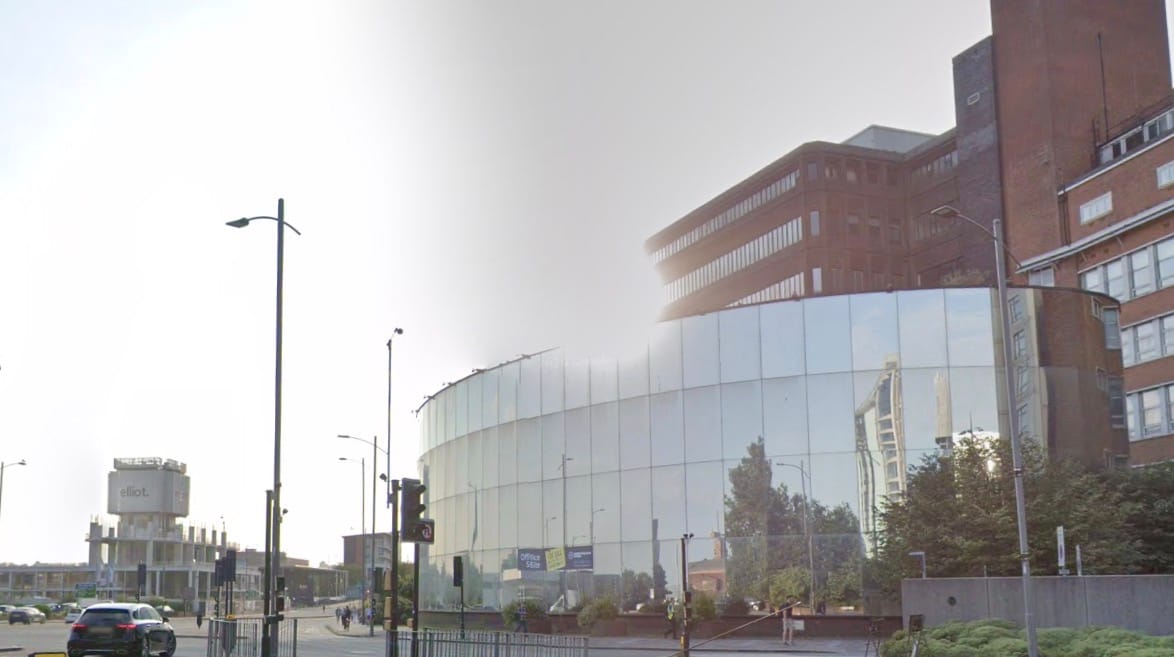
A distinctive, vacant building on the corner of Leeds Street and Old Hall Street that resembles a giant curved mirror could soon be no more, after plans to replace it with two enormous residential towers reached new heights last week.
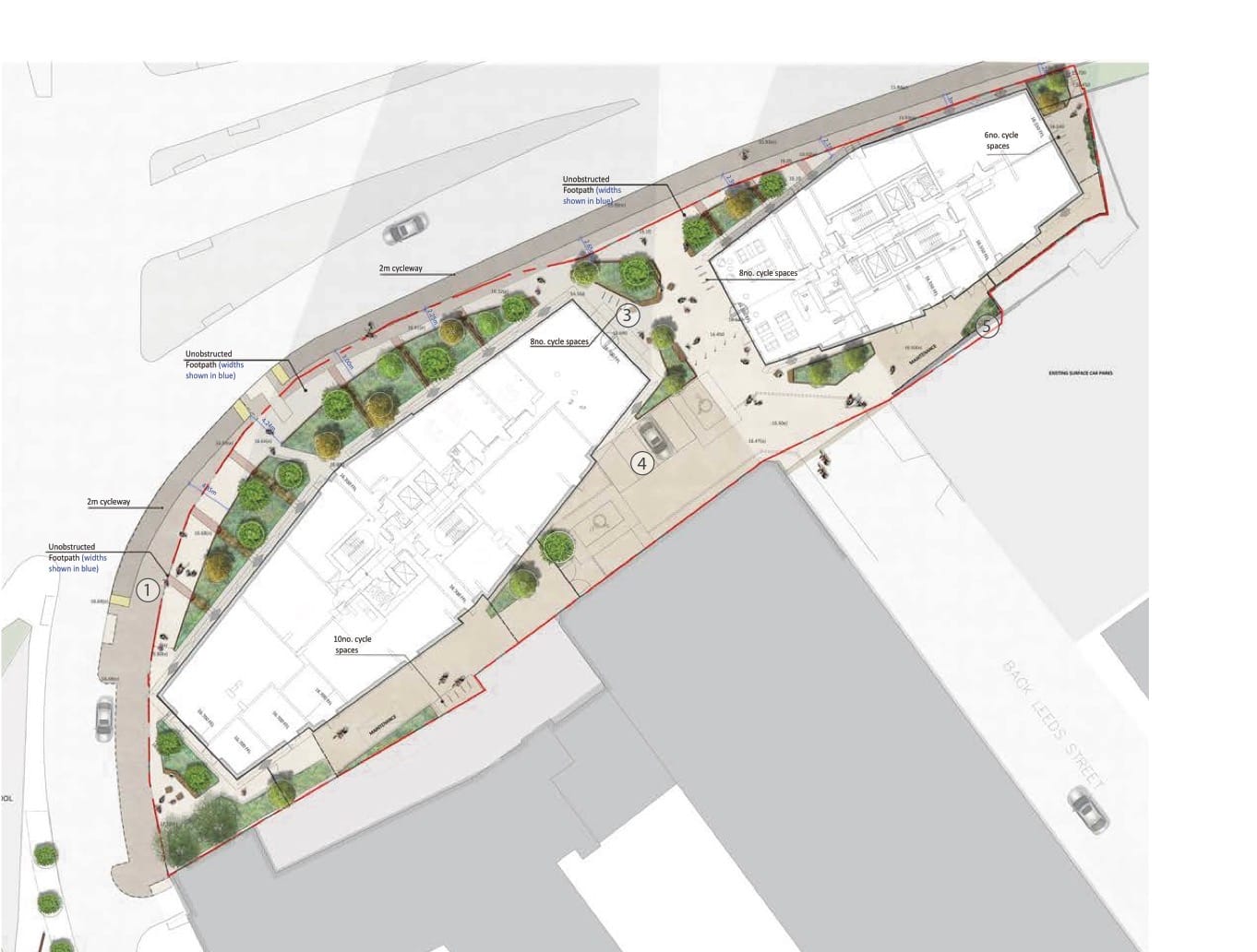
The building, originally constructed as a computer centre for Littlewoods, is earmarked for demolition to make way for 434 apartments across two buildings, one 25-storeys high and the other 19.
There's 663 bedrooms between them, and just seven car parking spaces, two of which would be reserved for disabled motorists.
If you’re wondering where all the residents’ cars are supposed to go, there is a reason for the limited parking. According to the planning documents, the development is designed around city-centre living, with plenty of public transport nearby and 330 cycle parking spaces instead. It’s an approach increasingly encouraged in planning policies aimed at reducing reliance on private cars.
The plans were backed by Liverpool’s planning committee in November last year, but the formal permission has only recently been issued following the completion of a Section 106 legal agreement. These agreements are used to secure contributions from developers towards things like local infrastructure and public amenities, and this one makes for interesting reading.
The developer, Liverpool I Ltd, has agreed to pay around £161,000 towards local improvements and to mitigate the impact of the scheme. That includes nearly £121,000 to address recreational pressure, £20,000 towards reviewing and implementing local parking controls, and another £20,000 for active travel schemes.
But there are some much larger sums it won’t have to pay, at least for now. The council’s planning policies would have ordinarily required £868,000 for open space development and £347,000 towards tree planting, alongside provision for affordable housing.
However, the developer has argued the scheme wouldn’t be financially viable with those requirements, and following an independent assessment, the council has agreed. So, there are currently no affordable homes in either tower, although the agreement does allow for the finances to be reassessed, potentially securing additional contributions if the position improves.
And, if towers of 25 and 19 storeys already sound like significant additions to Liverpool's skyline, local councillors Nick Small and Christine Banks actually suggested the site would lend itself to something taller. In the report that went to planning for approval last November, they referred to the need to balance ambition against what developers could ‘realistically deliver’.
They’re likely tall enough for the potentially soon-to-be-residents to catch a decent view of Bramley Moore and the new Everton stadium and a fair bit more of the riverfront views too, but whether those moving in would be especially attracted by a view over one of the city centre’s busiest road junctions is another question entirely.