The government doubled Wirral’s housing targets, could it mean trouble for the green belt?


Just 15 months after approving its local plan, Wirral’s about to start it all over again
Wirral is about to begin making a new local plan just 15 months since the last one was adopted, after councillors agreed the first steps this week amid concerns about what it could all mean for Wirral’s green belt.
The move follows government changes to national planning rules which have more than doubled Wirral’s assessed housing need from 800 homes a year to over 1600.
The local plan, produced by the council and signed off by the national planning inspectorate, says where local development should take place, how many homes are needed, what sites are protected and what rules planning applications should be judged against.
Wirral’s current local plan was only adopted in March 2025 after years of political arguments, public consultations, legal challenges, examinations and debate over issues such as locations, housing numbers and greenbelt land.
Before that, the borough spent years attempting to produce an earlier local plan, which was eventually abandoned before being restarted, as one councillor pointed out at the meeting of Wirral’s economy, regeneration and housing committee on Tuesday where, despite the current plan being little more than a year old, councillors were told they must begin the whole process all over again.
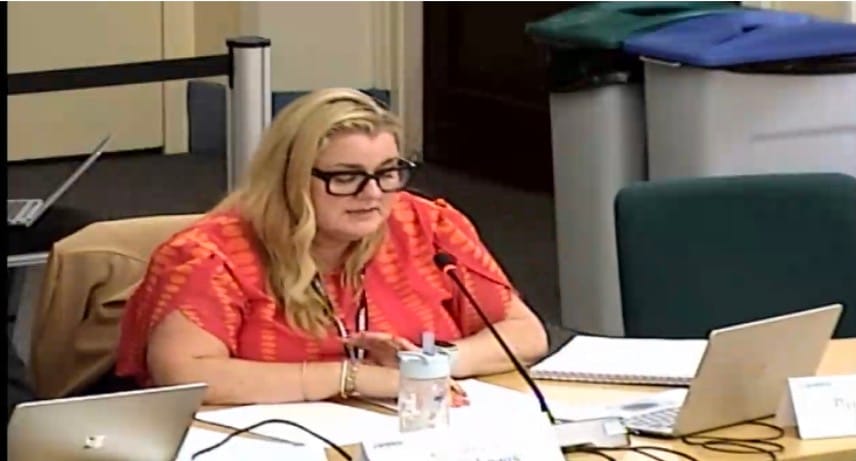
Planning officers stressed the decision doesn’t mean the current local plan was wrong: ‘it’s not a matter of fact that our current plan has failed,’ assistant director and chief planner Mandy Lewis told councillors. Instead, she said, because the government had changed the way housing need is calculated, it had triggered councils such as Wirral to need a replacement plan.
Lewis said the government had also fundamentally changed the way local plans are prepared. She told councillors the new system is ‘much more prescribed’ by the government than previous arrangements and introduces a series of formal ‘gateways‘ councils must pass through as plans are developed.
The process includes three rounds of public consultation, beginning this summer, and is intended to be a more ‘project-management style’ approach than previously. The government expects councils to complete the process within around 30 months. While it gets underway, Wirral’s current local plan will remain in force and used to determine planning applications.
Green councillor Gail Jenkinson described the report as ‘an item none of us wanted to see’ and questioned whether the government’s timetable was realistic. She also asked whether delays to the second of the three consultations, referred to in a report produced ahead of the meeting, and which is caused by local elections next year, would be accepted by government if the plan goes beyond the 30 months ministers expect it to take.
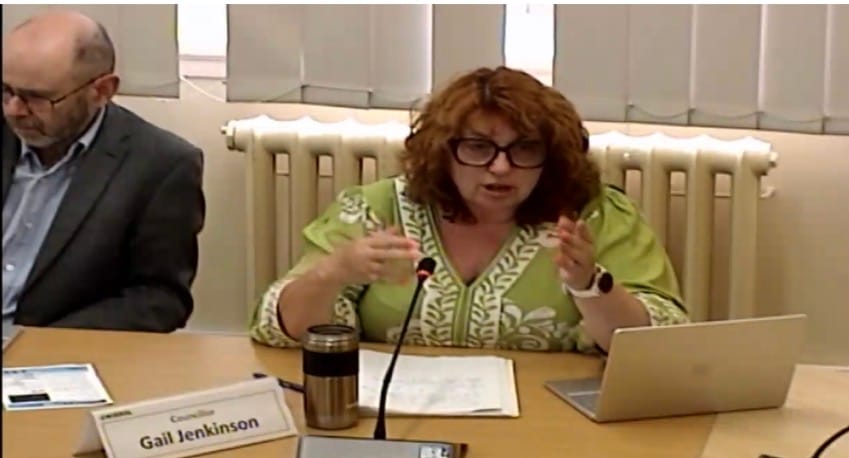
Earlier in the meeting, Lewis had warned that failure to begin and progress a new Local Plan could result in government intervention. She told Jenkinson officers had discussed the timetable informally with government officials and had been advised it was acceptable to produce a realistic programme that took account of factors outside the council’s control, like the timing of elections.
Questions were also raised about who ultimately controls decisions about where future development takes place. Conservative Cllr Andrew Gardner asked whether any future review of greenbelt land would remain within the control of Wirral Council. Lewis replied that while a strategic green belt review is being undertaken at Liverpool city region level by the metro mayor’s combined authority, the decision would ultimately remain with Wirral council.
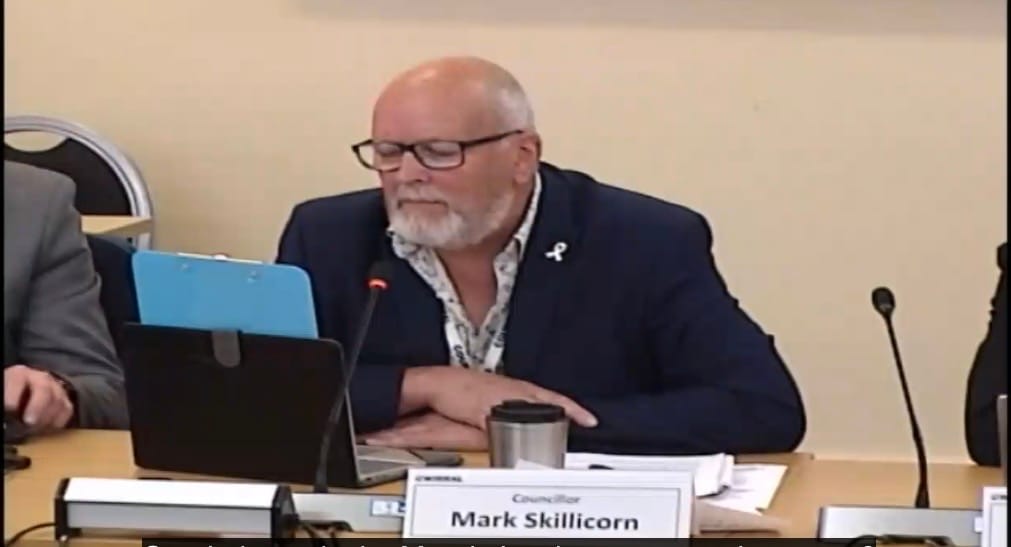
Committee chair, Labour Cllr Mark Skillicorn then pressed the point a little further, asking whether that effectively meant the council could refuse any recommendations arising from the review. ‘I won’t prejudge that, chair,’ Lewis replied, to which Skillicorn responded, ‘I’ll take that as a yes’.
Green Cllr Pat Cleary also asked what role the Birkenhead 2040 Framework would play in shaping the new Local Plan. The framework, which sets out a long term vision for the regeneration of Birkenhead, includes thousands of new homes, as well as jobs, transport improvements and redevelopment sites, and was a key part of the evidence underpinning the current local plan.
Lewis said officers were ‘very aware’ that the Birkenhead 2040 vision had been a founding piece of the current plan and that the vision for the replacement plan would need to reflect those ambitions.
The committee also discussed how Wirral’s new local plan will fit alongside the city region’s emerging spatial development strategy (SDS). Lib dem Cllr Stuart Kelly noted there is still considerable uncertainty about how this emerging city region level strategy will develop and how it is going to interact with local planning policies across the region.
The SDS will be a strategic planning document that will need to be considered in borough level planning decisions, and according to information published by the combined authority is only concerned with ‘planning matters that are of strategic importance’ to the wider region. What all this will look in practice is still something of a work in process.
Earlier in the meeting, Lewis had told councillors that the combined authority is carrying out a strategic review of greenbelt land as part of work on the future spatial development strategy. She said the review could recommend changes to greenbelt boundaries and would also consider so-called ‘greybelt’ land, a planning category devised by the government for previously developed, or what has been framed as lower quality, land within the green belt that could be considered more suitable for development.
Councillors were also told that much of the evidence and many of the policies underpinning Wirral’s recently adopted Local Plan could be reused: ‘It’s not a view from officers to start from scratch,’ Lewis said.
The first public consultation is expected this summer, with further consultations in 2027 and 2028 before a final plan is submitted to be examined by the planning inspectorate.
For now the existing one, lauded just last year with some fanfare as possibly the country’s first brownfield only local plan, remains in place. But, coming so soon after the years of arguments over housing numbers, development sites, not to mention legal battles with developers such as Leverhulme seeking access to green belt, this week’s move to make a new one now means very little is certain about where Wirral grows next.
You can view Tuesday’s meeting here.
before you dig those foundations …
If you’ve enjoyed this article, please consider subscribing to the Mersey Monitor. Unlike Wirral’s local plan, we promise not to start all over again next year, probably.
If you’re new to the Monitor, welcome. We’re a tiny local independent public interest newsroom operating on a non profit basis.
Our aim is to keep you informed about the decisions that affect our lives on Merseyside. We don’t do paywalls here, all our content is open access, and you can sign up - it’s completely free - and get an email or two off us a week. It also means you can comment on the site.
What do you think about Wirral renewing its local plan? Let us know, we love to chat!
Ideas for stories we should be looking at? Drop us an email at themerseymonitor@outlook.com or message us on 07442 402 023.
The Monitor is entirely and only funded by our readers. If you can spare a quid or two, we’d love your support.
You can do that here: https://www.merseymonitor.com/#/portal/support
You can also set up a regular donation of any amount of your choosing, your own tailor-made subscription if you like, here: Donate
Thanks for having a nose, it already makes you part of what we’re doing here at the Monitor. We appreciate you supporting local public interest journalism on Merseyside.