‘They fed her to the wolves for profit and for clicks’
From Hillsborough and the infected blood scandal to Southport and the deaths of Caroline Flack and Jason Arday, campaigners gathered in Liverpool to demand accountability from powerful institutions, including the media itself.

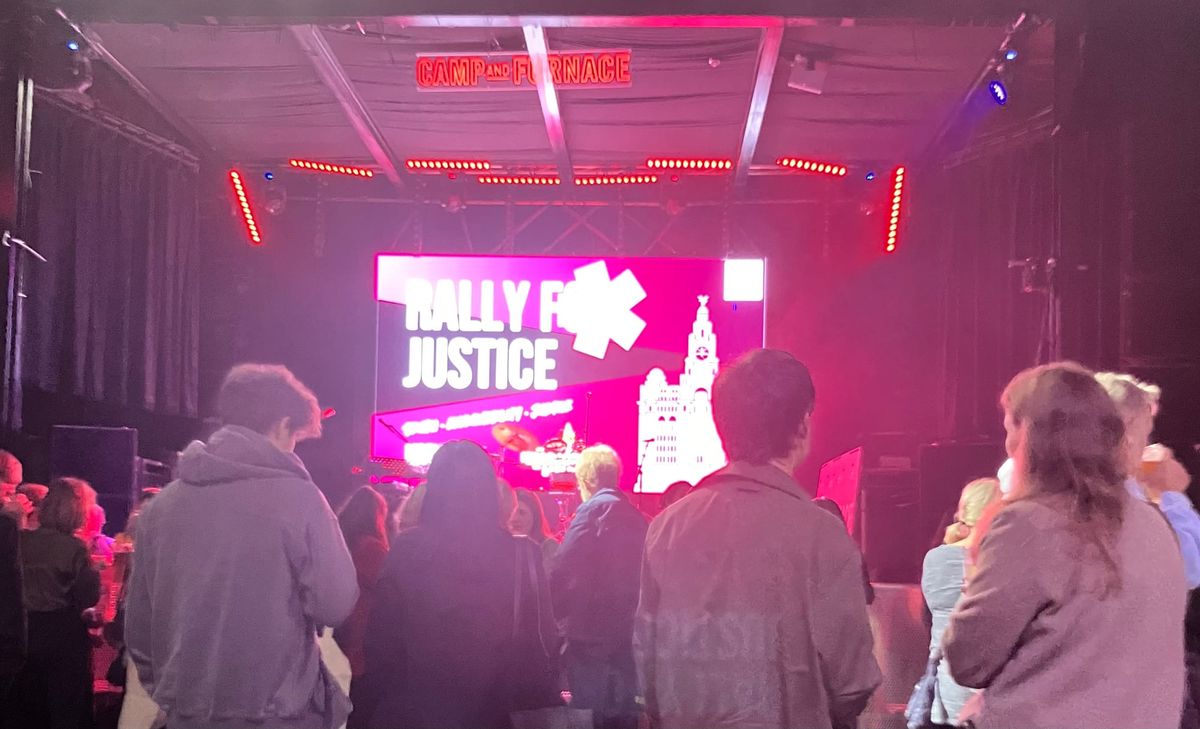
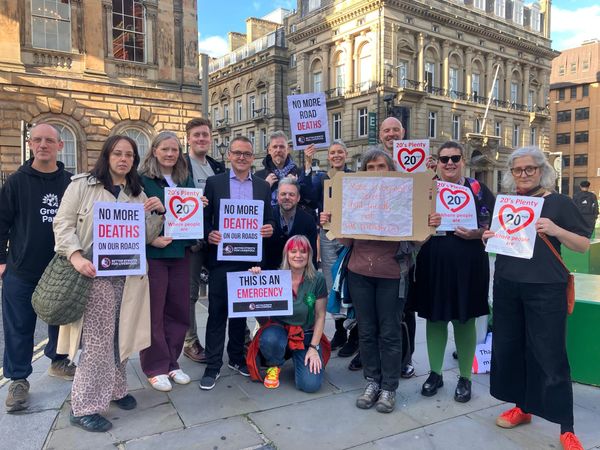
Two weeks ago yesterday, we were in a snaking queue outside Camp and Furnace in Liverpool’s Baltic Triangle waiting to have our bags searched and scanned before entering an event where people would describe years, even decades, fighting for justice.
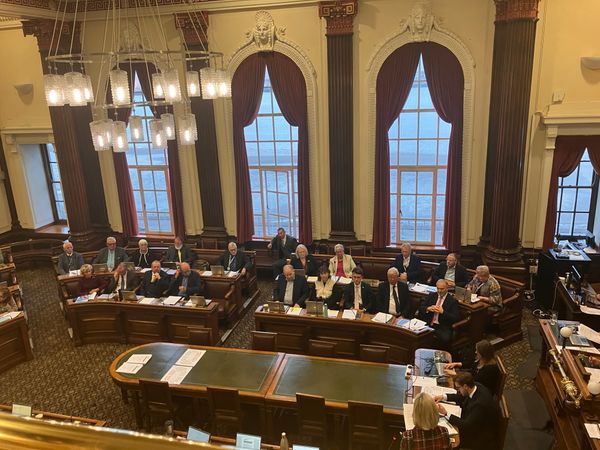
Yesterday, the legislation many of them have been campaigning for began its committee stage in the House of Lords. Peers will examine the ‘Hillsborough Law’, officially titled the Public Office (Accountability) Bill, line by line, considering the powers it creates and any proposed amendments. Having completed its passage through the House of Commons, the Bill is now progressing through the House of Lords, bringing it closer to becoming law.
It is almost 40 years now since 97 Liverpool FC supporters were unlawfully killed as a result of a crush during a game at Hillsborough in Sheffield. Almost as much time has been spent by the families trying to understand what happened, expose attempts to conceal responsibility and secure changes to the law.
Inside Camp and Furnace that Monday night were people affected by what happened at Hillsborough, as well as survivors of the Southport attack, and many others fighting to expose yet more of Britain’s most serious scandals. That includes those whose lives had been profoundly affected by the actions of the media.
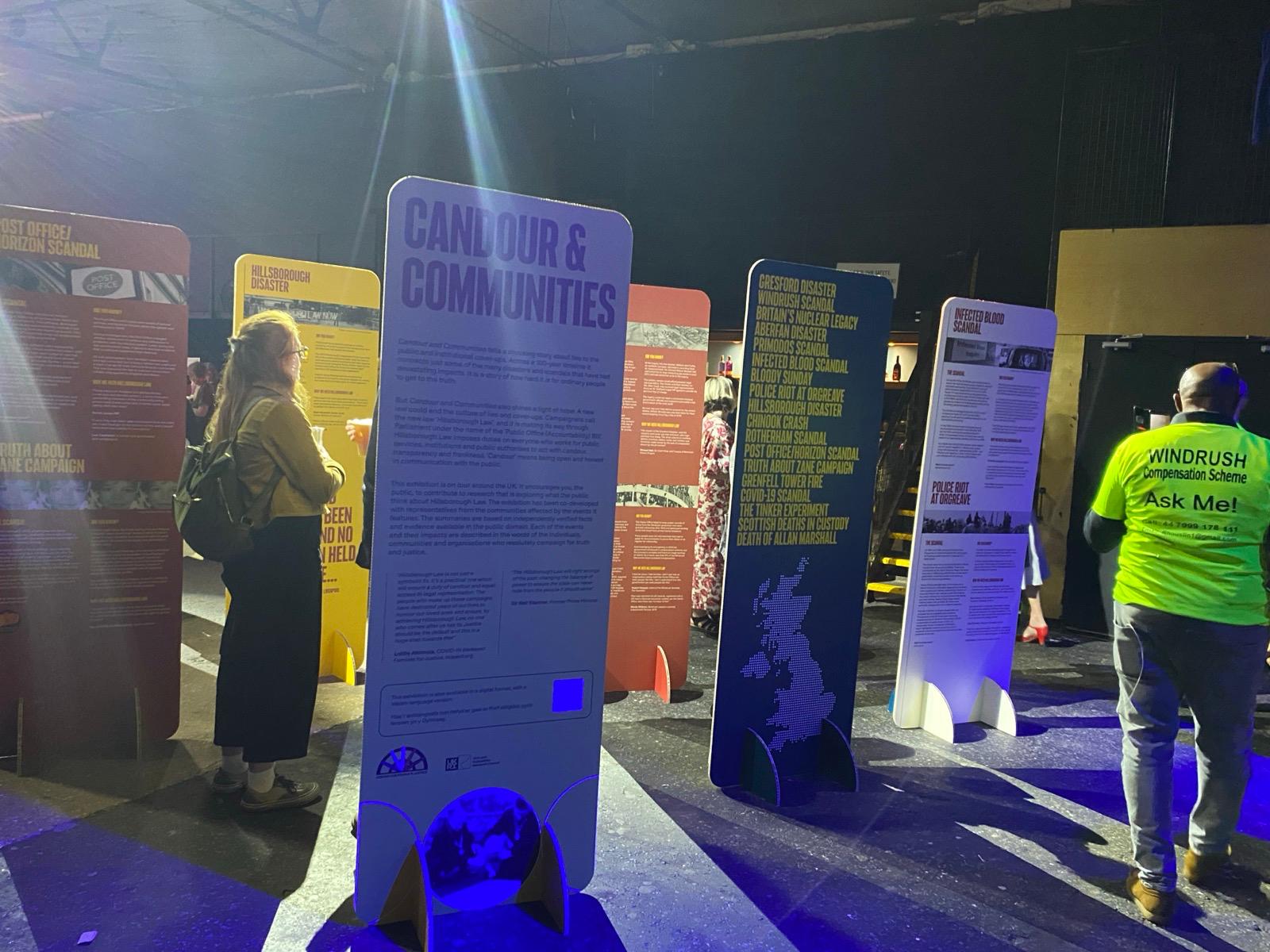
As journalists for the Mersey Monitor, a local website with a particular interest in public accountability, it was an evening we couldn’t miss. Getting institutions to answer questions isn’t always straightforward, and the prospect of a law requiring them to be transparent is of considerable interest to us, as it is to the families fighting for answers.
The speakers raised a question too that won’t be resolved by the legislation currently making its way through parliament: what happens when journalists and the organisations they work for are themselves responsible for causing harm and what can, or should, be done?
The ‘Rally for Justice’, held during the Labour Party conference, was organised jointly by Hillsborough Law Now and Hacked Off. The two organisations campaign for different reforms, but there is perhaps nowhere that the relationship between public and press accountability is more apparent than Liverpool.
Hacked Off, established following the phone-hacking scandal that took down the News of the World, campaigns for stronger independent regulation of the press and better remedies for those harmed by inaccurate or intrusive reporting.
After the 1989 Hillsborough stadium disaster, South Yorkshire Police tried to avoid responsibility for its failures by making false allegations about supporters’ behaviour, claims repeated in sections of the national press, most notoriously in The S*n’s ‘The Truth’ front page.
The families and survivors were left fighting not only to understand what happened, but to overturn a false public narrative that compounded their suffering. It took until 2016 for new inquests to conclude the 96 victims had been unlawfully killed. Andrew Devine became the disaster’s 97th victim when he died in 2021.
The Bill introduces a legal duty for public officials to engage with any investigations, inquests or inquiries, creates a new offence should they mislead the public, and will make legal-aid provisions for families so they can participate on an equal footing.
Liverpool MP Maria Eagle, who has worked with Hillsborough families since entering Parliament in 1997, paid tribute to the campaigners who had helped bring the proposed law to parliament. ‘It wouldn’t have happened without them. It wouldn’t have been devised without them,’ she said.
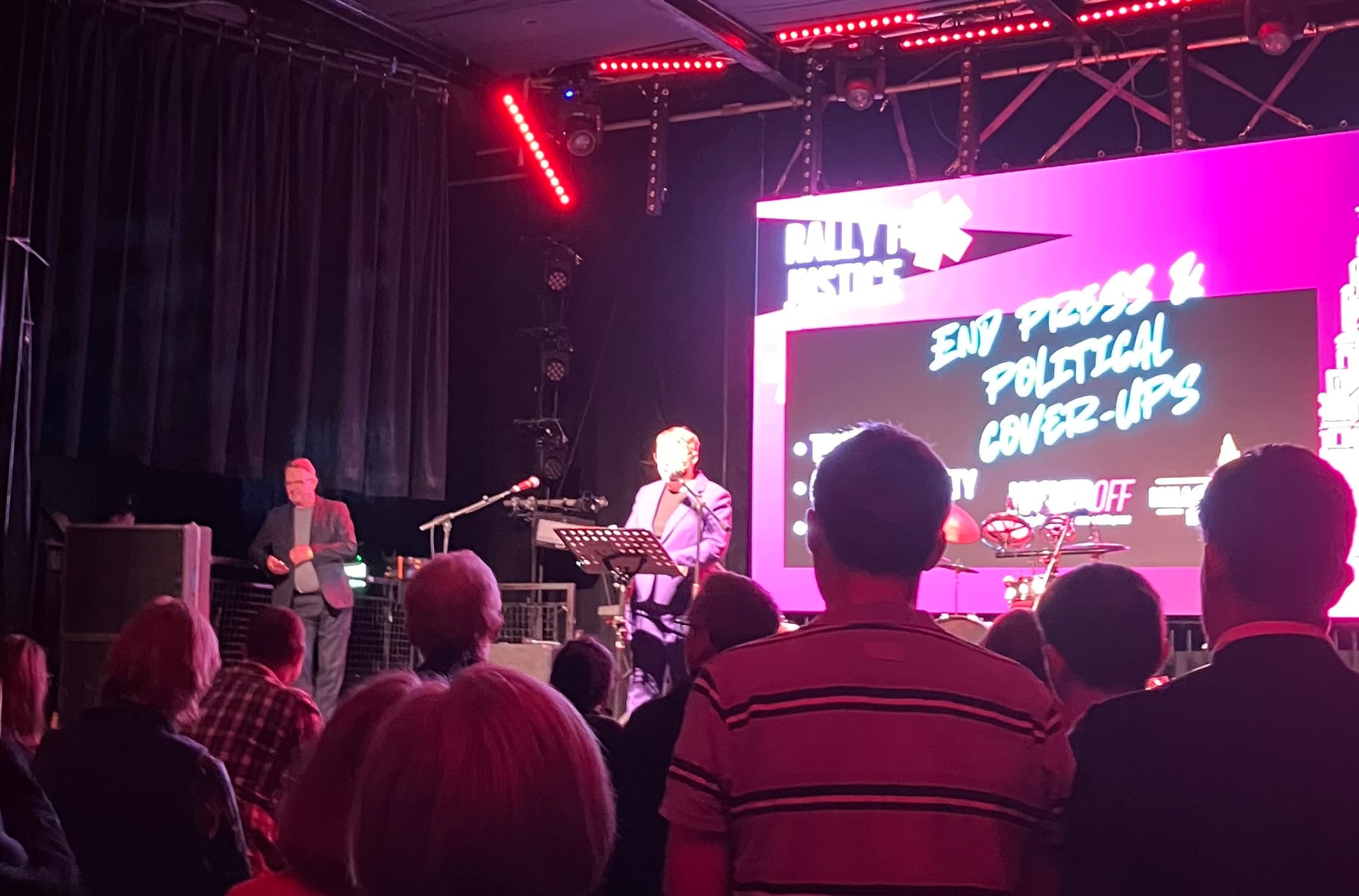
Eagle also argued that bereaved families should have more control over how disasters are investigated, calling for greater power and resources for the Independent Public Advocate.
As speaker after speaker made clear at Camp and Furnace, the consequences of institutional failures don’t end with the original incident. For many families, what follows is another horrific ordeal altogether.
‘Forced kicking and screaming to give us justice’
Another highlighted at the event was the infected blood scandal. During the 1970s and 1980s, this saw thousands of people with bleeding disorders or who had received blood transfusions given imported blood products containing HIV and hepatitis viruses.
‘Of those 6,000 people, over half are dead,’ explained Kate Burt, chief executive of the Haemophilia Society. ‘1,250 people were co-infected with HIV, almost 400 of those were children. Today only about 200 of those HIV victims are alive.’
Campaigners spent more than 40 years seeking justice here too and, finally, in 2024, a public inquiry concluded the disaster could ‘largely, though not entirely, have been avoided’. Chaired by Sir Brian Langstaff, the inquiry found this issue went well beyond a series of unfortunate medical decisions. Patients were exposed to unacceptable risks, warnings had been missed or ignored and authorities had failed to put patient safety first.
Burt spoke of a pattern across Hillsborough, Windrush and Grenfell. ‘Harm was done by the state or organisations related to the state, then the lies, then the cover-up,’ she said. ‘Only until they are forced kicking and screaming to give us justice do we get it.’
Even when inquests and public inquiries have reached their conclusion and made recommendations, the battle for families often continues. Deborah Coles, executive director of INQUEST, which works with families following deaths involving the state, warned of a ‘shocking accountability gap’, with ‘potentially life-changing recommendations’ too often left ‘gathering dust’.
INQUEST is among the organisations calling for a national oversight mechanism, to ensure that the findings of inquiries lead to change, rather than leaving bereaved families to continue campaigning long after the truth has been established.
‘Victims should be able to spend their energy healing’
Leanne Lucas survived the knife attack at a children’s dance class in Southport in July 2024. Three young girls, Bebe King, Elsie Dot Stancombe and Alice da Silva Aguiar, were murdered. Lucas was seriously injured trying to protect the children.
She told the audience that some of the institutions responsible for helping her afterwards had caused further trauma. ‘What I have learned since becoming a victim is that the original traumatic event does not necessarily mark the end of harm,’ she said.
Lucas described having her personal information breached by ‘multiple public bodies’, poor communication and repeated chasing for answers. She also spoke about the lack of a trauma-informed response from services that were supposed to be supporting her, leaving her feeling that she had fallen through the gaps.
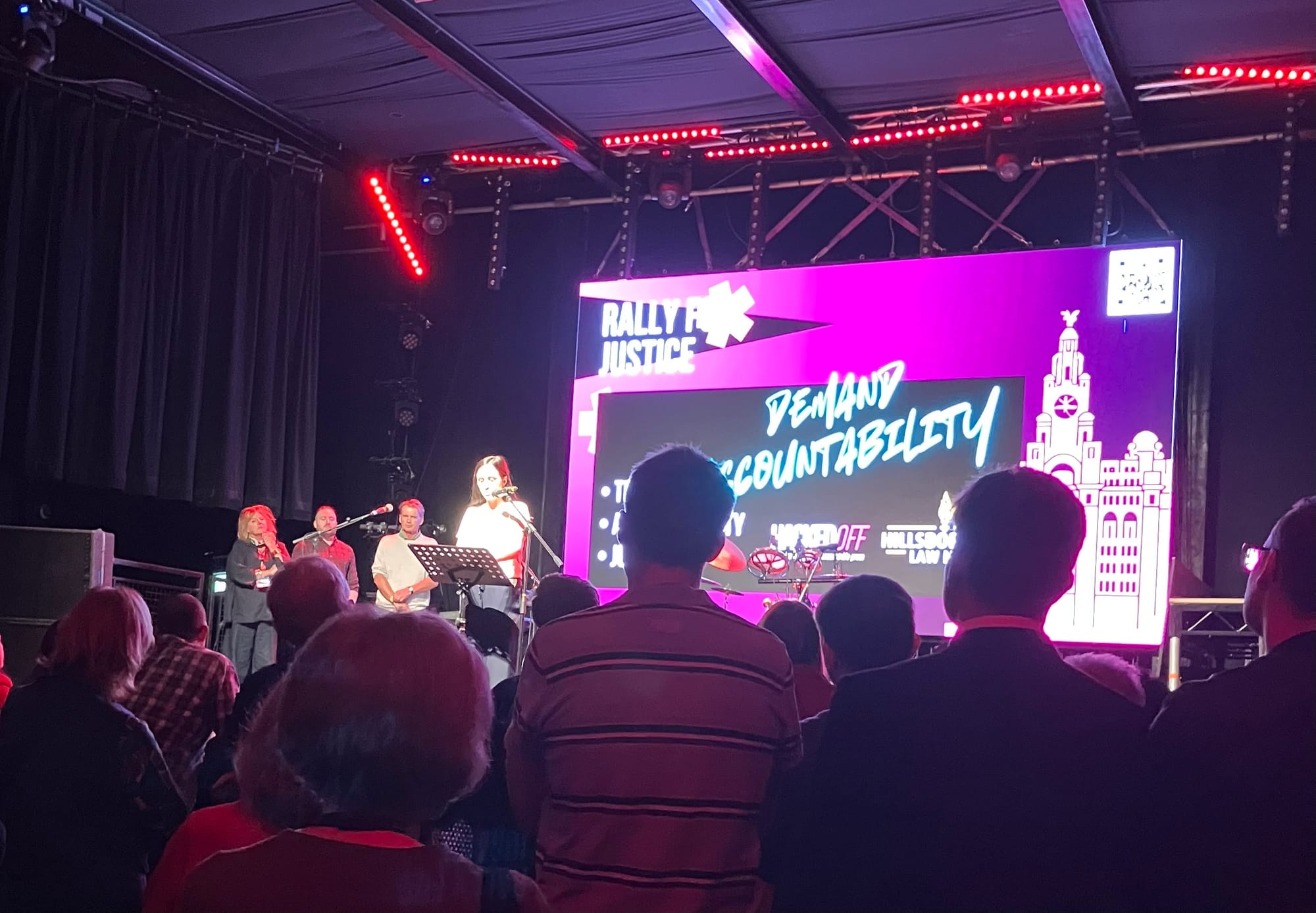
‘At times I’ve felt that protecting institutions has taken priority over simply being open with the person affected,’ she said. ‘There have also been occasions where I’ve only been informed about important decisions affecting me because they were due to appear in the press the very next day.’
Lucas called for services to be designed with the help of survivors because too often people are left trying to navigate systems that don’t understand their needs. ‘Victims should be able to spend their energy healing, not fighting the systems that are supposed to help them,’ she said.
Lucas has since established Let’s Be Blunt, a community interest company campaigning for safer knife design and preventive action to reduce knife harm.
‘I’m simply a mum’
The evening’s other major theme was the conduct of the press and the unfinished business of the Leveson Inquiry. Following the phone-hacking scandal, Leveson recommended a new system of independent press regulation.
Most major national newspaper publishers are now members of the Independent Press Standards Organisation (IPSO), which isn’t recognised under the Royal Charter framework established after the inquiry, and uses the same Editors’ Code from the former Press Complaints Commission.
IPSO operates a complaints system and can require newspapers to publish corrections and adjudications. Its supporters argue regulation must remain independent of government to protect the freedom of newspapers to investigate matters in the public interest.
Yet Hacked Off and other campaigners say the current system isn’t sufficiently independent of the industry it regulates and doesn’t provide adequate resolutions for those who suffer serious harm.
The other press regulator, Impress, is recognised under the Royal Charter framework, but its members are mostly smaller publishers. (The Monitor intends to join them.). The Guardian and Financial Times, notably, are members of neither regime.
Among those calling for reform was Christine Flack, whose daughter Caroline, the TV presenter, died by suicide in 2020 following a period of intense media coverage.
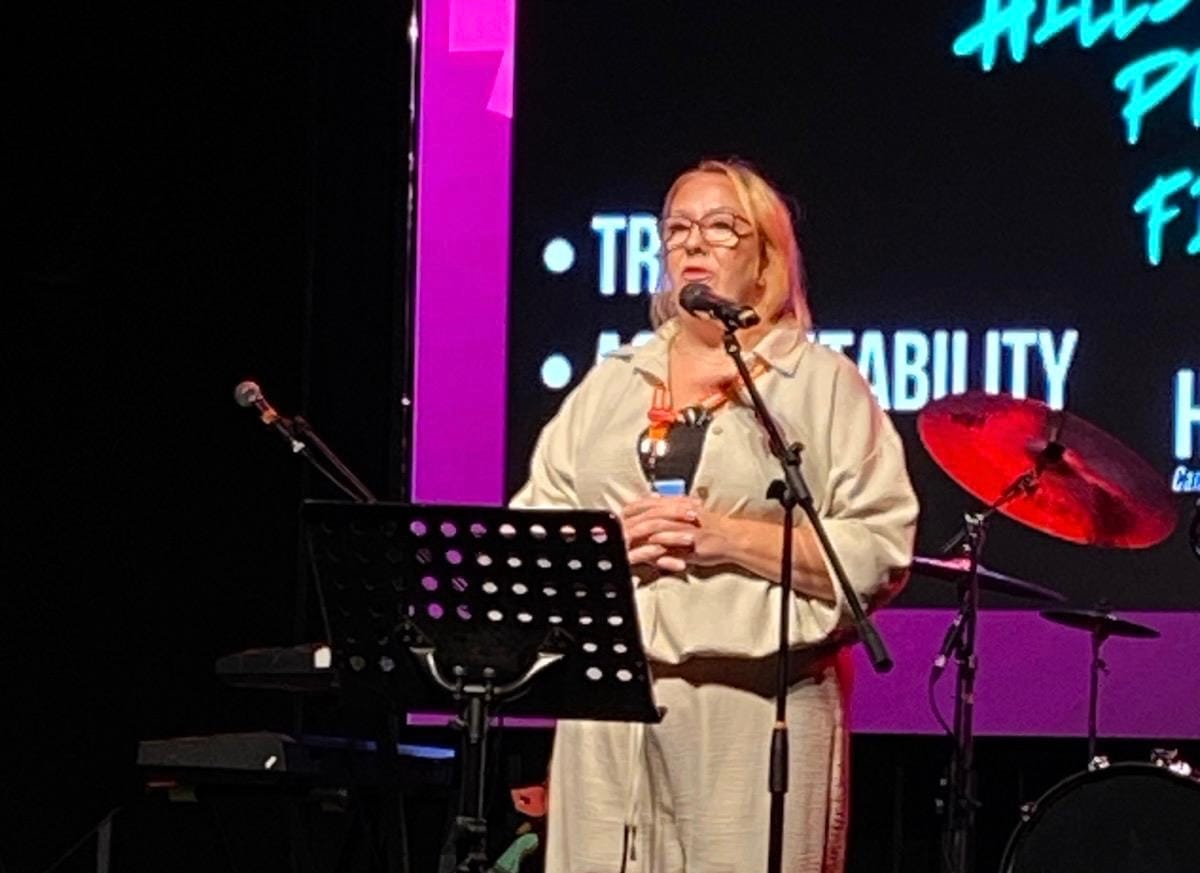
‘May I first say that freedom of the press should never be withdrawn, but what comes with freedom of the press must come the truth,’ Flack said. ‘I’m not a politician, I’m not a campaigner by nature, I’m simply a mum, and every single day I carry a pain that parents who lose their children have to bear.’
She spoke about the difference between the Caroline the public knew and the person her family had lost. ‘Beneath the sparkles and the glamorous lights, she was a sensitive human being who felt things deeply.’
She described a relentless campaign by sections of the tabloid press, with headlines appearing day after day that she believed were written not to inform, but to humiliate. ‘They didn’t just report on her life, they hunted her,’ she said. ‘They camped outside her home. They twisted the truth and they fed her to the wolves for profit and for clicks with total disregard for the person behind the headlines.’
She also spoke about the impact of her daughter’s death: ‘Caroline’s death has changed my family’s life, it affects everyone, you lose faith in everything.’
For Flack, the connection between what happened to her daughter and the experiences of the Hillsborough families was clear: ‘The Hillsborough campaign proved that ordinary people united by grief and an unshakeable demand for truth can stare down the establishment and change the law.’
She added: ‘They showed us that a cover-up is a cover-up whether it happens in the police or in a newspaper office.’
She argued that the same commitment to accountability being created through the Hillsborough Law should be applied to the press: ‘A free press is vital to our democracy, but bullying is not freedom, harassment is not freedom, smearing the vulnerable to sell newspapers or drive online traffic is not freedom. It’s an abuse of power.’
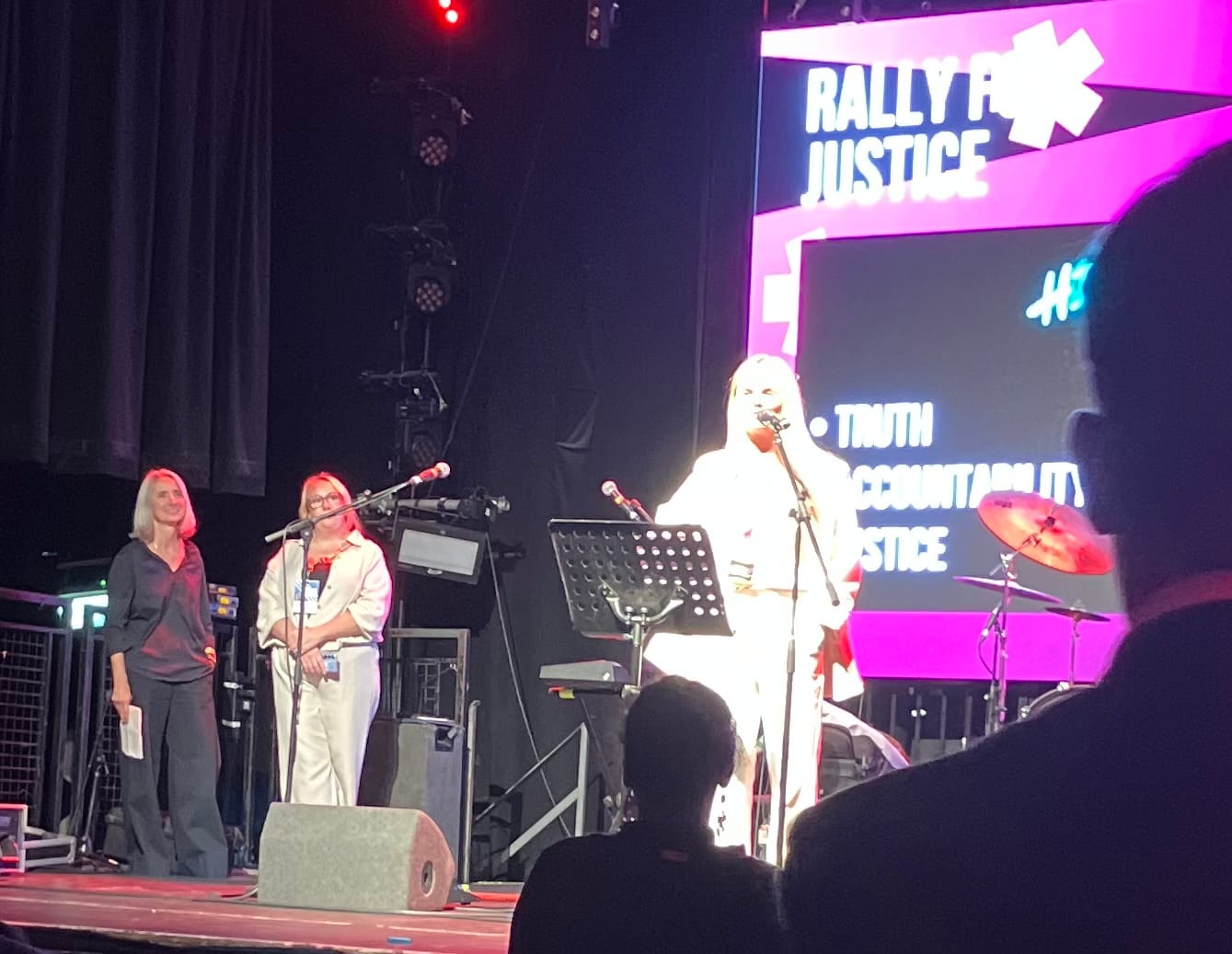
‘We need a media that is accountable. We need a regulatory system that has teeth, that protects ordinary people from ruthless intrusion and that gives families who have been ripped apart some semblance of justice.’
‘I tried to keep him alive’
Several speakers raised the death of Professor Jason Arday, the Cambridge academic who was found dead in August this year, following weeks of intense newspaper coverage.
Arday had become Cambridge’s youngest Black professor in 2023. This summer, newspapers began publishing allegations of plagiarism, and highlighting alleged inconsistencies in accounts of his life and academic career. Arday denied the allegations, but resigned from his post in early August.
Between 24 July and his death on 14 August, Arday was the subject of well over 200 news articles, some of which were later edited or deleted. Professor Corinne Fowler told the audience that Arday had contacted her just days before he died, having learned of her own experience of hostile press coverage.
Fowler’s academic work examined connections between National Trust properties and colonialism, and had become the subject of extensive hostile media coverage following a report published in 2020. ‘There was a deliberate mischaracterisation of our work in hundreds of articles by journalists and opinion writers,’ she said. She described receiving threats and abuse, and said in most cases she hadn’t been given an opportunity to respond before publication.
Jolyon Maugham, founder of the Good Law Project, which fights for legal changes on matters of public interest, described speaking to Arday during this time. ‘From July into August, almost every day for three weeks, I spoke to Professor Jason Arday and I tried to keep him alive.’
He described Arday as ‘a father, a husband, a son, a hero to his many Black students struggling to make their way in white-dominated academic institutions throughout the country’.
‘Jason knew this would happen,’ he added. ‘He told us. He told us.’
Maugham alleged that newspapers had ignored warnings about Arday’s mental state. He asked why the media industry should be allowed to operate without the kind of independent regulatory oversight imposed on other powerful organisations. ‘Any other industry with those features would be regulated. Why not the print media?’ he asked.
Other speakers described the consequences of media coverage for their personal lives, mental health and professional reputations. Danielle Hindley, a beautician from Leeds, spoke about successfully suing the Daily Mail after an article published in 2017, but said the compensation couldn’t undo the impact on her family. ‘That money would never have fixed the damage they didn’t just do to me, but they did to my child,’ she said.
‘Everybody can speak out’
Hillsborough campaigner Charlotte Hennessy was the final speaker of the night. Her father, Jimmy, was 29 when he died at Hillsborough, when Charlotte was just six years old. ‘My dad was a mod,’ she explained. ‘He was popular. He was kind. He was loved.’
Hennessy described her father’s final hours, that he had survived the initial crush and been seen raising an arm, signalling for help. She spoke about the devastating impact of the reporting in the aftermath of the disaster, which falsely blamed Liverpool supporters for what had happened.
‘I want to acknowledge the survivors that are in the room that stood on their truth and gave us the answers that we needed,’ she said. She spoke about the continuing impact on younger generations of her family, including relatives who had not been born when her father died, and the responsibility to explain this family history.
It had been a long evening. Hennessy acknowledged as much, asking the audience for their attention one last time. ‘It’s really heavy. There’s loads to take in,’ she said, but she wanted those listening to leave with something they could do.
‘You don’t need money. You don’t need a crowdfund. You don’t need to give anything other than your time and your voice,’ she said.
‘Everybody can speak out. Everybody can call for a Public Office (Accountability) bill and everyone can call for press reform.’
The Mersey Monitor is an independent public interest news site covering Merseyside on a not-for-profit basis. Everything we publish is free to read, with no paywalls, and we’re funded by reader donations.
You can sign up to receive our emails (they’re totally free) at the bottom of this page.