An outbreak of ‘optimism bias’?
From Steve Rotheram's tidal ambitions to Sefton's spending forecasts and our dreams of a fictional scrutiny committee, is there too much ‘optimism bias’ on Merseyside this week?


Greetings Mersey Monitrons,
We hope you’ve all had a lovely weekend. We spent much of ours carving pumpkins, asking for sweets accompanied by a small human pumpkin and, of course, rummaging through council reports – not all of which were as scary as the little pumpkin person.
In one of those reports, we came across a phrase we think deserves a place in the official vocabulary of the recently established Mersey Monitor Brown Envelope Scrutiny Committee – ‘optimism bias’.
These words appeared in a report about Sefton Council’s capital spending programme, but we realised they may also offer a useful way of looking at some other things discussed across Merseyside this week. Before we get into all that, though, a quick look back at the last few days.
What have we been getting up to this week?
On Tuesday, we were excited to announce we’d established an entirely fictional Brown Envelope Scrutiny Committee, a slightly ridiculous offering of something in return for your very kind donations.
We really don’t want to put our public-interest stories behind a paywall at the Monitor, so instead we’re asking people to support us by becoming fully paid-up members of our imaginary committee.
You can join for the princely sum of a fiver a month, with perks including a membership number, your own Certificate of Endurance and our monthly Brown Envelope Edition – which mostly involves getting the occasional official daft committee document. You’ll also have the satisfaction of knowing you’re doing your bit to support free, independent public-interest news for Merseyside, and we can’t really say fairer than that, can we?
This plan might qualify as our own case of ‘optimism bias’, having only come up with it following a sham consultation with a small group of cats, and without checking if anyone human wants to join first.
But, we’ve had a very encouraging response so far, with the first members due to receive their numbers and certificates next week – all very exciting! So perhaps our optimism is well placed.
If you missed our appeal on Tuesday, you can catch up here:
 Lisa Rand

Much of the rest of our week was spent following Liverpool’s increasingly noisy argument over tighter controls on Houses in Multiple Occupation (HMOs), examining the evidence behind the plans, then heading to the town hall to watch councillors argue about them. There have been accusations of people playing political football, some fairly colourful language and, eventually, a bit of relief for residents who'd spent weeks worrying.
More on that here:
 Lisa Rand
Planning system overhaul
On the Wirral, a special council meeting was convened on Wednesday to discuss new national rules that will change how planning decisions are made. The regulations came into effect on Halloween and will, among other things, reduce the number of applications decided by planning committees.
Councillors had strong words to say, including warnings that local democracy is being undermined. Wirral Conservative leader Cllr Simon Mountney described the changes as ‘a coordinated top-down assault on local accountability and the centralisation of power’.

Some interesting points were also raised about what the changes could mean in practice. Of course, with the rules now in effect, we’ll find out for ourselves soon enough. But Wirral councillors agreed at the meeting to write to central government to object.
We’ve got a full piece coming up on this soon, looking at what it all means for planning decisions across Merseyside and what councillors think. But it’s fair to say there’s already a lot of pessimism here about the implications.
In the meantime, let’s look at some of the perhaps more optimistic decisions coming up this week…
Millions more needed for Mersey tidal barrage - but what will it actually cost?
Steve Rotheram’s long-promised Mersey tidal barrage was back on the agenda this week, and we’ve been digging through the Liverpool City Region Combined Authority (LCRCA) reports ahead of a meeting this Friday.
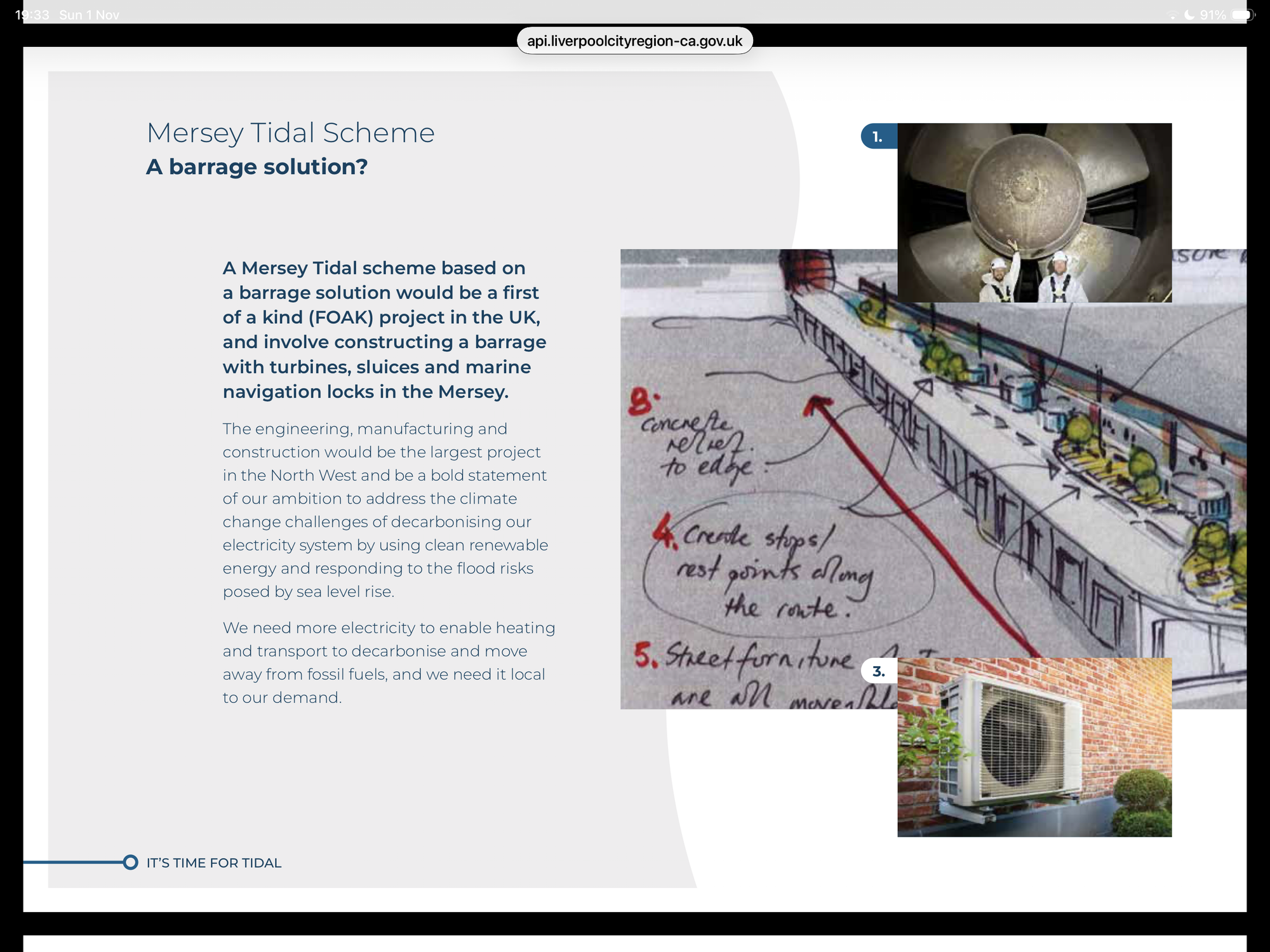
The plan is to build a huge dam-like structure across the Mersey to take advantage of its famously high tidal range to generate electricity. There’s now a recommended location - connecting Bromborough on the Wirral and Otterspool in south Liverpool - which has already attracted some local media attention elsewhere. So instead we’ve been taking a look at some of the cash involved.
It’s an ambitious proposal, potentially providing renewable power for hundreds-of -thousands of homes for generations, as well as a walking and wheeling path across the top. There’s even talk of it protecting communities from rising sea levels, and it’s one of metro mayor Steve Rotheram’s long-dreamed-of flagship projects, so what’s it all going to cost?
A few million here, a few million there
According to the combined authority’s published financial reports, more than £1.5m was spent developing the project in 2023/24, followed by nearly £3.1m in 2024/25. That’s around £4.6m of public money in two financial years, without including earlier expenditure or anything spent since April last year.
Friday’s report says that the combined authority is currently spending around £2.5m a year on the scheme, but that’s only enough to keep things ticking over. Another £16m will be needed next year, with approximately £50m in total development funding needed before a final decision will be made about whether to build it.
To be clear, we’re talking here about the cost of developing the plans alone, not actually building the thing, which would run into billions. The latest report doesn’t provide an updated construction price, but the hope is that central government will provide the money, although that has yet to be secured.
Who’s picking up the bill?
The consultants, Arup, have recommended financing the barrage through something called a ‘Regulated Asset Base’ (RAB) model. This may mean electricity customers start paying towards construction costs before the barrage generates any electricity.
Doing this could make an incredibly expensive project cheaper to finance by enabling investors to recover some of their money during the construction. The catch is that customers carry some of the risk if the project (inevitably?) takes longer or costs more than expected, and there’s not much detail yet about how it would work.
A national study published last year by the National Energy System Operator (NESO), the publicly owned body responsible for Britain’s electricity system, found that tidal power could help bring down wholesale prices, but overall costs to consumers could be higher with this kind of project. It said RAB financing could help reduce additional costs, although this shifts more of the financial risk onto consumers (that’d be us).
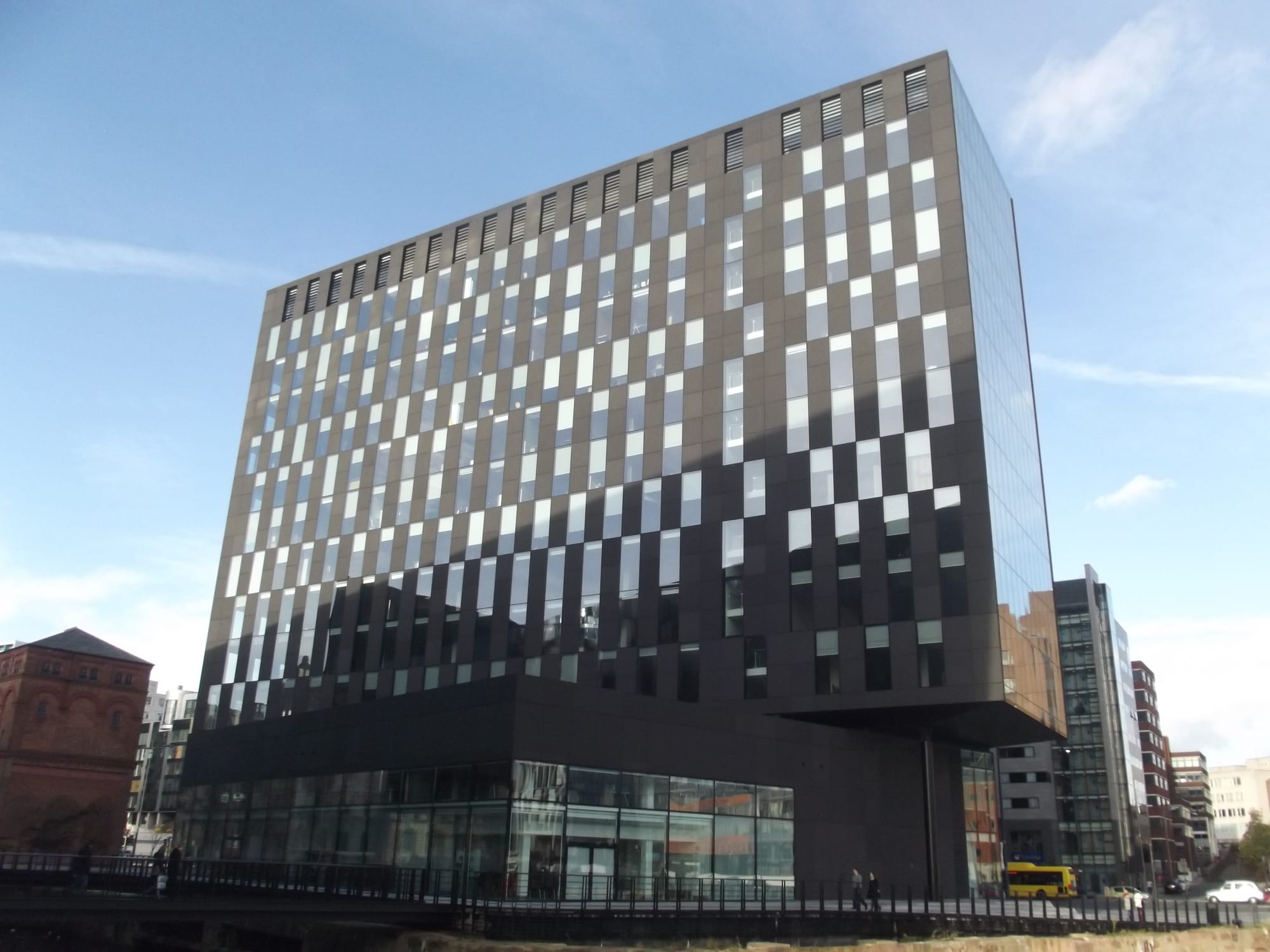
mann Island (image: Mann Island Buildings - Liverpool under creative commons) That NESO report wasn’t a study of the Mersey barrage, so it doesn’t tell us whether this project would be good value for money. It does, though, raise questions about the proposed funding arrangements, particularly as the combined authority’s reports don’t tell us what customers might eventually be charged.
What do we get for the money?
The project has been promoted as capable of generating up to 1GW of electricity, enough to power hundreds-of-thousands of homes. Interestingly, the six options examined for the Bromborough to Otterspool location all have a maximum generating capacity of 700MW, smaller than the headline figures state. It doesn’t necessarily mean the original ambition has been abandoned, but it’s something we’re hoping Friday’s meeting can clarify.
There’s also the timetable, which keeps slipping. Back in 2024, the combined authority was working towards making a planning application in 2026, with construction potentially beginning in 2028. The latest report puts the application date in late 2028 or early 2029, with a final investment decision expected around 2030, assuming the money needed to keep developing the project can be found.
There’s still no final design, either. Consultants have examined different ways of allowing ships through, while more work is needed to understand what it might mean for the estuary’s wildlife and habitats. The Cheshire Wildlife Trust is targeting the NESO asking for an independent commission on the plans, saying it wants us all to understand the right role for tidal energy in Merseyside's future.
Friday’s meeting won’t give the go-ahead for construction – that’s a long way off. Members will be asked to endorse the preferred location and financing approach so work on the plans can continue. We’ll bring you any key updates from the meeting.
The meeting of the Combined Authority will be held in Authority chamber at No. 1 Mann Island on Friday 6th November at 1pm. You can also watch online, more details here
That ‘optimism bias’
We came across another spot of ‘optimism bias’ while rooting through the papers for Thursday’s Sefton Council cabinet meeting. The phrase appeared in its latest financial report, which warns that an ambitious programme of building and improvement projects might not progress as quickly as planned.
Sefton is forecasting capital expenditure of £118m this financial year on projects including Southport’s Marine Lake Events Centre, Bootle Strand and Southport Pier, along with £5.1m on expanding Summerhill Primary School. However, the council doesn't seem to have been dishing out the dosh quickly enough. It had spent less than £22m at the end of September, £4m below what was expected by that point.
The report highlights that, from previous experience, there may be ‘potential optimism bias’ in the timetable, with some spending likely to slip into next year. In other words, the council might have jumped the gun on how quickly it could get things done, a great shock to us all.
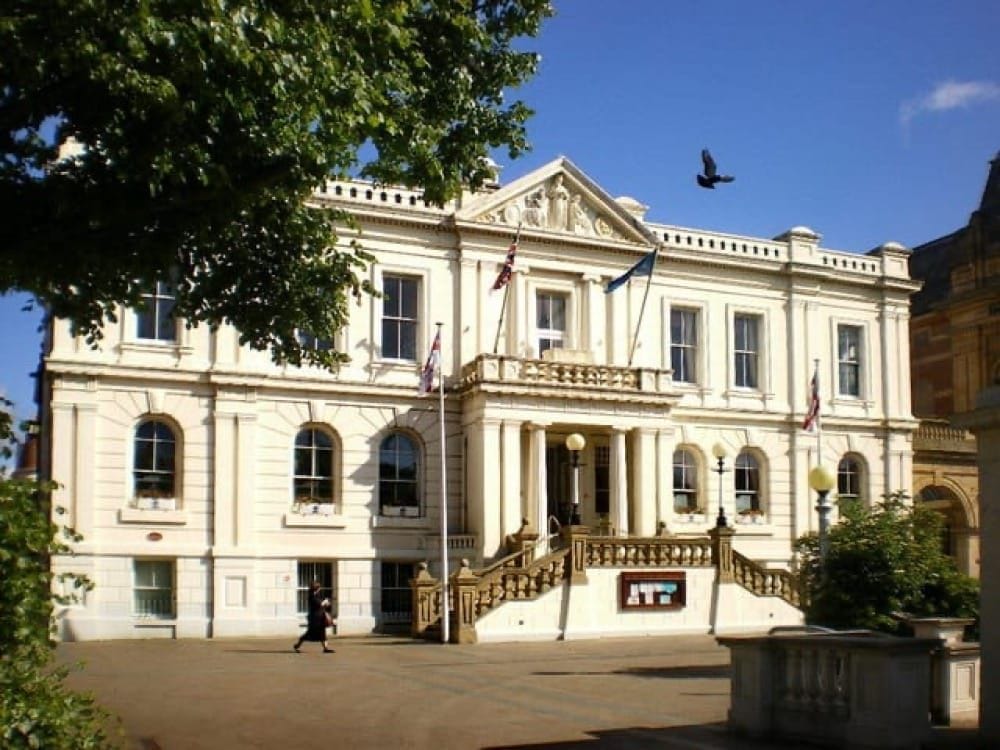
There’s some rather-more-shocking news in the same report. Sefton is now forecasting a near-£10m overspend this financial year, which was expected to be just £2m in its previous monthly forecast, and despite measures to bring spending under control by making savings and other provisions.
Children’s social care spending is by far the council's largest pressure, with a forecast overspend of £12m, including nearly £9m on accommodation and support packages, and another £2m on staff. Adult social care is expected to see an overspend of nearly £5m, while education travel support is £2.2m over budget.
Interestingly, the report says the council had expected costs to fall in children’s social care, so some were not included in this year’s budget. Officers are now examining whether this will need to be reflected in future budgets. Cabinet members will consider the figures on Thursday, alongside plans to sell council-owned land, develop affordable housing and make road investments.
We couldn’t help but wonder if the optimism bias had spread beyond development timetables, so we'll be keeping an eye on all of this. You can too, it’s at Southport town hall. More details here.
HMOs again
We’re sorry, but we’re talking HMOs again, because it seems everybody is these days. While Liverpool’s political parties have been arguing over controls, St Helens' Reform-led administration has been pursuing its own approach, with plans to introduce 'Article 4' restrictions on conversions of houses from 1 December.
The council’s position has shifted a fair bit since January, when the previous Labour administration adopted local planning guidance that recognised the role HMOs play in meeting housing needs. They said at the time there wasn’t enough evidence to justify Article 4 restrictions in particular areas. Just six months later, the new Reform administration is proposing borough-wide measures.
Article 4 doesn’t ban HMOs, it gives councils more control over where they can be created. Larger HMOs already have to get planning permission, but councils can use an Article 4 Direction to remove permitted development rights for converting houses into smaller HMOs, meaning they also have to go through the planning process.

National policy says restrictions must be supported by ‘robust evidence’ of growth in concentration and resulting impacts, and should be limited to the ‘smallest area’ necessary to mitigate harm. The secretary of state also has power to intervene where restrictions aren’t justified. So what changed in St Helens between January and July?
Well, of course there was a change in leadership, with Labour losing control of the council and Reform taking control. That means St Helens now has a flag policy, and its leader has waged war on ‘subversive woke movements', as well as making a series of controversial comments and directions.
In terms of HMOs in the borough, the council’s own figures suggest the known number hasn’t changed much recently. In 2024/25, the council recorded 223, and the evidence supporting the new restrictions in March 2026 identified 227. That’s a difference of just four, although the figures aren’t necessarily compiled in the same way. They also don’t take into account any unknown ones, which, as the name suggests, aren’t straightforward to quantify.
The council argues that a borough-wide approach is needed because limited restrictions will simply push new HMOs into neighbouring communities. If you’ve been following Liverpool’s debate, you’ll have noticed councils across Merseyside taking quite different approaches, but all now leading in the same direction.
All roads lead to Article 4
Liverpool first introduced Article 4 around Smithdown in 2018, largely in response to the impact student HMOs were having on communities there. This was extended to more areas in 2021, and the council is now introducing immediate restrictions in five more areas, with the rest of the city due to follow next October.
Sefton introduced controls gradually before extending them borough-wide last year, while Knowsley has recently approved immediate borough-wide restrictions, with consultation and a decision on whether to confirm them to follow. The immediate direction could expire after six months if not confirmed.
Halton took a different approach, although it also changed tack quite quickly. In March 2025, it adopted planning guidance saying Article 4 restrictions weren’t necessary, but within six months it was introducing immediate controls in parts of 11 wards, citing new evidence of growing concentrations of HMOs. Wirral, meanwhile, has just asked its chief planner to investigate the possibility of introducing some restrictions here, but there’s no firm plan in place yet.
There’s also the different approaches on immediate and non-immediate directions to consider. Liverpool has introduced a non-immediate one, effectively giving developers 12 months' notice of the rule change. Sefton, which already has a borough-wide one in place, moved in stages like Liverpool is doing, although the final borough-wide step was immediate, unlike what Liverpool is doing.
Immediate Article 4 Directions, as the name suggests, can take effect immediately. They can also be agreed before consultation is completed, although councils must later confirm them so they remain in force, as in Knowsley. St Helens is consulting first, so it’s non immediate, with a proposed start date of 1 December, 12 days after the consultation closes.
Sefton and Liverpool took different positions on the financial risk of having to pay compensation to developers if they were in the middle of converting and then had to go to planning. St Helens’ report on introducing the controls suggests these risks could be mitigated by a consultation period. Knowsley, meanwhile, assessed likely costs would be ‘minimal’ and could come from existing budgets. The proof of each of the approaches will be in the pudding.
Residents and landlords in St Helens have until 19 November to comment. More details here.