A fortnight of political squabbling: is there any need for it?
Liverpool’s row over HMO controls heads to the town hall.


Liverpool’s political parties have spent much of the past fortnight arguing on social media over plans to introduce tighter controls on houses in multiple occupation (HMOs), despite all of them appearing to agree more needs to be done to manage the impact conversions of family homes into shared accommodation are having on the city’s communities.
On Thursday, a specially convened meeting of Liverpool Council’s culture and economy scrutiny committee will consider a Liberal Democrat call-in of a recent cabinet decision to introduce immediate Article 4 controls in five more areas, with the rest of the city to follow in October 2027.
The decision has prompted a flurry of social media posts, with accusations and counter-accusations flying about all over the show. Labour councillor Nick Small has accused the Lib Dems of ‘grandstanding’, warning that communities will be left ‘helpless at the hands of rogue developers’.

Liverpool Community Independents leader Cllr Alan Gibbons called the move ‘party political posturing’, suggesting the Lib Dems want controls extended to ‘the better-off wards where they have councillors, even though they have fewer HMOs there’. Liberal Party’s Steve Radford has also raised his concerns and Liverpool Green leader Cllr Tom Crone told the Monitor of his ‘disappointment’ about the delay for areas, such as his own ward, on the verge of getting the controls.
Lib Dem leader Cllr Carl Cashman recently spoke to the Monitor about the row, rejecting warnings made by Labour about the consequences of delaying the implementation of Article 4 while it heads to scrutiny, arguing it‘s unlikely for developers to swoop in across the city in a matter of weeks.
He also described some of the recent political exchanges on social media as ‘the lowest form of politics,’ saying the Lib Dems are just trying to ‘speak truth to power’ in a bid to protect all areas of the city from the scourge of excessive HMOs.
How did we get here? Are any of them right? And, really, is there any need for it?
What is Article 4 anyway?
Under national planning rules, a landlord can convert a house into accommodation for between three and six unrelated people without planning permission. The Tory-Lib Dem coalition introduced this permitted development right in October 2010, reversing an earlier Labour government decision to require permission.
An Article 4 Direction removes that automatic right in a specified area. It doesn’t ban HMOs, but allows councils to consider the loss of family housing, existing concentrations of shared properties and the impact on neighbours through the planning process before deciding whether a conversion should go ahead.
Liverpool introduced Article 4 controls around Smithdown Road in 2018 and across a larger inner-city area in 2021. Its cabinet approved further restrictions on 13 October, at a meeting which became something of a spectacle, with a carousel of councillors lining up to describe problems in their wards.
Council leader Liam Robinson called the issue the city’s ‘main planning priority’, although Article 4 was only one of a ‘number of tools in the box’, alongside enforcement and licensing. Housing cabinet member Hetty Wood stressed the need for ‘robust legal evidence’, explaining that some neighbourhoods, including Fazakerley East, had ‘not quite’ met the threshold for immediate restrictions.
Councillors also spoke of HMOs providing accommodation people need. East recalled spending time in one as a child because it was somewhere ‘where I could see my dad’, saying the plans are not intended to stop HMOs completely.
A council consultation over increasing Article 4 controls carried out ahead of the decision attracted 1,070 responses, with just over 80% supporting wider measures. The cabinet decision has since been put on hold following the call-in.
Boundary issues
National planning policy requires Article 4 directions to be supported by ‘robust evidence’ and to cover ‘the smallest area required to mitigate the evidenced harm’.
A study commissioned from planning consultants Iceni Projects, included in tomorrow’s scrutiny reports, estimates Liverpool has between 7,000 and 10,800 HMOs, representing around 3% to 4.6% of its housing stock.
According to the study, small HMO numbers increased by 15% inside existing Article 4 areas over three years, compared with 57% outside them. The consultants argue that this demonstrates conversions being displaced beyond existing boundaries.
They identify concentrations around St Michaels, Sefton Park and the corridor from Kirkdale through Walton to Orrell Park. However, comparing Liverpool with Preston, where two rural wards have no recorded HMOs, the report points out that Liverpool has HMOs ‘present in all wards (if student exemptions are included) and growing across almost all wards’.
The consultants consider this consistent with eventual citywide controls, partly to ‘avoid further displacement’, but Liverpool’s officers recommend immediate restrictions only in five areas where they consider the evidence sufficiently strong.
Liverpool Green leader Tom Crone told the Monitor that the Greens had campaigned for wider controls since October 2023 and feared landlords would move into nearby unrestricted streets. ‘What could have been done is predicting the next phase and putting a buffer zone,’ he said.

Cashman and his fellow Lib Dems want immediate citywide controls. Drawing on his experience as a mortgage broker, he said developers would simply move into unrestricted neighbourhoods: ‘I’m not saying I think it might happen, I’m telling you I know it will happen.’
The Iceni study examines similar concerns raised by Salford and other councils, although people consulted during its research disagreed about whether investment might move to ‘outer Liverpool neighbourhoods’ or ‘neighbouring districts and areas outside the city’. The report acknowledges that ‘the evidence does not establish where displacement would occur or its likely scale’.
What are the other councils doing?
Sefton introduced controls in parts of Bootle, Litherland, Seaforth, Waterloo and Southport in 2018, extending them to Aintree and then the remaining borough in 2025.
Its evidence estimated around 500 HMOs and identified ‘some emerging evidence that HMOs are being displaced to areas outside the existing article 4 directions areas’.
Sefton’s final two directions took immediate effect. The last came into force in October 2025, although it wasn’t formally confirmed until February 2026.
Its October 2025 cabinet report acknowledged the potential compensation liability, but concluded that ‘the risk of this is fairly small and is offset by the control that the Council will have in managing HMO proposals’. The council chose not to wait 12 months, arguing more properties could be converted in the meantime.
Knowsley’s cabinet also approved immediate borough-wide controls on 14 October, identifying just 151 known HMOs across all 15 wards. Council papers reported complaints increasing from four in 2020 to 17 in 2025, with another 17 recorded so far this year, adding that restricting conversions in selected neighbourhoods could just encourage landlords to move elsewhere.
St Helens is pursuing borough-wide restrictions too, with 227 known HMOs across 17 of its 18 wards, according to Liverpool’s study. Its council has cited displacement concerns, including possible movement from Liverpool and Wigan. A consultation runs until 19 November, with controls proposed to take effect on 1 December, subject to approval.
Wirral councillors, meanwhile, voted unanimously this month to ask the chief planner to examine borough-wide controls, although none have yet been introduced.
What about the financial risk?
An immediate Article 4 Direction doesn’t automatically entitle landlords to compensation. Government planning guidance says councils can become liable if they subsequently refuse permission for a conversion previously allowed without an application, or impose more restrictive conditions. Claims are limited to ‘abortive expenditure or other loss or damage directly attributable to the withdrawal of permitted development rights’, which could include money spent preparing plans for a conversion that can no longer go ahead.
The risk generally concerns applications made within the first 12 months after the direction takes effect. Giving at least 12 months’ advance notice can avoid that liability, which appears to sit at the nub of Liverpool’s decision to delay the borough-wide direction.
The Liberal Democrats’ call-in, submitted by Cashman and councillors Kris Brown, Josie Mullen and Richard Kemp, points to five local authorities identified in the Iceni study as having introduced immediate directions despite the financial risk: Sefton, Chorley, South Ribble, Halton and Bolton.

The study quotes Chorley Council’s assessment that ‘based upon the experiences of other Local Authorities who have taken similar action, it is considered unlikely that there will be many compensation claims’.
Liverpool’s cabinet report is more cautious, stating that ‘the number, timing and value of any compensation claims cannot be estimated reliably at this stage’. No specific financial provision has been made for them.
Cashman also disputes warnings about the consequences of the call-in delay, telling the Monitor that purchasing and converting a house generally takes months, with conveyancing alone often lasting around three months.
However, not every potential conversion involves a property yet to be bought, and some residents are already watching work proceed on neighbouring houses. The Monitor has been speaking to one resident in St Michaels over recent months who has been eagerly awaiting the new controls, hoping they might prevent a conversion next door. Her response to news of the call-in was simply: ‘Thanks Lib Dems’.
An immediate Article 4 Direction would not stop a conversion already under way, the council’s reports don’t establish how many additional conversions might take place during the delay either - but, while Liverpool weighs the potential cost of acting immediately, it is worth remembering it’s of course not just the politicians concerned about the consequences of waiting.
Is there any need for the row or the call in?
For all the accusations of grandstanding and political posturing, there is a genuine disagreement here about how Liverpool should use its planning powers, and the evidence perhaps deserves more attention than the social media squabbling suggests.
The council’s own consultants identify HMOs in every ward, there is substantial growth outside existing Article 4 boundaries and what they state as evidence of displacement. Other councils have taken a different approach, accepting the potential compensation risk of introducing immediate restrictions across their boroughs, instead of limiting them to selected areas.
It doesn’t mean Liverpool should follow suit, of course, but it does raise reasonable questions about why it hasn’t. Will the proposed boundaries simply push conversions into neighbouring streets? Does the financial risk really justify waiting another year? Perhaps those are questions worth putting to the council.
‘We’re putting our head above the parapet,’ Cashman told the Monitor, adding that the Lib Dems were ‘speaking truth to power’.
‘So much has been brushed under the carpet over the years, it’s important for people to have their say,’ he said.
For the resident we’ve been speaking to, who is waiting for controls that could stop further disruption on her street, the latest stage represents just another delay. ‘We were so close,’ she said. ‘Now we don’t know what’s going to happen.’
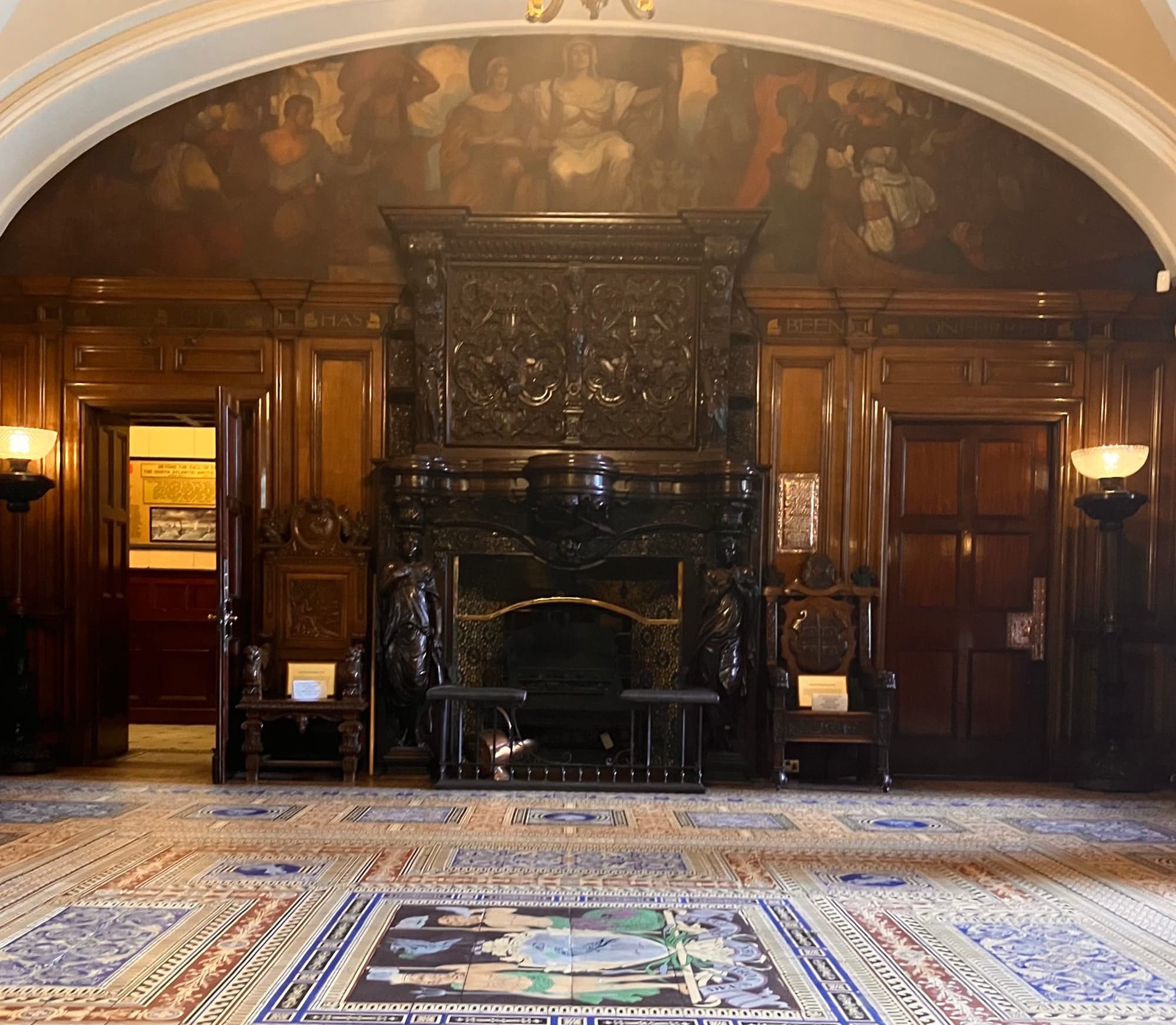
That will depend on the committee tomorrow. Its options are to allow the original decision to proceed, refer it back to cabinet for reconsideration or, on specified grounds, refer it to full council. Labour holds eight of the committee’s 11 seats, so it’s hardly an uphill battle for the administration to get its preferred decision through.
Here at the Monitor we’ll be keeping an eye on what gets said and decided tomorrow, and if you’re not yet sick of hearing about Article 4, we’ll let you know how it all went down.
Liverpool’s culture and economy scrutiny committee meets tomorrow, Thursday 29 October, at 5pm at Liverpool Town Hall. The meeting is open to the public, and you can also watch it online here.