Sorry, not a single listicle about Southport’s candy floss shops in sight
What stories have we got for you about Merseyside this week?


Evening Mersey Monitoronis,
If you have arrived here for your Sunday newsletter already disappointed because your dreams of a top ten coastal candy floss lowdown listicle will not be coming to fruition, we hope you can forgive us.
While we might occasionally be partial to a bit of heated sugar doused in pink food colouring (honestly, after teenage years spent spinning the stuff in a tiny cubby hole at the back of a shop, not really), it hardly feels like the weather, amidst all this wind and rain, for traipsing around taste-testing candy floss at the seaside for a weekend fluff piece.
We’re also fairly confident you’d much rather hear about what’s going on across Merseyside instead. As always, there’s plenty to talk about, but we’ll try not to keep you too long.
HMO to and fro
One of the stories we’ve been working on this week concerns Article 4, something we mentioned in last Sunday’s newsletter too. Many of our local politicians have been chatting, and posting, about it repeatedly after a row broke out over proposed new controls on houses in multiple occupation (HMOs) in Liverpool, following a decision by the local Lib Dems to call in the plans for scrutiny.

Article 4 is a planning tool that removes permitted development rights, in this case requiring conversions of ordinary houses into smaller HMOs to go through formal planning procedures.
Liverpool's cabinet approved extending existing Article 4 controls to several more areas of the city, with the council arguing that its evidence justified immediate restrictions in some neighbourhoods but not others. That has raised questions about why places such as Aigburth and Fazakerley East have been left out when neighbouring areas are included.
The cabinet also approved plans for a citywide direction, intended to come into force in October 2027. However, the Liberal Democrats have called in the cabinet's decision for further scrutiny, saying the measures don’t go far enough fast enough. The call-in temporarily prevents the Article 4 direction agreed at cabinet from being implemented, prompting accusations and counter-accusations across the city's political spectrum.
Liverpool isn’t alone in considering Article 4 at the moment. Knowsley has just approved borough-wide controls, Sefton already has them, and St Helens is consulting on its own borough-wide proposals.
We’ve been tracking the different approaches in play across Merseyside and will have more on some of the issues behind the row before it all heads to a specially convened meeting of the culture, economy and skills scrutiny committee on Thursday.
The Monitor has really grown arms and legs recently, with some excellent journalists and editors joining us to help keep the stories coming. None of our articles, thankfully, are written by the cats.
We were really pleased this week to see one of our stories appearing on the BBC the day after we published our piece. That was about asbestos-backed panels needing removal from the Wallasey Tunnel. If you missed it, you can read our report here:
 Lisa Rand

It’s the bins’ fault
That story was all the fault of Wirral’s bins. In last Sunday’s newsletter, we reported on a consultation about moving to three-weekly bin collections and explained how the proposal hadn’t exactly dropped out of thin air, although it may well have felt that way to residents.
As well as being mentioned at council meetings, the possibility of three-weekly collections appeared in public procurement documents for the borough’s new waste contract back in 2025.
That took us for a nose through the procurement portals, where we spotted the tunnel story. A salutary reminder of why it’s always worth rummaging about in publicly accessible information, because you never know what you’ll find. Here at the Monitor, this kind of rummaging is very much our thing.
A new home
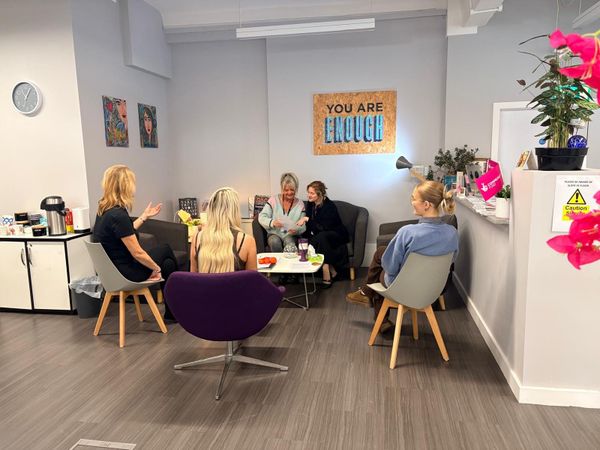
We’re not all doom and gloom, though, and it was lovely to see Patricia’s piece last week about the Women’s Health Information and Support Centre (WHISC), which has finally found a permanent home after leaving its Bold Street premises of more than three decades following a significant rent rise.
The building WHISC once occupied now sells vapes and other items, while the charity itself has popped down the hill onto Church Street, above Lloyds Bank.
You can read Patricia’s story here:
 Patricia Shaw
Right, moving swiftly on to the main business at hand. The weather‘s wild, the clocks have gone back, the nights are drawing in. It‘s time to get cosy, grab yourself a cuppa (or perhaps a bag of candy floss?) and find out what our local politicians are going on about this week.
New council homes for Wirral
Wirral Council is changing its approach to tackling the cost of temporary accommodation, with plans to buy 38 newly built homes in Bromborough for more than £11 million.
Back in February, councillors approved £5.3 million to buy 30 properties for temporary accommodation. But an opportunity has now arisen to acquire 38 brand-new homes for permanent social rent instead, according to a report discussed by councillors last week.
The properties are being built at Merse, a 249-home development on the former Ministry of Defence site off Old Hall Road in Bromborough. Wirral Council previously owned the land, which had stood vacant for more than two decades before being sold to Northstone, a housebuilder belonging to the Peel Group.
The homes were originally earmarked for housing association Magenta Living, but under the proposed arrangement the council would buy them instead, while Magenta would acquire another 38 properties in a later phase.
The purchase would be supported by £4.2 million from Homes England, alongside existing council funding and another £1.7 million from ring-fenced affordable housing contributions, capital receipts and grants.

Priority would go to households currently living in bed and breakfast accommodation, followed by those in other temporary accommodation and households at risk of needing emergency housing.
The council’s report says the proposal builds on work already underway to ‘eliminate the use of bed and breakfast accommodation for families unless it is absolutely necessary’, for example on safety grounds.
According to the report, the purchase could reduce temporary accommodation costs and Housing Benefit subsidy losses by between £260,000 and £1.1 million, depending on which households move in. The homes would also generate around £282,000 a year in gross rental income, before management costs of up to £95k.
The council already owns, or is in the process of acquiring, around 70 properties. The report says the Bromborough purchase could ‘establish a first phase from which the Council could develop a wider programme of Council-owned social housing’.
The new homes, expected to be completed in phases between October and March, will have solar panels and air-source heat pumps.
The proposals went before Wirral’s Policy and Resources Committee on Wednesday 21st October, chaired by Council leader and Labour Cllr Paula Basnett.
Green councillor Ruth Molyneux welcomed the plans as a ‘good news story’, describing the homes as ‘absolutely beautiful’, and asking when residents might move in.
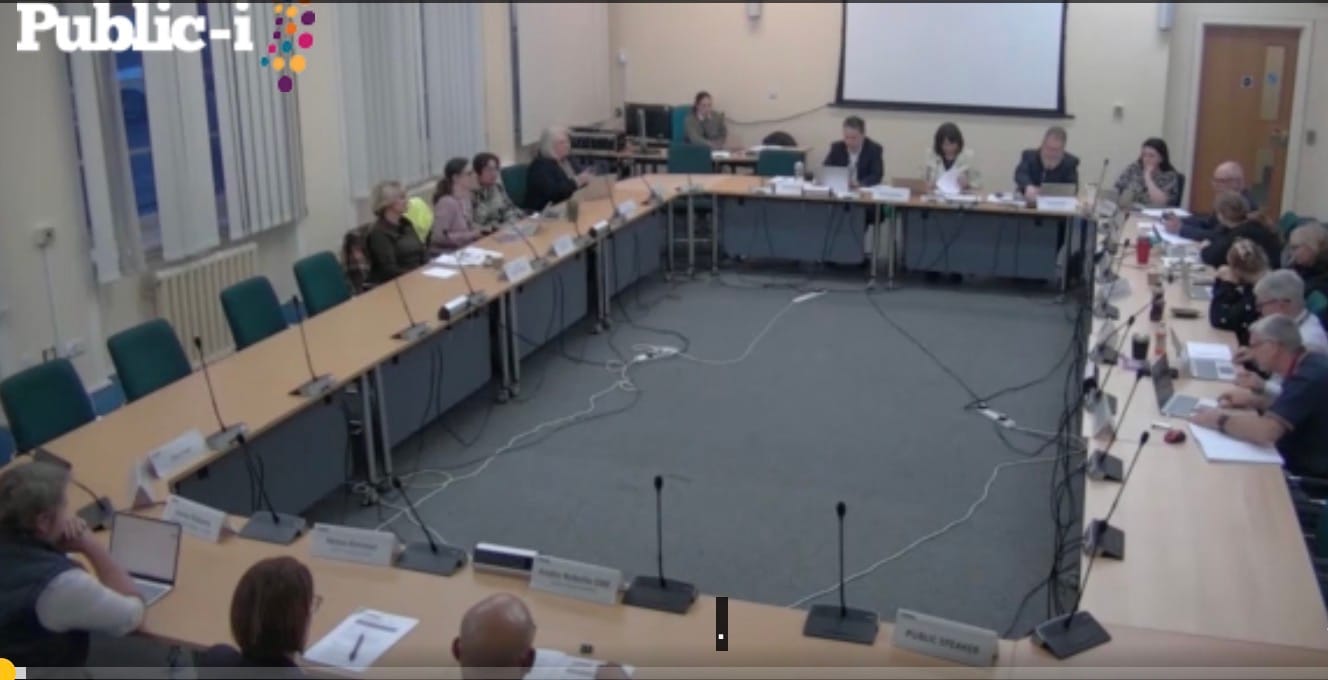
Assistant director of housing Lisa Newman said the council was still going through legal processes and couldn’t yet confirm dates, but hoped the first families could move in ‘this side of Christmas’.
Conservative group leader Cllr Simon Mountney questioned whether the purchase represented ‘value for money’. Newman said that valuations varied depending on property size but were ‘in line with the market’.
Who gets to decide planning applications?
There are some significant changes coming to the way planning applications are decided very soon, and not everyone is happy about them.
From Saturday 31 October, new national rules will mean fewer applications being decided by elected councillors, with more decisions left to council planning officers.
Most applications are already dealt with by officers, but until now councillors have also been able to request that particular applications be brought before a planning committee. In some councils, a certain number of objections from residents can trigger a committee hearing too.
The new rules will remove those arrangements so that smaller developments, including schemes for up to nine homes on sites smaller than half a hectare, will generally be decided by officers. Other applications will only reach committee if a senior planning officer and the committee chair agree they meet the criteria for referral.
The government says the changes will make the planning system more efficient and consistent, allowing councillors to concentrate on significant developments, but the changed have also led to questions about how much influence local people and their elected representatives should have over decisions affecting their communities. The issue sparked a bit of heated exchange at Wirral’s full council meeting earlier this month.
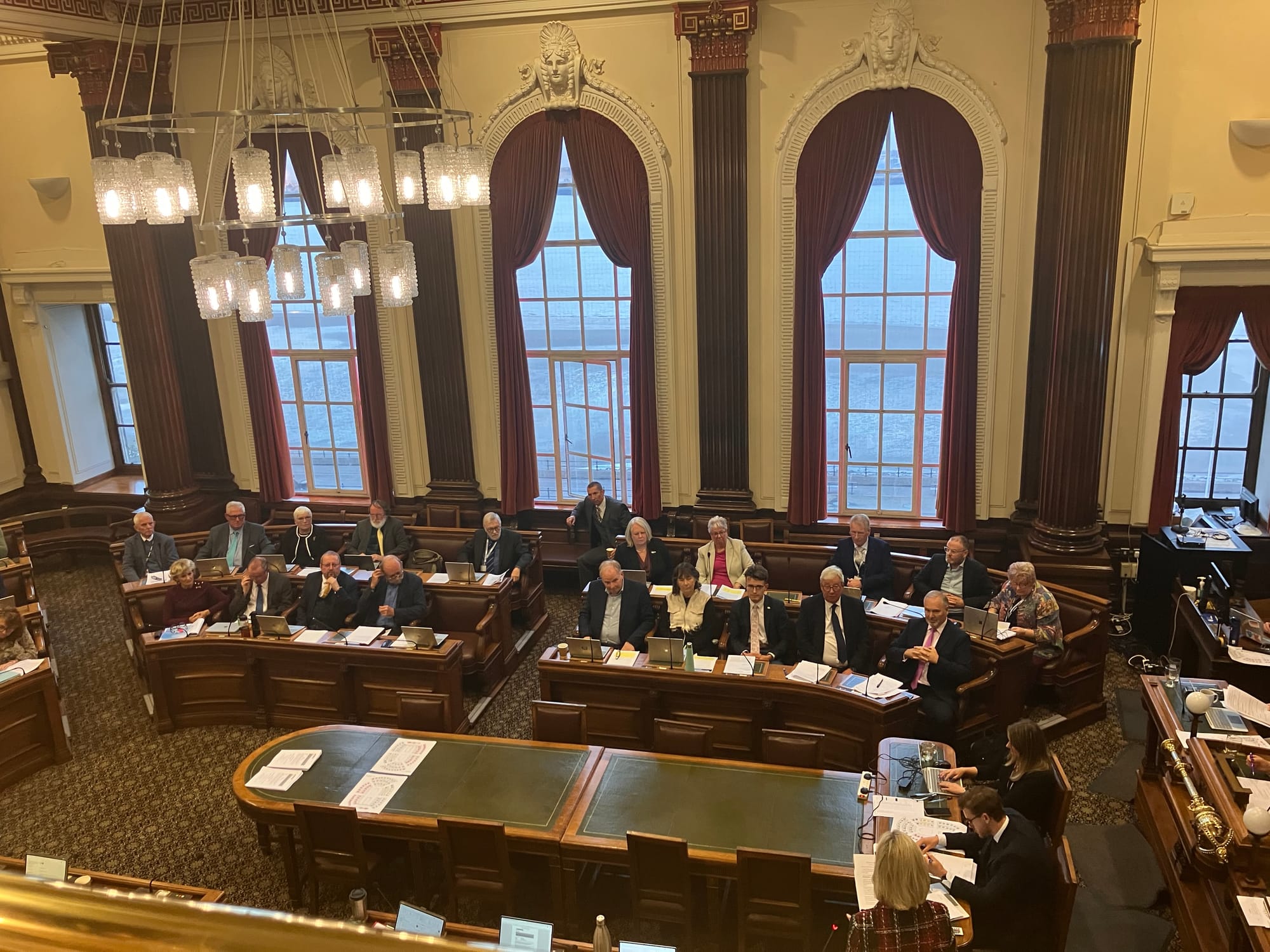
Conservative councillors tried unsuccessfully to delay changes to Wirral’s constitution, prompting Liberal Democrat councillor Stuart Kelly to warn that doing so could leave the council unable to deal lawfully with applications and potentially threaten green belt protections.
Conservative councillor Jeff Green accused him of ‘catastrophising’, insisting his party would never knowingly put the green belt at risk and arguing that the government’s changes would reduce residents’ and councillors’ influence over planning decisions.
The Conservative amendment was defeated, although the constitutional changes were subsequently approved unanimously. You can read more about that meeting in our earlier report.
An extraordinary meeting of Wirral’s full council has also been called for this Wednesday evening, just three days before the new rules come into force.
Councillors will consider a motion calling for more local flexibility, particularly where developments attract significant community concern. It also calls for residents to be informed about the changes and for the arrangements to be reviewed after six months.
Of course, planning decisions aren’t a popularity contest. Councils must consider applications according to planning law and policy, rather than the number of people who support or oppose them. Whether elected councillors should have a greater role in scrutinising decisions affecting their communities is a question that goes well beyond Wirral.
Because fewer applications will now be considered at public committee meetings, we’ll soon be introducing a planning round-up to our regular coverage, bringing you details of applications and decisions that might otherwise pass beneath the radar.
Could a controversial Sefton HMO plan go ahead after all?
Speaking of planning decisions, there’s an interesting situation brewing in Sefton, where proposals to turn a house at 2 Litherland Park into a nine-person HMO were rejected by councillors last month, despite planning officers recommending approval.
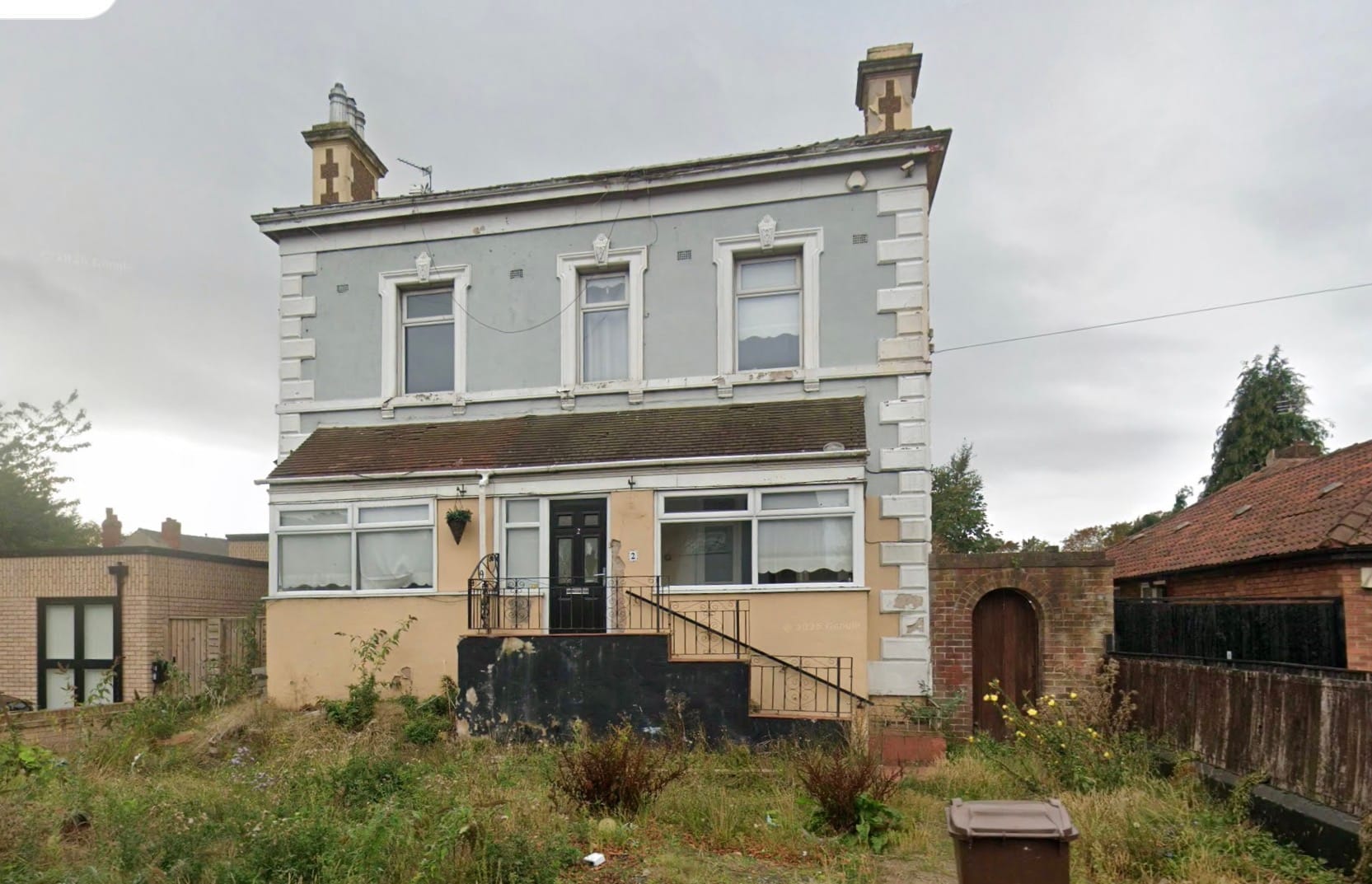
The application attracted considerable opposition, including a petition with more than 2,000 signatures and 132 letters of objection. Residents raised concerns about parking, noise, neighbouring properties and the character of the area, and we reported live from the planning committee meeting in September.
Sefton’s planning committee ultimately refused permission, concluding that the development would cause significant harm to neighbours’ living conditions and the area’s character.
But, as we reported at the time, a refusal isn’t necessarily the end of the road, and it‘s certainly shaping up not to be in this case. Applicants can appeal to the Planning Inspectorate, which has the power to overturn a council’s decision, and that’s exactly what the developer has done.
It’s an interesting example in light of the national changes: an application recommended for approval by officers but refused by elected councillors following local objections. Whether that decision stands is now in the hands of the Planning Inspectorate. We’ll bring you an update when we hear what they decide.
A quieter week ahead
It’s a relatively quiet week for council meetings in Sefton, St Helens and Knowsley, although there are still a few things going on that residents might want to know about.
In St Helens, the council is consulting on plans to take on greater powers to enforce moving traffic offences, initially aimed at three locations in the borough. This would allow the council to enforce existing restrictions instead of relying on the police. Residents have until 1 December to have their say.
Meanwhile, Knowsley Council is reviewing its Corporate Enforcement Policy. This sets out how the local authority deals with breaches of regulations and the action officers can take when businesses or individuals fail to comply. The consultation closes on 20 November, with details available here.
In Sefton, although there’s not much on the council calendar this week either, the dispute over the future of Southport’s Botanic Gardens aviary continues. Campaigners have issued a legal claim challenging the council’s decision to close it, while Southport’s Liberal Democrats have launched a survey seeking residents’ views.
The council still intends to close the aviary by March 2027, citing animal welfare concerns, the condition of the buildings and financial considerations despite the huge opposition.
Aye AI…
And finally, a little footnote to our earlier mention of Liverpool’s Liberal Democrats.
Following some recent social media posts connected to the party that appeared to have led to a political newsletter being spectacularly mangled by AI, to much comic effect, the local political grouping is now perhaps better known in some circles as the Gomecletto party.
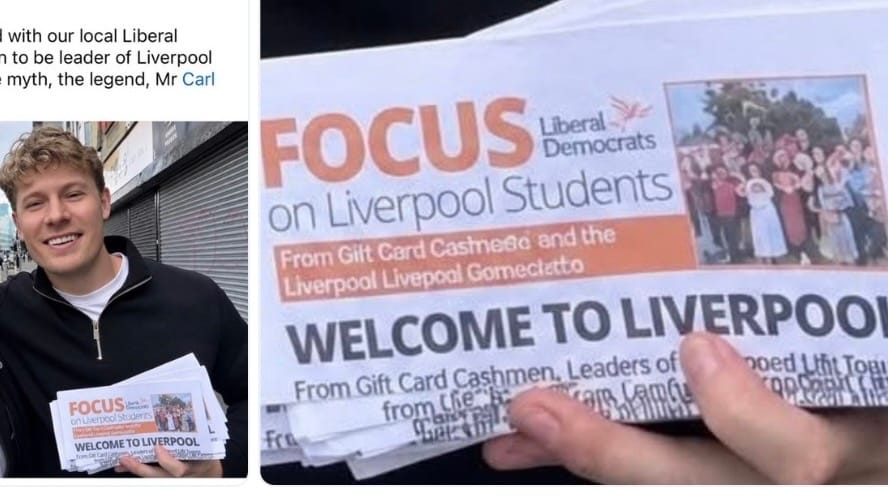
Funnily enough, when we asked a group of Liverpool Lib Dem supporters outside the last full council meeting what a gathering of Lib Dems might be known as, a ‘gathering of gomeclettos’ didn’t come up.
We must confess, we also spoke to local Lib Dem leader Cllr Carl Cashman last week about an unrelated matter and asked him, while we were at it, whether he had any suggestions for a family member’s birthday present.
Although he took it all in good humour and confirmed AI was behind the image, we’re sad to report we didn’t manage to come away with any of his now infamous gift cards for our trouble. Perhaps we should have stuck to the candy floss instead.