Tears of relief after a game of ‘political football’
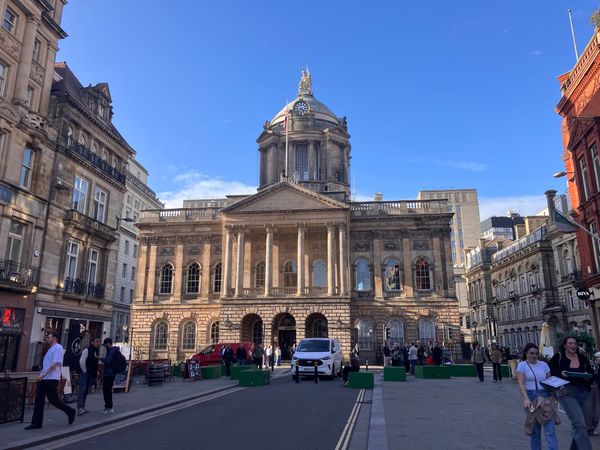
Shouts of ‘shame on you’, accusations of political games and a councillor accused of wielding a ‘wrecking ball’. The Monitor was at Liverpool Town Hall as a bitter row over HMO controls finally came to a slightly confusing end

‘I just sobbed at your message.’
That was the response of one Liverpool woman on Thursday evening, after learning that Liverpool Council’s plans to tighten controls on HMOs in her area would now go ahead.
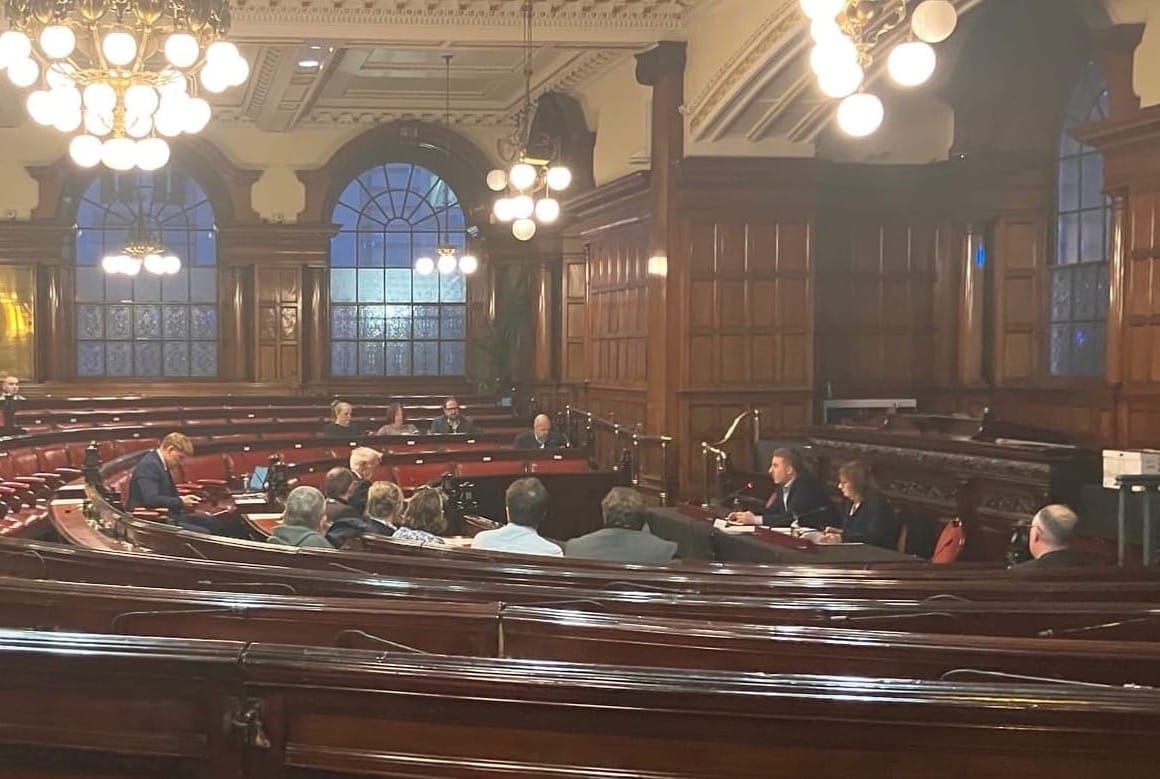
She was among residents anxiously awaiting the outcome of a challenge to the decision, called in for scrutiny by Liberal Democrat councillors. Others were inside Liverpool Town Hall, watching as councillors turn that same decision into a game of ‘political football’.
The Monitor was there too, to witness all the bickering. There were shouts of ‘shame on you’, accusations of ‘grandstanding’ and ‘politicking’, talk of a ‘wrecking ball’ and, at one point, ‘a load of crap’. One councillor accused the Lib Dems of turning the issue into a ‘political football’ that became an ‘own goal’ as Liberal Democrat leader Cllr Carl Cashman faced criticism from Labour, Community Independents, Liberal councillors and local residents alike.
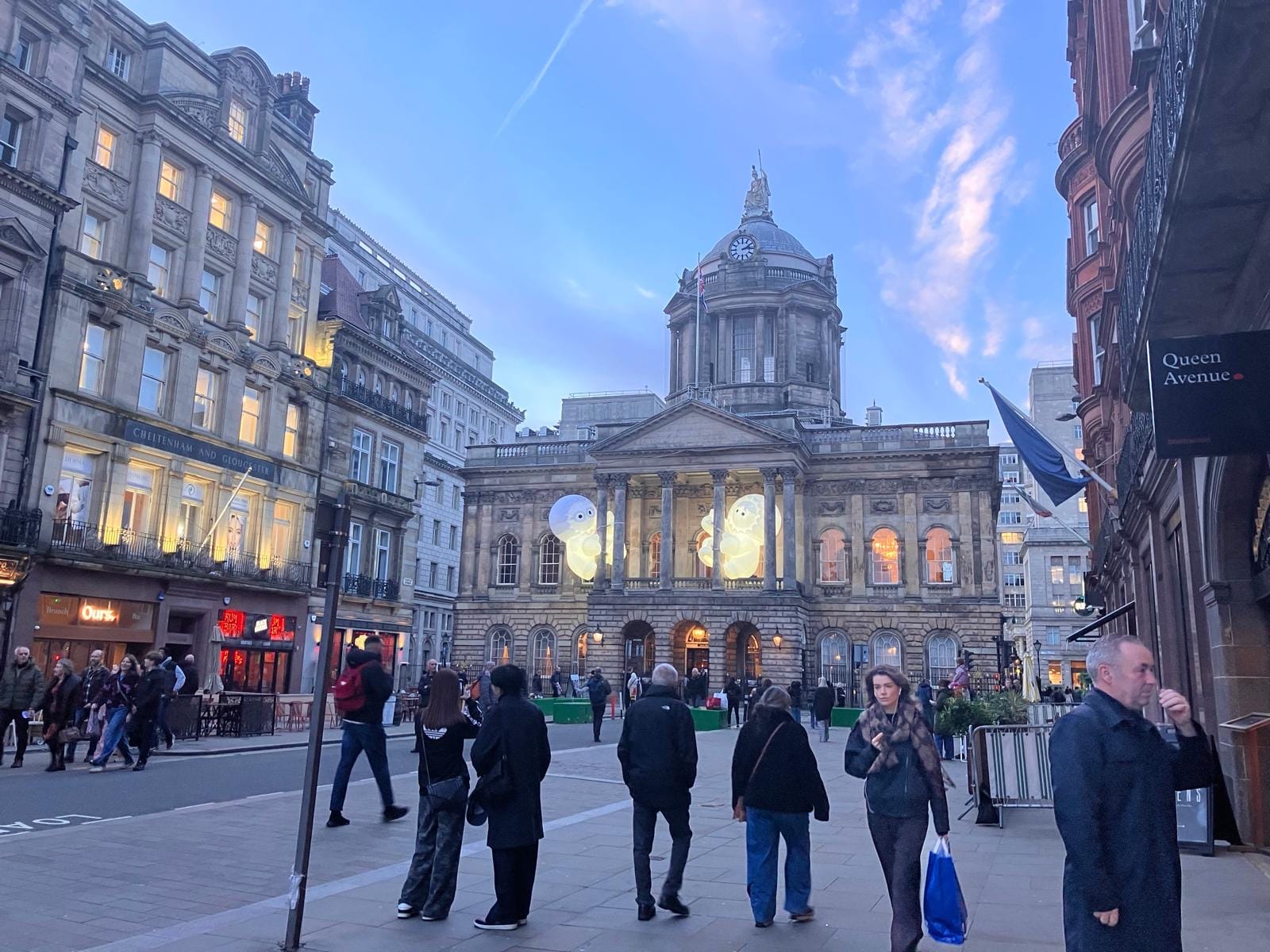
Two weeks earlier, the cabinet had decided to extend Article 4 restrictions into five more areas immediately, with citywide controls intended to follow next year. The council first introduced the restrictions around Smithdown Road in 2018, in response to the growth of student shared housing, before extending them across a larger area in 2021. Article 4 removes permitted development rights to convert family homes into small houses in multiple occupation (HMOs), meaning developers must then seek planning permission.
Labour argued a phased approach - more areas first then across the whole in a year - reflected the evidence gathered through consultation and work with consultants Iceni. Cllr Nick Small called it ‘the most comprehensive piece of work this city has ever done on HMOs’, saying the ‘evidential test has been met for the areas identified in the cabinet report’, but not for immediate citywide controls.
‘We want to future-proof policy and to provide certainty and consistency,’ he said, citing compensation risks, the need for a robust evidence base and the requirement to notify the secretary of state, who has the power to intervene.
Cashman and three other Lib Dem councillors, who were not present last night, called the decision in for scrutiny, arguing the compensation risks were being overblown, pointing to Iceni’s reference to compensation claims elsewhere being viewed as ‘unlikely’. With neighbouring authorities adopting borough-wide controls, Liverpool was becoming ‘an outlier in its own city region’, he said. Displacement into areas without restrictions was ‘inevitable’.
Two members of the public spoke. One described her ‘small cul-de-sac’ in County ward becoming a ‘nightmare’ as HMOs multiplied. She accused the Lib Dems of focusing on ‘the affluent areas’, something Cashman rejected, insisting he didn’t want other areas to get ‘swamped’.
‘Community is being lost, neighbourhoods are being broken,’ the resident said, urging councillors to ‘uphold’ the decision and ‘give us back our hope’, to loud applause from the public gallery. Another speaker, identifying himself as a developer, supported the 12-month delay over compensation concerns.
Much of the remaining argument focused on the Lib Dems’ decision to call the matter in at all.
Cllr Steve Radford called it ‘a wrecking ball filibuster’. Cllr Alan Gibbons accused the party of ‘pure abstraction’, criticising its lack of engagement with the earlier evidence-gathering process and its last-minute challenge, the day before the rules would have come into effect. ‘No more politicking, let’s get on with the deal,’ he said.
Cllr William Shortall described residents ‘fed up with continued delay’. ‘Every single one of us wants controls,’ he said, adding he ‘couldn’t believe it’ when the decision was called in.
Between the arguing, Lib Dem Cllr Larry Sidorczuk appeared determined to conduct an ordinary scrutiny meeting amidst all the heated words, lowering the temperature temporarily with a smattering of questions about the finer details. ‘There are issues I think need to be addressed,’ he said.
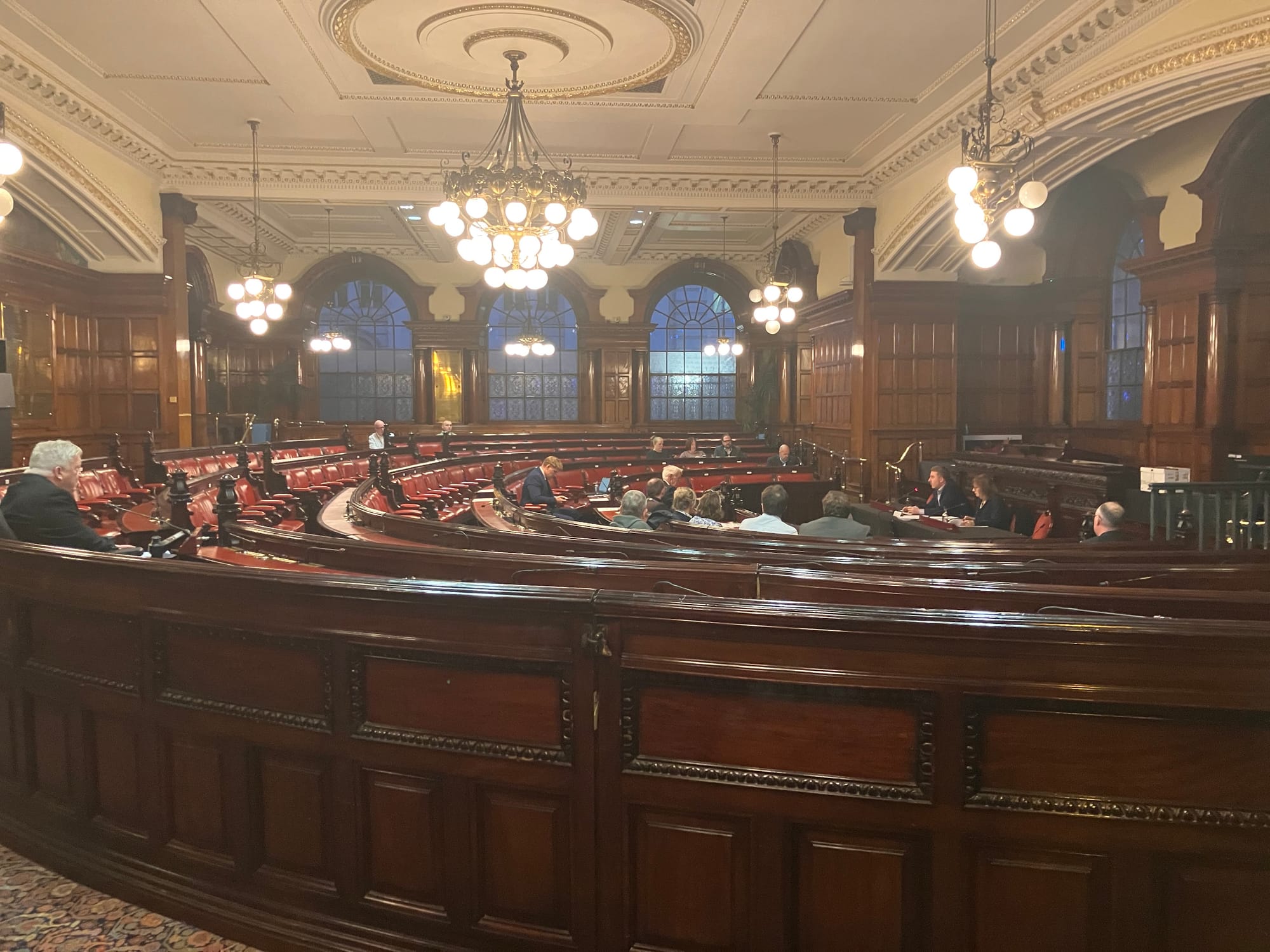
This scrutiny meeting was far from ordinary, however, involving Cllr Sam East at one point treating Small to a quick Article 4 quiz, apparently for the benefit of Lib Dems he suspected ‘didn’t know and called it in to make politics’. He also suggested Cashman should ‘cut the ribbon on every HMO that opens as a result’ of the 16-day delay, although offered no figures for how many that might be. The political rhetoric was off the charts.
Lib Dem Cllr Rob McAllister-Bell insisted the party’s concerns ‘were not about leafy suburbs’, saying they were standing up ‘for areas we don’t represent’. He defended the call-in: ‘It is not irresponsible to use the legitimate means of this select committee to challenge’ the decision, he said, ‘we have seen what happens if things are not challenged.’
Eventually, most of the committee voted to uphold the original decision, although exactly when it would take effect left some councillors momentarily scratching their heads.
The Monitor was equally puzzled, so we approached a local councillor just after the meeting ended who had apparently just sought advice himself. Would it go ahead immediately as the call-in period was now already over?
‘I think so,’ he said. ‘It should be tomorrow morning, I think.’
We left him pondering the procedural details and headed into the busy city centre evening air to message the woman, who had a HMO in the process of being converted next door.
After all the heated words spoken in the chamber last night, it was her simple reply that perhaps gave the strongest sense of what was at stake. For many, a period of anxiety and frustration is finally at an end - although, with Article 4 just moving the whole problem into the planning process rather than stopping conversions altogether, and the next phase still sitting a year away - Liverpool’s battle against excessive HMOs is far from over.