‘The impact could be catastrophic’: sounding the alarm at Sefton Arc

Mysterious websites, ‘financial leakage’, risks of ‘fraud’ - why are we only hearing about all this now?
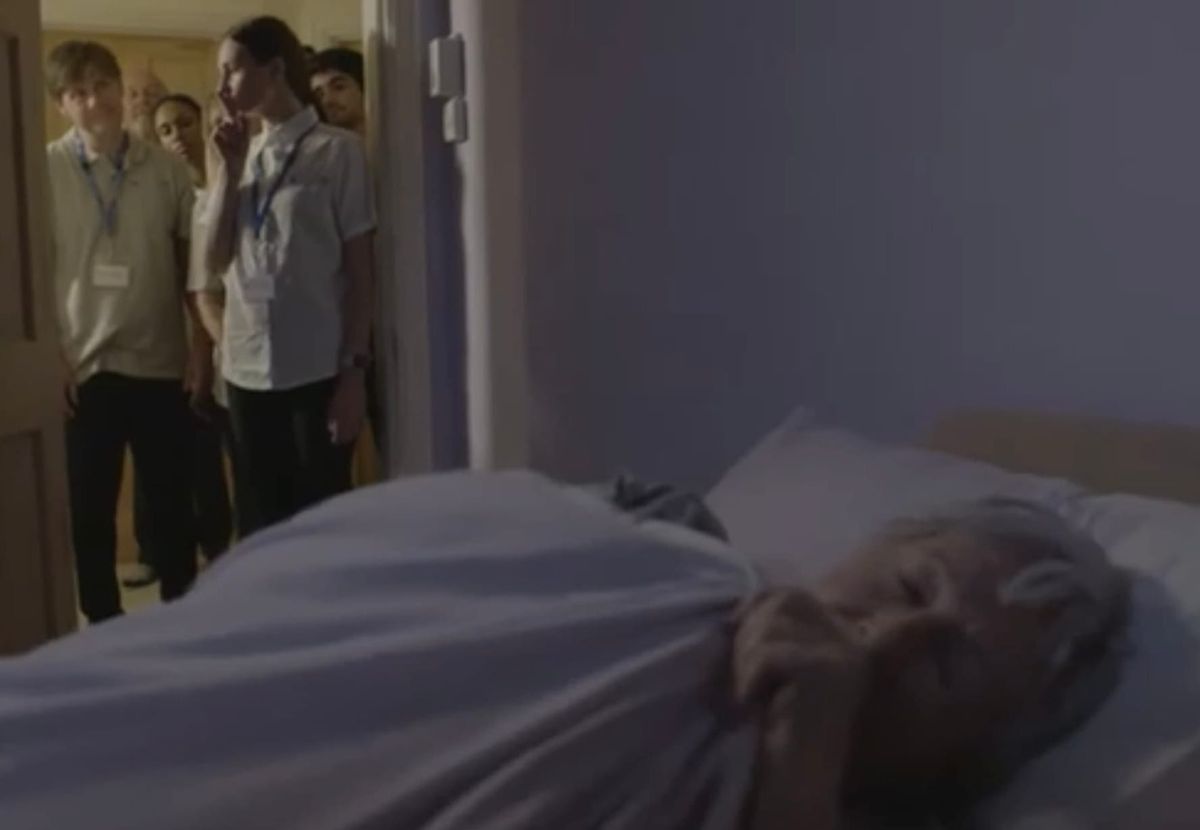
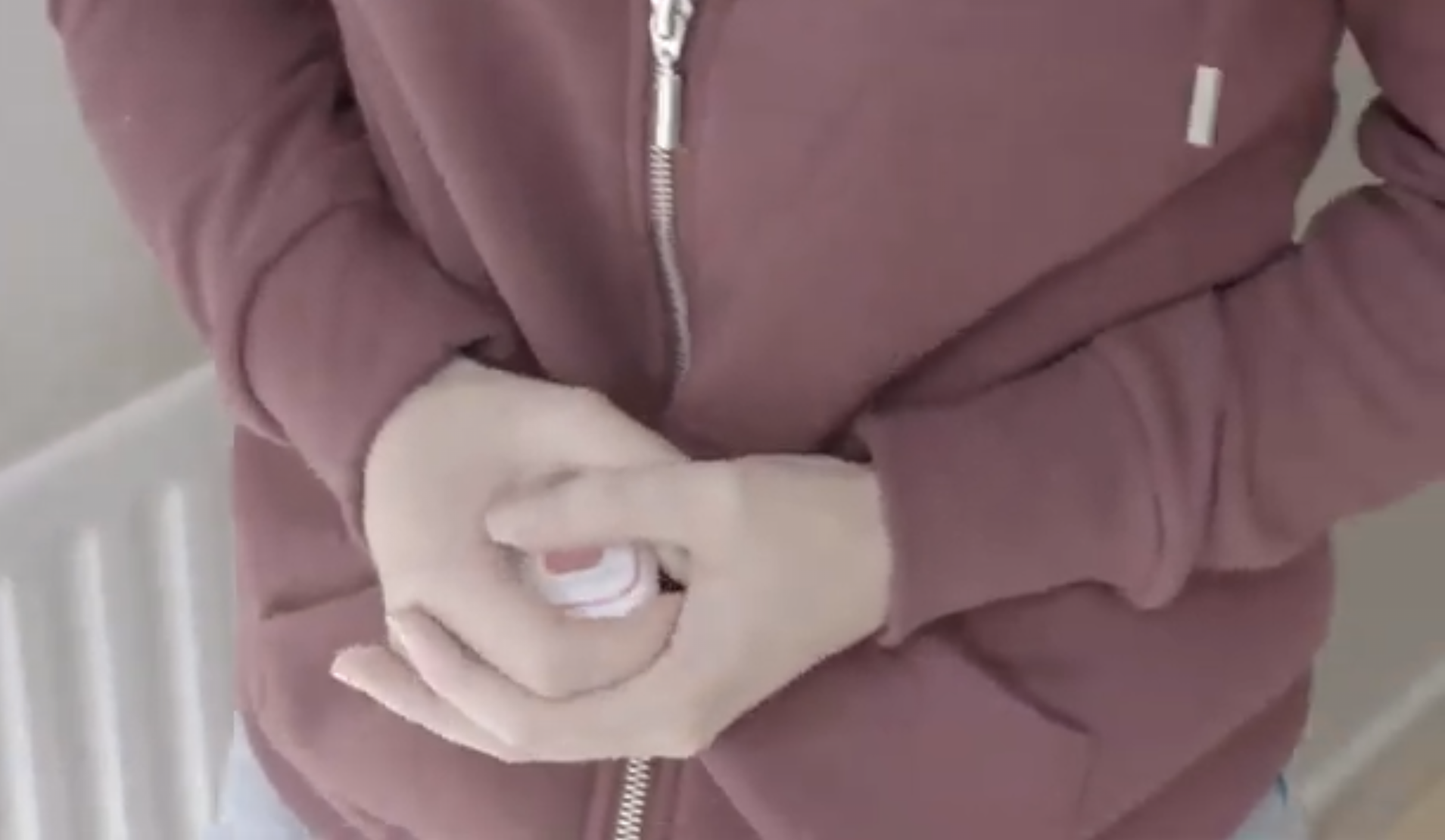
An elderly woman walks slowly along a path, carrying a large shopping bag and using a walking stick. A group of people wearing blue lanyards follow a short distance behind her, walking in sync. When she reaches a bench and sits down, they stop too, heads slightly cocked, watching the woman as a voiceover explains: ‘They know who you are, where you are and what your needs might be.’
It is an odd little scene. While it wouldn’t be entirely out of place in an eerie dystopian thriller, where it actually comes from is an old promotional video for ArcAngel, a device linked to a service provided by a Sefton council department known as Sefton Arc and designed to help elderly and vulnerable people remain safe and independent in their own homes.
It’s probably fair to assume the people following the woman aren’t supposed to look sinister. The blue lanyards worn by the strange chorus of watchers carry Sefton Council’s logo and the video appears to be trying to convey some kind of reassurance. Technology and trained staff are there in the background, keeping track of what a vulnerable person might need, ready to respond if anything goes wrong. It’s a really important service that Sefton Arc still provides to this day.
The ArcAngel video was uploaded by an account with just one post in 2019
Run by the council from a base on Linacre Lane in Bootle, Sefton Arc combines telecare and Careline services with CCTV, security and electrical work. Many of the people relying on its falls alarms are elderly or disabled, vulnerable residents who are trusting the council with their safety, their personal information and, because it is a paid for service, their payment details.
Sefton Arc was once something of a glimmer of hope for Sefton Council during the dark early years of austerity, offering the prospect not just of providing a crucial service but also bringing much-needed cash into council coffers.
In May 2012, Sefton became Labour led for the first time in its history under Peter Dowd, now the MP for Bootle. By December that year the council was knee-deep in a transformation programme as tens of millions of pounds disappeared from its funding and further cuts loomed amid an onslaught of austerity imposed by central government.
Among the ideas being explored at Sefton Council at the time involved greater use of assistive technology like falls alarms to allow elderly and vulnerable people to remain living independently. As well as potentially reducing pressure on social care budgets, the council had spotted an opportunity.
A report presented to cabinet in December 2012 talked explicitly about developing ‘a more commercial approach’ to emerging markets, finding customers outside Sefton and working with other suppliers on a ‘regional and even national basis’. Careline and Telehealth were moved alongside Sefton Security specifically to identify opportunities to recover more of their costs from ‘additional and potentially external sources’ with ArcAngel the flagship product.
A ‘commercial approach’
Sefton Arc, which is what those amalgamated services became, had its own branding and headquarters but it’s never been a separate council-owned company.
It is an in-house service, albeit one that was being encouraged to behave in an increasingly commercial way. Alongside providing services the council needed itself, from CCTV monitoring and alarms to security patrols and even electrical work in buildings and schools, Sefton Arc also had external customers, suppliers, prices to set and income to generate. The ArcAngel was a big part of this.
Between 2013 and 2017 relatively little was ever discussed about Sefton Arc in council meetings. There were a few references in budget reports, occasional cabinet member updates from former Cllr John Fairclough, not much else. For a while, the commercial model it was based on appeared to have been working broadly as hoped, with those budget reports showing the service generating surpluses that was helping the council in its ongoing bid to balance the books.
Within a few years of Sefton Arc having been formed, however, things had moved quite sharply in a different direction. By 2018, Sefton Arc had gone from an income-generating service to one that was costing the council over £400k, a situation put down at the time to challenges with generating new sales.
It wasn’t very long after Sefton Arc’s finances began taking a turn for the worse that other problems started appearing. In 2021, there was talk in council reports of an audit looking at payments made by the service, while rumours circulated locally about serious problems at Sefton Arc.
By 2022, councillors were told Sefton Arc had been designated as a ‘major risk’ to the local authority and in March 2023 a few more details emerged, thanks to an audit team update report presented to the audit and governance committee.
The update councillors received that March about Sefton Arc was quite shocking once you got past the audit-speak, I reported on it at the time for the Echo. Sefton Arc had received the highest internal audit risk rating and 47 recommendations had been made, 11 of them high priority.
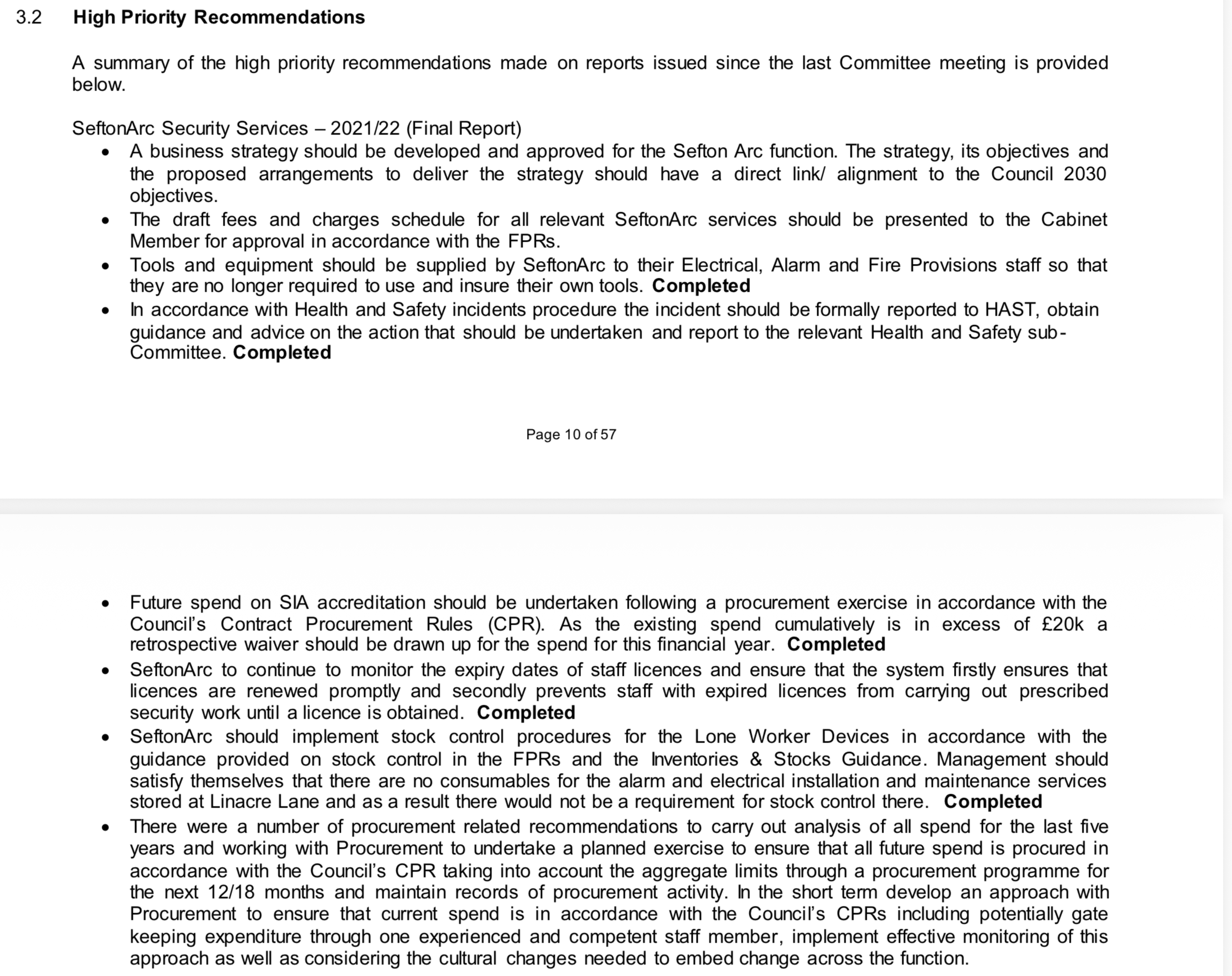
Councillors were given a summary of the high priority recommendations, covering issues including procurement, fees and charges, staff licences, stock control and the use of employees’ own tools. They were told 28 of them had already been implemented with ‘significant progress’ being made on the rest.
An elusive report
What they weren’t given was the full audit report itself, or most of the findings and evidence explaining why those recommendations had been made in the first place. The full report was never made public, until now. Well, sort of.
Following a fresh Freedom of Information request by the Monitor, we have finally obtained a copy. It’s still not the final report though, because the council says it no longer has that under its document retention rules, so instead we’ve been provided with a draft.
That draft shows considerably more serious and widespread problems than the short March 2023 update revealed. It describes millions of pounds being spent with little evidence proper procurement procedures had been followed, longstanding supplier arrangements with little or no paperwork to support them, weak financial controls, unusual goings on with tools and equipment, missing records and repeated failures to follow council rules.
There were problems with pricing, stock, licensing, health and safety, data protection and risk management, as well as basic things such as keeping hold of important inspection reports. Auditors listed among their concerns poor stock control, missing asset registers, an ‘opaque method of calculating charges’, potential data breaches, failures relating to health and safety and security legislation and the loss of accreditation, which had already led to lost income.
They said there were ‘significant concerns’ about how Sefton Arc was being managed and identified what they called a ‘sub-culture’ that had been fostered by the previous management team over a ‘number of years’. That culture, they said, had allowed a ‘laissez faire approach’ to council rules to develop, with staff and managers failing to properly understand or follow council policies and management failing to monitor or pick up on what was going on.
The report warned of ‘financial leakage’ and potential ‘fraud’ and said the way the service was operating could lead to ‘major incidents occurring’ which might be difficult for the council to defend either legally or reputationally.
Auditors also warned that Sefton could be exposed to ‘undetected risks’ whose impact ‘could be catastrophic if they crystallise’, almost apocalyptic language that is particularly striking against the more procedural and bureaucratic terminology audits are usually dressed in.
None of those startling phrases from the audit report made their way into the March 2023 update received by councillors.
Procurement but no paperwork
The procurement problem was extensive. Auditors looked at suppliers used by Sefton Arc over a number of years and found more than £3m had been spent between 2015 and 2020 despite what they described as ‘very limited formal procurement exercises’.
For the vast majority of suppliers there weren’t any contracts or quotes, no pre-contract risk assessments, no formal approval of procurement decisions and no waivers explaining why normal rules had not been followed.
It wasn’t just historic spending being picked apart by auditors. They also looked at spending from around the time of their review, finding multiple examples of longstanding supplier arrangements with no formal contract, no explanation of how the arrangement came about or why they were continuing. Many of these involved spending well above the limit when council rules, requiring three quotes or a tender, were meant to kick in. None of these things, though, had been put in place as they were supposed to have been.
Invoices and purchase orders seemed to end up the wrong way round too. If you’ve never had the joy of dealing with such paperwork, the purchase order is supposed to come before the invoice, but auditors found many examples of it coming the other way round, with the purchase order only raised after the invoice had been submitted to the council by the supplier.
They also found that goods and services weren’t always checked to have actually arrived before invoices were marked for payment, a situation the auditors said created a risk of ‘financial leakage, fraud and non-compliance’.
The council’s responses state a number of those practices were changed while the audit was still underway. There had been significant management changes, staff were to be trained in procurement rules, purchase orders were to be raised before invoices arrived and suppliers were to send bills directly to the council’s central accounts team. Basic controls were finally being implemented.
Some of the failures identified, though, had implications beyond Sefton Arc itself, going deeper into other parts of the council. The local authority had a corporate procurement team which auditors said was supposed to act as a ‘second line of defence’, there to keep an eye on purchasing and identify where rules weren’t being followed.
According to the auditors, that team was ‘not carrying out [its] monitoring role effectively’, adding that some of the problems later uncovered at Sefton Arc would ‘probably’ have been identified earlier if it had. That finding was also conspicuously absent from the March 2023 Sefton Arc update.
Missing tools and more
Staff in Sefton Arc’s electrical, alarm and fire teams were using their own tools to carry out council work and insuring them through their personal home insurance policies. According to the report, this remarkable situation was a longstanding arrangement that had grown out of previous concerns that council-owned tools were being repeatedly ‘mislaid’.
Auditors found no evidence that any health and safety risk assessments had been carried out on those privately owned tools and referred what they described as a ‘suspected health and safety breach’ to the council’s corporate health and safety team, adding that the findings showed managers were unclear about their responsibilities.
According to the report, the new management team said the arrangement had been promptly stopped and staff had been told the council would now provide the tools they needed for their jobs, adding that what they’d previously been told by former management was ‘incorrect’.
There were issues too with the security work being carried out, in particular over the standards and licences required. Sefton Arc had held NSI Gold accreditation, something the council could use to promote its work to customers, but auditors found that certificate had been allowed to expire. They were also told that due to staffing shortages, the team was struggling to meet a required four-hour response standard and this had already led to potential work being lost.
When auditors asked for the latest inspection report from the Security Industry Authority, a regulatory body for security services, Sefton Arc staff couldn’t seem to find it anywhere despite ‘a number of requests’. There was no evidence it had been shared with senior council leaders or the relevant cabinet member either, leaving auditors with no way to establish whether any of its recommendations had actually been carried out.
There were also problems with some licences held by security staff. Auditors found one employee’s licence had expired and not renewed for six months, with management explaining this was because there were two staff members with very similar names and they’d initially been looking at the wrong person’s licence. Once the mistake was identified, the report said, the employee was put on leave.
By the time the audit was finalised, management said new processes had been put in place to monitor renewal dates in advance and prevent anybody whose licence had expired from carrying out security work. Again, none of these details had been made explicit in March 2023. Councillors were being told what was being fixed, not what has gone wrong in the first place.
How much?
For a service which had been deliberately set up to take a more commercial approach and generate income, there were also fundamental problems with something particularly important: working out what to charge people in the first place.
There was no transparent pricing schedule covering Sefton Arc’s services, finance staff hadn’t been involved at all in setting some of the charges and Sefton Arc wasn’t regularly comparing its prices with competitors as it was supposed to do.
Prices for some services appeared to have remained unchanged for at least two years and while fee updates from other Localities Services, the overarching department within which Sefton Arc sat, were regularly being put before the cabinet member at the time, Cllr John Fairclough. Sefton Arc’s were not.
This doesn’t appear to have been picked up on by senior staff or the cabinet member. It wasn’t addressed at all until after it was identified in the audit.
Although a more ‘transparent’ fees and charges process has been put in place at Sefton Arc it hasn’t stopped questions still being raised about the cash the council collects from its Sefton Arc customers.
The Monitor has spoken to family members of current Sefton Arc falls alarm customers who said that, despite registering for the service, supplying payment details and receiving a working device, more than six months later they still haven’t been charged for the device or the monthly monitoring service.
These accounts raise questions about how Sefton Arc is checking that people receiving its services are also registered on its charging system. We asked the council about this, specifically how customers are entered onto the system, what checks are carried out to compare active devices with customers being billed and whether any audit exercises have taken place since 2022 to identify if there are any live services for which no income is being collected. The council has not answered those questions by the time of publication.
Mysterious websites
One of the particularly alarming parts of the audit involves concerns over what happened when potential customers actually tried to find Sefton Arc and buy its services. It involves one website in particular, although we’ve also found another.
The first is seftonarc.com. Auditors said another company, which was providing lone-worker devices to Sefton Council, was advertising services offered by Sefton Arc through that website. When they searched for the service online they said they’d found that site carrying the Sefton Arc name alongside the telephone number 0800 622 6107, which they described as ‘different’ from the council’s own contact details.
Part of the site appeared to show an error, but a ‘request a call back’ function was still working. ‘It is unclear if this company is using Sefton to win business opportunities,’ auditors said, warning of ‘financial leakage’ from potentially lost business as well as possible data protection breaches if potential customers were entering personal information into the callback form expecting it to turn up at the council.

The recommendation auditors made was for Sefton Arc’s own management to look into it. They were tasked with investigating whether another company was advertising council services and to take action to stop potential customers being ‘misled into placing business’. The management response marked the recommendation as completed, saying ‘former business associates’ who had control of the domain had been instructed to stop using the Sefton Arc name, with confirmation apparently received in June 2022.
What the auditors state in the report, however, does not accurately convey the council’s own public involvement. Sefton Council had on occasion been actively promoting the website on its social media channels. Text on the site also refers to it being run by the local authority, the Monitor found when we examined archived screenshots on the Wayback Machine.
We also identified multiple historic social media posts from council accounts, mostly dating from around 2017, which were directing members of the public, including those at risk of domestic violence, to click on a link to the website.

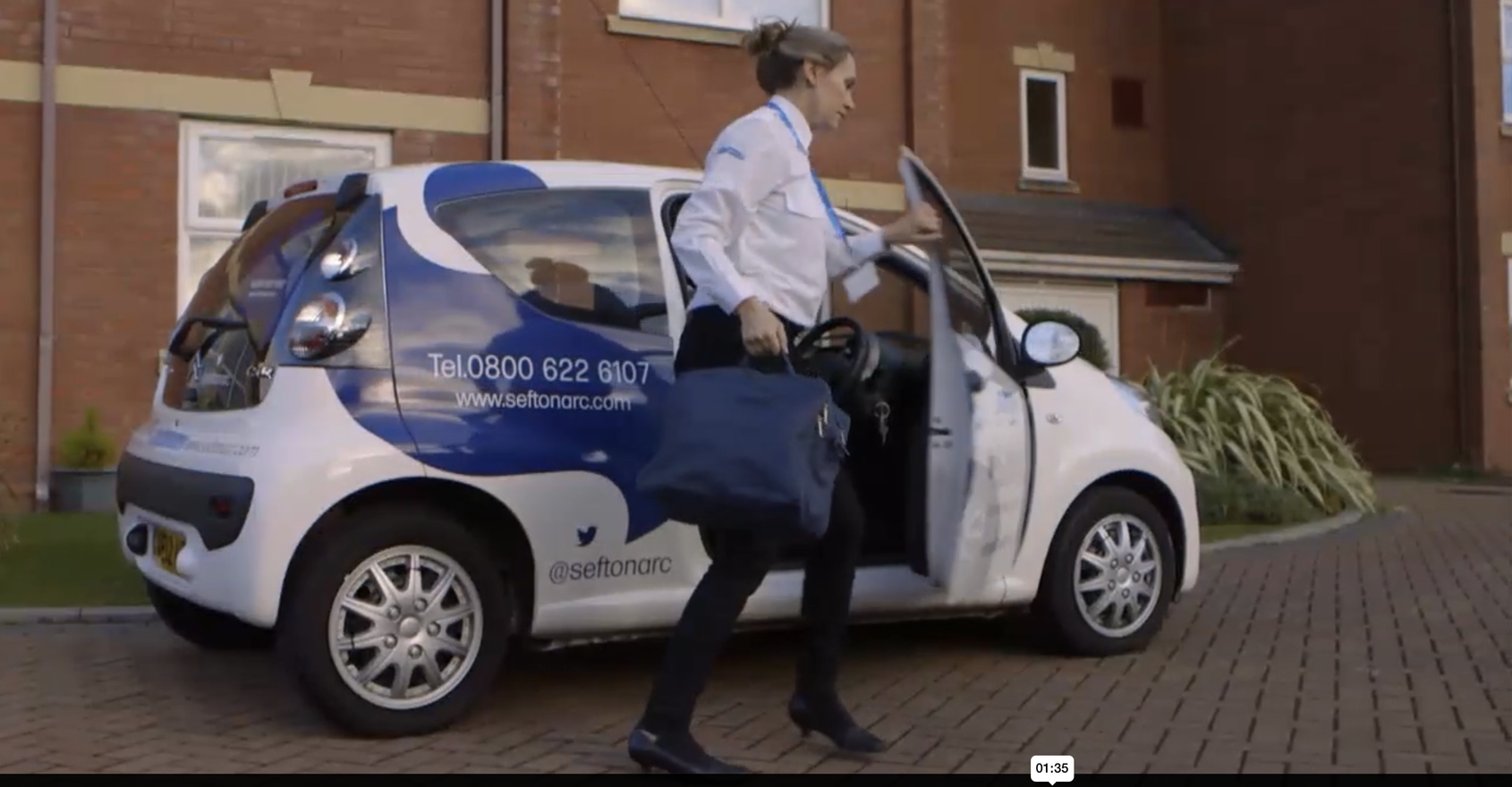
There’s also a Sefton Arc promotional video, which is still on Vimeo, showing a series of clips that include people wearing Sefton Council uniforms, premises owned by Sefton Council and a number of different vehicles. Most of those vehicles clearly display both the seftonarc.com website address and the same freephone number identified by auditors, alongside the council logo.
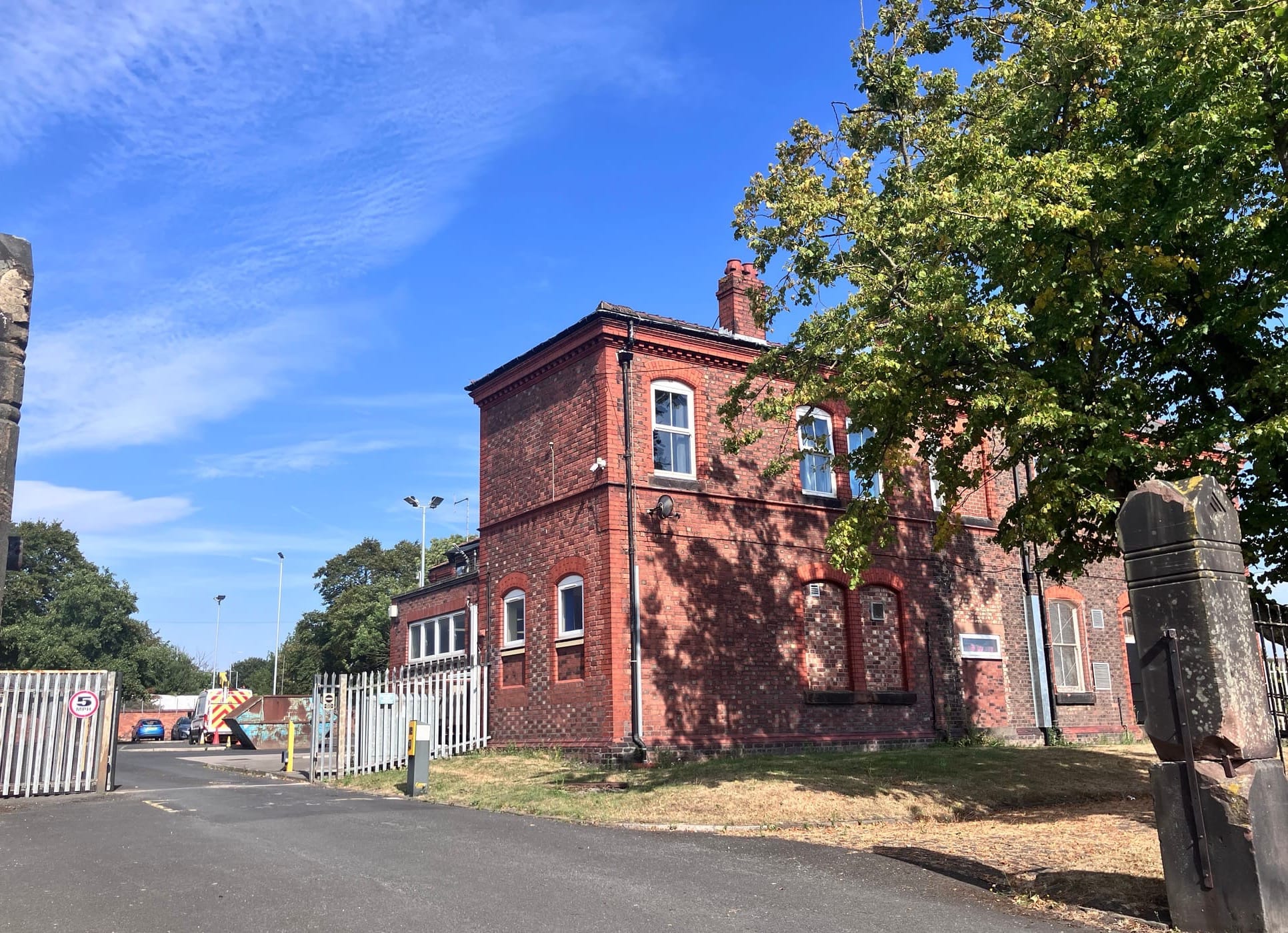
The vans used by Sefton Arc don’t appear to have this livery today, at least the ones the Monitor has seen anyway. We’ve recently observed vans parked up at Sefton Arc’s Linacre Lane site which appear to only have Sefton Council branding on their side with no reference to Sefton Arc, the website or the freephone number. We asked the council if the signs visible in the video had been on and then removed from council owned vans used by the service, when this happened if so and at what cost to the local authority. We have not received a response by time of publication.
The video appears to have been uploaded in 2014
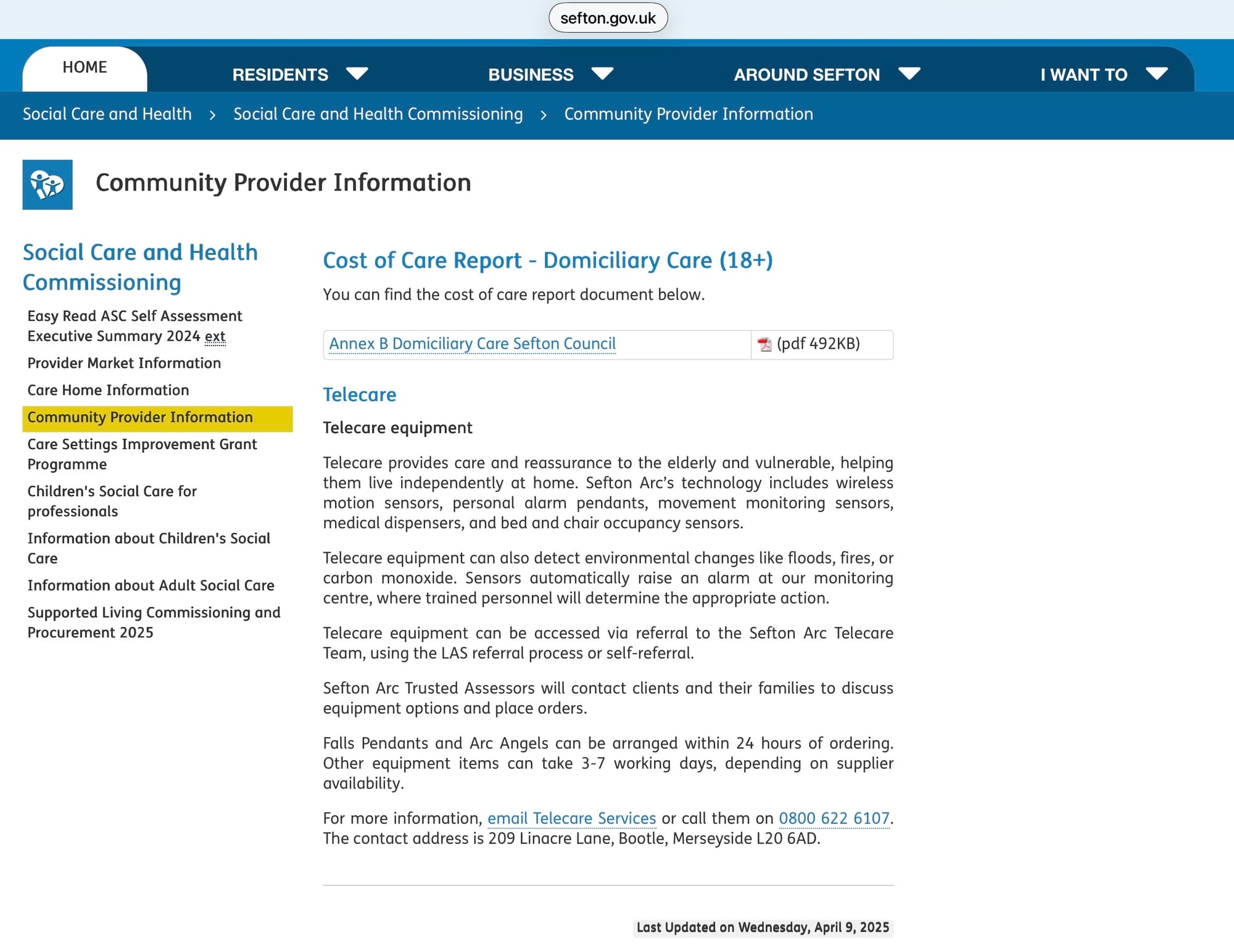
That freephone number hasn’t entirely disappeared since the audit, although we can confirm it doesn’t function when you call it. A currently live Sefton Council webpage explaining how residents can access telecare equipment tells people they can self-refer to the Sefton Arc Telecare Team by calling that freephone number, while giving the council’s Linacre Lane headquarters as the address. The page was last updated in April 2025.
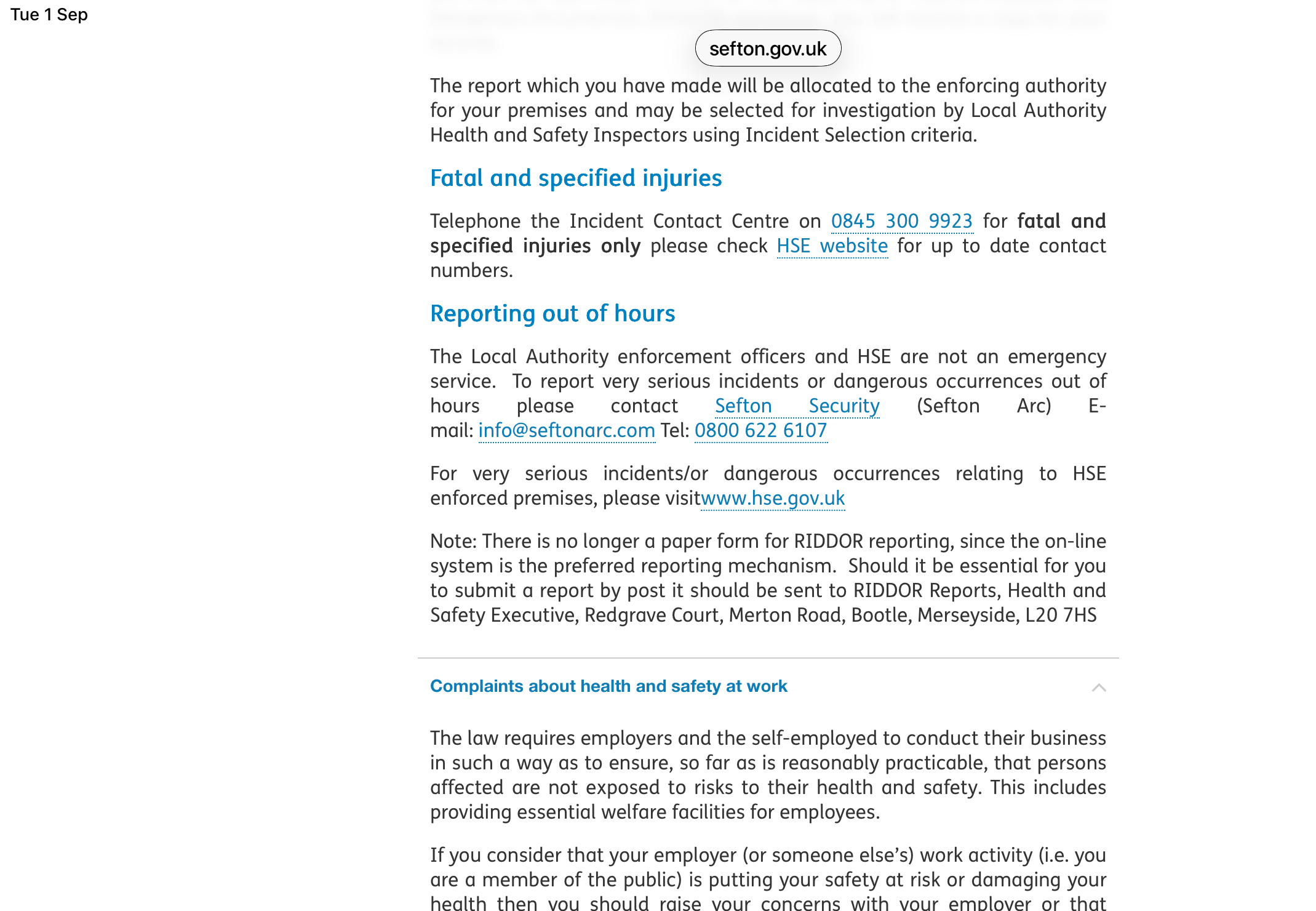
Another council webpage, updated in 2024, currently details how people can report health and safety emergencies out of hours by calling the same freephone phone number. There is also an email address listed which uses the seftonarc.com domain. When we tested the email address, the message we sent was returned as ‘undeliverable’.
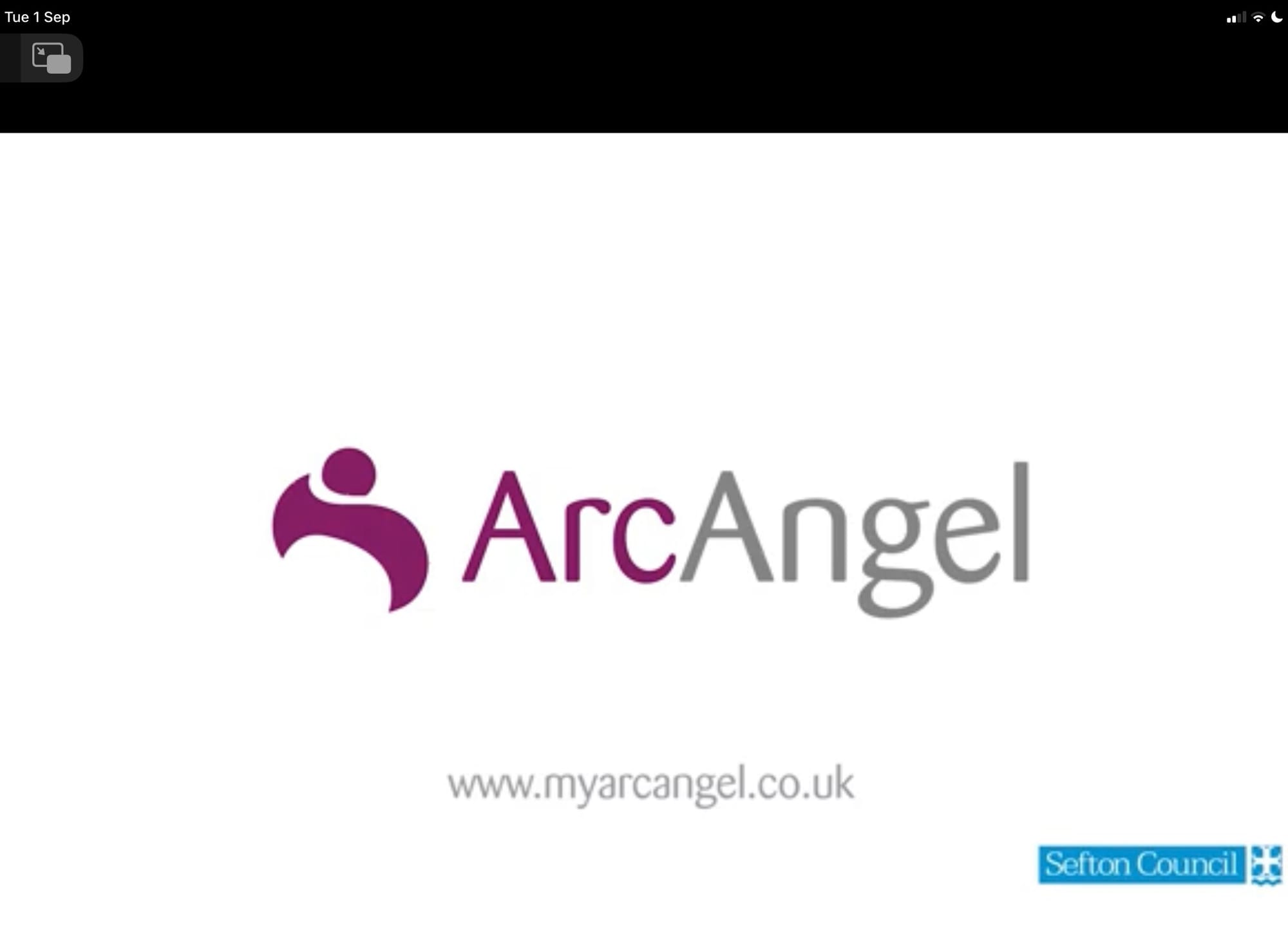
There is also a second website, myarcangel.co.uk, which appears in the promotional video mentioned earlier featuring the elderly woman and chorus of lanyard-wearing watchers.
That video repeatedly shows Sefton Council branding, including staff wearing council lanyards and badges. By the end of it, viewers are directed to myarcangel.co.uk for further information. The Sefton council logo can be seen in the bottom right.
The two websites are separate and the audit itself only refers to the seftonarc.com site. The Monitor asked Sefton Council whether it commissioned or approved either of the sites, if they knew who controlled the domains and associated contact details and what relationship existed between the council and any businesses involved.
The council has not confirmed whether or not it has originally commissioned or authorised seftonarc.com to use its branding, nor has it confirmed whether or not myarcangel.co.uk ever had anything to do with the local authority either. A spokesperson did say, echoing the 2022 audit report, that unnamed ‘former business associates’ had controlled the seftonarc.com domain and were instructed to stop using the name in 2022.
The Monitor also asked if the council knew who actually received calls to the freephone number, who received emails sent to the seftonarc.com domain email address and what happened to information submitted through the website’s callback facility. We have not received answers to these queries by the time of publication.
We asked whether the council had established whether any customers, contracts or income intended for Sefton Arc had gone elsewhere. We also asked what happened to personal information submitted through the site and whether any part of the issue was referred to Merseyside Police, the Information Commissioner’s Office or another outside body. Those questions have not been answered by the time of publication.
Exactly what happened through the seftonarc.com domain remains unclear, including whether Sefton Arc ever lost customers or income as a result. The status of the other domain is even more confusing.
With only the March 2023 update to go off, you’d probably never know any Sefton Arc website problems existed. With the 2022 audit report at your disposal, you still wouldn’t necessarily know the council was once involved in promoting one of them.
The way the website issue was presented suggests a potential link through business associates but depicts the website as operating without the knowledge or consent of the local authority. Auditors described ‘another company’ as advertising Sefton Arc services, questioned whether it was ‘using Sefton to win business opportunities’ and warned that potential customers could be ‘misled into placing business’. The council’s own promotion of the website on its social media channels and on a council webpage for health and safety emergencies suggests that, at least at some points in time, the situation was much less clear cut.
What changed?
A council spokesperson has said that all recommendations arising from the audit have now been implemented. A spokesperson added that the management team has been changed and stronger financial and governance controls have been introduced. The spokesperson also pointed to the fact the problems were ultimately found through internal audit as evidence of the council’s own systems identifying and dealing with failures.
There is indeed evidence in the audit itself of changes being made before the report was even finalised. Staff were being retrained, council-owned tools were being provided, licence monitoring had changed and new procedures were either being introduced or in the process of being developed. By March 2023, councillors were indeed told that over half of the recommendations were already complete.
There is also evidence from council records of later changes that went further again. In August 2023, the council approved a restructure of Sefton Arc and Careline, saying some staff had been working under job descriptions not reviewed in over a decade.
In June this year, the council told another committee meeting that Careline was moving its remaining customers onto digital equipment, also reporting the electrical and alarms teams were looking at providing new lockdown alarms to schools which could help generate additional income. There are also signs Sefton Arc’s financial woes have somewhat stabilised.
There is evidence of changes having been made, but one of the things the report mentioned and is referenced in March 2023 was the need for culture change. The auditors said this was vital. Just ticking off individual recommendations would not likely be enough, the report warned. How does that culture change get evidenced? How do we, the public, know enough has been done? Until today, we didn’t even know how bad it had got.
It is clear perhaps, now the report has been released, that it also gives far from the full story. Not only are there questions left unanswered about the websites, the Monitor has also been examining some of the supplier relationships identified in the report, as well as other underlying records. Our findings raise further questions about how Sefton Arc was operating and how it was allowed to go on for so long, and we hope to bring you the second part of this investigation very soon.
For now, though, there’s another particularly important question that so far we’ve been unable to get an answer from Sefton Council about: the alarm was well and truly sounded at Sefton Arc in 2022, so why could hardly anyone hear it until now?
before you press that button …
If you made it this far, well done! And apologies, it was admittedly a bit of an epic.
If you’ve not been on our site before, welcome. The Mersey Monitor is a free, open access public interest news site focused on local decision-making and accountability on Merseyside.
We’re entirely funded by reader donations. If you can spare a quid or two, we’d love your help.
To support us with a one off donation, please click here
You can also set up a regular donation by clicking here
You can also sign up to receive our newsletters, they’re completely free.
Thanks for reading, we really appreciate your support.