The Sefton ‘hokey cokey’, a New Brighton arrest and an AI lord
A political row in Sefton, a Labour peer’s connection to AI in Merseyside schools, and a New Brighton arrest raising questions about privacy and the public interest. It’s been an interesting week.


Well hello there Mersey Monitorites,
Welcome to our Sunday newsletter, coming as usual on half a shoestring, beamed, in part, from a makeshift ‘gazebo office’ in Lisa’s backyard, where she‘s often joined by the cats, who are kept as firmly as possible away from the keyboard. Meanwhile, Kirsty is weaving her magic today from a rather foggy location overlooking the Mersey.
We’ve got loads for you today, including an arrest in New Brighton, where we're focusing on the decisions made by local journalists about what they publish. We’ve also found an interesting detail about the company now providing AI technology to Merseyside schools, political fallout in Sefton and an upcoming rally about proposed job cuts in Liverpool.
There’s also some lovely news about one of our writers and the latest from our increasingly bureaucratic Brown Envelope Scrutiny Committee.
AI provider for Merseyside schools led by Labour lord
There were two announcements from the Liverpool City Region Combined Authority (LCRCA) that caught our eye this week, both about the use of so-called Artificial Intelligence (AI) in local schools.
The first, on Tuesday, was about the expansion of an AI learning platform to 20 Merseyside secondary schools and more than 3,000 pupils. The technology provides ‘personalised’ learning in English, maths and science for students by ‘adapting to their individual abilities and progress’, according to the press release.
This follows a two-year pilot involving nearly 5,000 children at 45 Merseyside primary schools. Century Tech's case study says those using the AI platform to complete learning 'nuggets' over three months saw an average improvement in assessments of 10% (the LCRCA states this as 12%).
The programme is provided by Century Tech and its chair of directors is Lord Jim Knight of Weymouth, a Labour peer in the House of Lords and former schools minister.
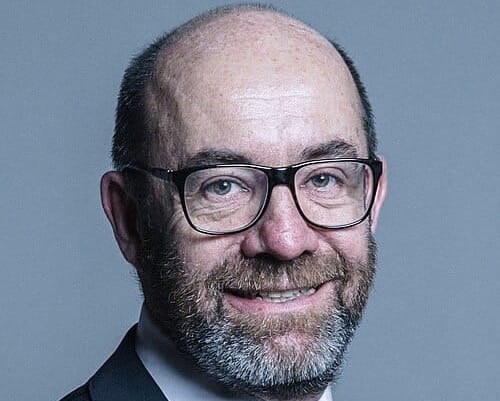
His position is declared in the House of Lords register of interests and he's listed on Companies House as a person with significant control of the company. Alongside this work, Lord Knight also sits on the House of Lords Communications and Digital Committee, which scrutinises government policy in this area.
Labour metro mayor Steve Rotheram has championed the programme as part of his stated ambition to improve access to technology in state schools, saying he wants to give local children access previously available mainly to private pupils. ‘I want us to use AI for good; to close those gaps, not widen them,’ says the press release.
This year, the Communications and Digital Committee conducted an inquiry into AI and copyright, highlighting among other concerns, issues with 'opaque' systems currently being developed in this industry. In a debate about the impact of AI on people and society in June, Lord Knight confessed his relationship with 'Claude' the AI chatbot, yet warned we may be 'consigning a generation to fester in their bedrooms, spiralling into mental health crisis as their addiction to phones gets deeper and darker' and said we must 'regulate AI'.

On Thursday came another announcement from the Combined Authority, this one about free AI training for school leaders through the Oasis Big Education Institute, an education and teacher-training organisation created this year through a merger between Big Education and the Oasis academy trust.
The Big AI Project says it will support the use of AI in schools ‘safely, ethically and responsibly.’ Interestingly, it’s also described as ‘AI-agnostic’, aiming to help schools make informed decisions about technology instead of promoting a particular platform.
We’re taking a closer look at these projects, and what they might mean for our young people, and will be back with any more details we manage to glean. If you have been involved with these initiatives, as a pupil, parent or member of school staff, do drop us a line.
A political fallout
There’s also been some political fallout in Sefton following Waterloo councillor Kieran Dams’ decision to join the Liberal Democrats after leaving the Greens last month.
Sefton Labour leader Cllr Marion Atkinson took to social media to criticise Dams' latest move, claiming her party had rejected him previously because he has a history of switching sides. She described his political movements as ‘hokey cokey’.

The post was shared and liked by other local Labour figures, including Cllr Atkinson’s uncle, Peter Dowd, former leader of Sefton Council and current Bootle MP. Yet Atkinson’s comments prompted public criticism from other councillors and private criticism from some local Labour members, one of whom told the Monitor they thought the post was ‘nasty’.
Dams himself said he was ‘hurt’ by Atkinson's statement and disputed parts of her account. We’ve also seen correspondence Dams said he sent to Atkinson before her comments were made, where he described the ‘political and personal’ impacts of his departure from the Greens, and spoke of struggling to sleep.
We asked national and local Labour contacts whether they considered Cllr Atkinson’s statement appropriate in light of this, and if there were any concerns it might put others off considering a switch to their party. National Labour did not respond, while a Sefton Labour Group spokesperson said there would be ‘no further comments’.
Rally over job cuts
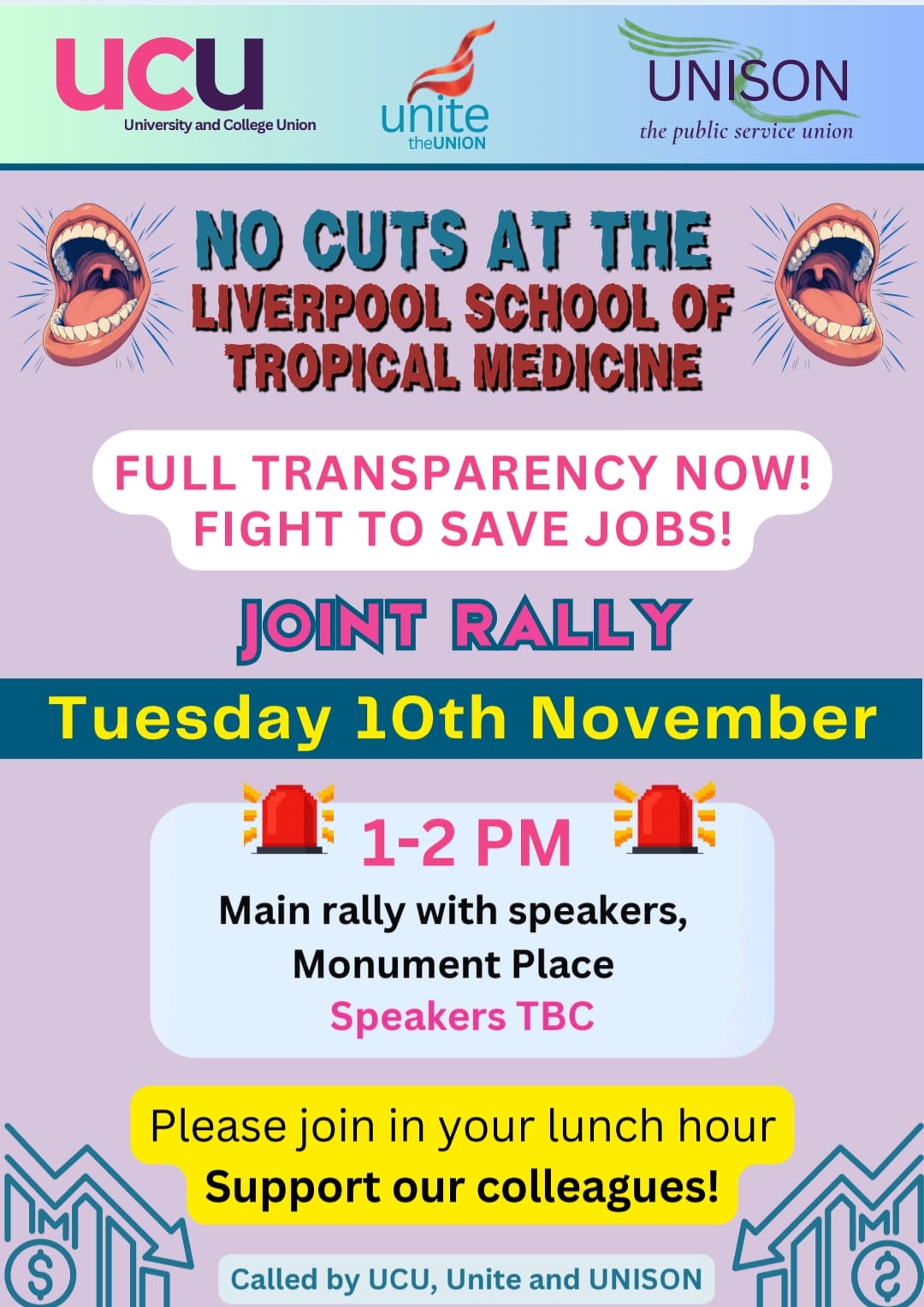
We’ll be keeping an eye on developments at the Liverpool School of Tropical Medicine (LSTM), where trade unions have raised concerns about potentially dozens of job cuts as the institution seeks to make £8m in savings.
UCU, Unite and UNISON are holding a joint rally opposing the redundancies on Tuesday at 1pm at Monument Place, which we’ll be attending. If you’re concerned about the plans, and are interested in finding out more, details are in the poster below.
Just because you know doesn’t mean you should publish
'Bloomberg v ZXC' is a phrase that appeared in my messages a few times this week. This refers to a Supreme Court case from 2022, but why was it being discussed among fellow journalists?
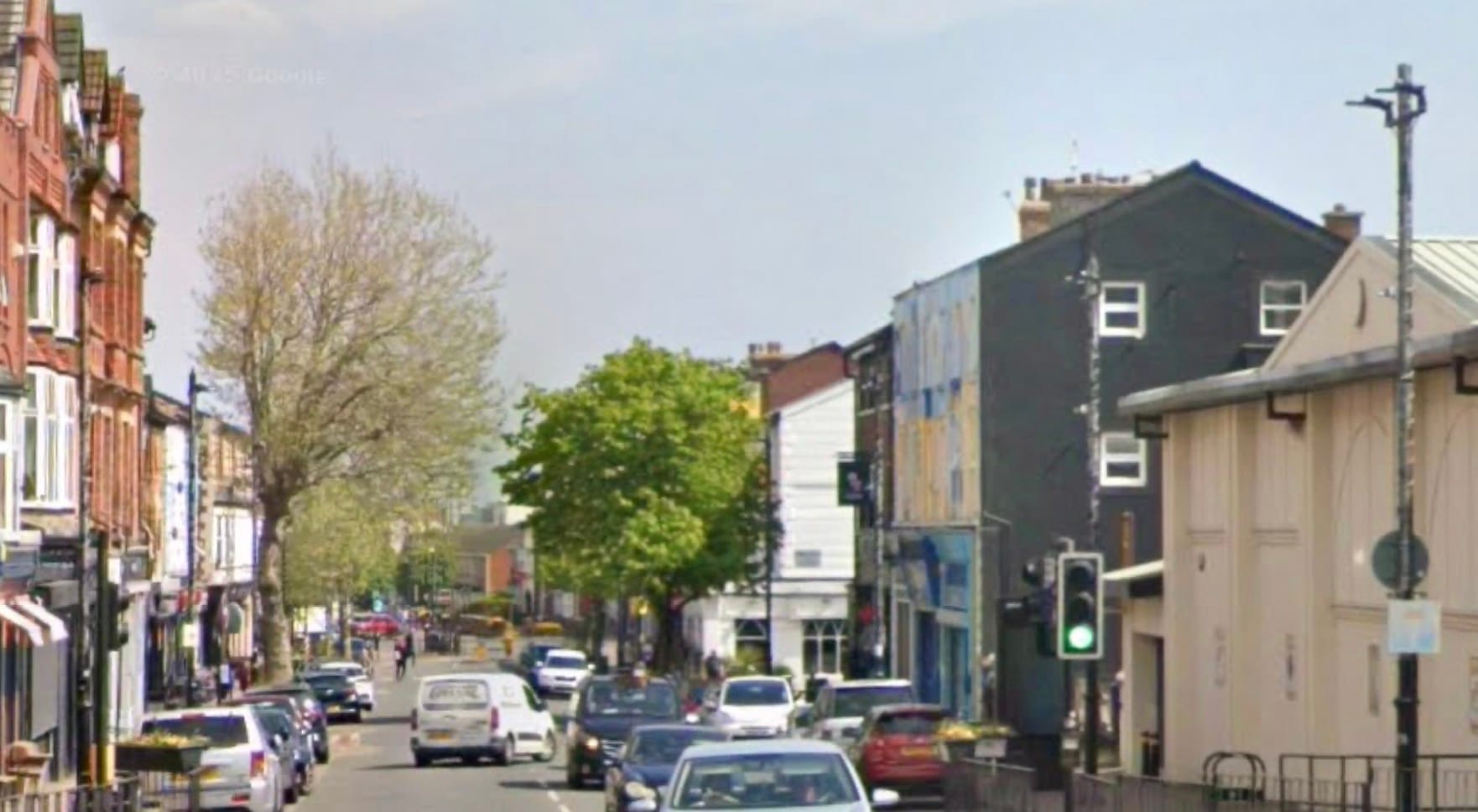
Well, it concerns an arrest in New Brighton, made in connection with graffiti that appeared on the wall of a shop called Rightway on Victoria Road. The scrawling appeared in September, prompting local speculation on social media. A woman was subsequently arrested and charged with criminal damage, and this week a second arrest was announced by Merseyside Police.
At least two local publications covered this new development, but took very different approaches. One identified a man it said had been arrested and published a photograph of him, while the other reported the arrest without identifying them. We also won’t be naming the man arrested in this story, for reasons we hope to make clear below.
In line with national policing guidance, Merseyside Police didn’t identify the man in its public statement. The guidance says police should only release the names of those arrested or suspected of a crime ‘in exceptional circumstances, where there is a legitimate policing purpose to do so’.
In the Bloomberg v ZXC case in February 2022, the Supreme Court upheld a ruling against the publisher after it identified a businessman who was under criminal investigation but hadn’t been charged. The court confirmed that, as a general starting point, people under criminal investigation have a ‘reasonable expectation of privacy’. Of course, they may, or may not, end up being charged with an offence.
This doesn’t make identifying somebody who’s been arrested automatically unlawful, as there may well be sufficient public-interest justification for doing so, depending on the circumstances. The ruling was quite controversial at the time, with the National Union of Journalists expressing ‘considerable disquiet’ and the Society of Editors warning of ‘far-reaching implications.’
Among the concerns raised was that identifying suspects can sometimes encourage witnesses to come forward or expose wrongdoing involving powerful people. But, even taking those concerns into account, it doesn’t follow that every arrest involving somebody who happens to be well known is automatically in the public interest.
We may ask: How serious are the allegations? Is the person exercising public responsibilities? What does identifying them add to the story? Different publications can and will reach different conclusions about where the public interest lies.
There are also differences between how explicit the press regulators are on this issue. IPSO, which regulates most of the UK’s major newspapers, has general privacy requirements in its Editors’ Code. IMPRESS goes further, with a specific provision stating that publishers ‘should not directly or indirectly identify any people under criminal investigation before being charged’, subject to exceptions where police have released identifying information or publication is in the public interest.
IMPRESS is also the only press regulator officially recognised under the Royal Charter, and was introduced after the Leveson Inquiry into press standards prompted by the phone hacking scandal. IPSO has not sought that recognition, instead it’s another form of industry self-regulation like the Press Complaints Commission it replaced. Both schemes are voluntary.
At the Monitor, we aim to work to the IMPRESS Standards Code. We're not currently regulated by IMPRESS, but signing up is one of our priorities. Not every publication belongs to a regulator (like the Guardian and Financial Times, which both decided to regulate themselves post-Leveson), although all remain subject to the law.
The includes the Contempt of Court Act, which outlines that criminal proceedings generally become ‘active’ when someone is arrested, meaning publications must avoid material creating a substantial risk of seriously prejudicing or impeding those proceedings, or the eventual right to a fair trial. Depending on the circumstances, that can also include public speculation in comments sections. So we’ve decided to turn ours off for this edition.
To be clear, we’re not suggesting that identifying the man arrested in New Brighton means those publications broke the law. We did ask both publishers about their editorial decision, but neither had responded by the time of publication. At least we can explain our own editorial reasoning at the Monitor. Our starting point is that we won’t identify somebody who’s been arrested but not charged, unless we can establish a compelling public-interest reason for doing so. We haven’t, so we won’t.
We’ve wrestled with whether to discuss this at all, not least because we don’t want to draw more attention to the reporting we’re questioning. In the end, we’ve also decided not to name the other publications, because for us, the public interest in mentioning it at all is to explain to readers why journalists can make different decisions. And why knowing something doesn’t necessarily mean you should publish it.
News from the gazebo
Sunday sermon over, finally some positive news from the Monitor gazebo, where it’s been a relatively quiet week on the publishing front, although there’s been plenty going on behind the scenes.
One of our contributors, Ashish Prabhu, was at an awards ceremony last night, the Liverpool Lifestyle Awards, where he won a trophy for Diversity and Inclusion. Another one to add to his growing list of awards. Ashish has spent many years giving a voice to people whose experiences are often under-reported, so a very well-deserved award for him. Congratulations Ashish!

We’ve also been busy sending out Official Membership Numbers to members of our Brown Envelope Scrutiny Committee, our daft scheme that helps keep the Monitor free for everyone. We’ve had a very encouraging response, so many thanks to those who’ve signed up already. If you’re considering joining the committee, there's still time...
Alongside membership numbers, you will receive Certificates of Endurance, which are currently going through a convoluted oversight and verification process. We hope to have something to report once the appropriate authorities have agreed on the composition of the subcommittee responsible for deciding whether a further subcommittee is required.
We’re also preparing our first monthly Brown Envelope Edition for paying members. Don’t worry, we’re not squirrelling our journalism away behind a paywall. The Brown Envelope Edition is entirely fictional, bringing you monthly daft bureaucratic updates rather than any actual news.
If you’d like to join us, you can find out more here or just give the button a click if you’re ready to support local public-interest journalism now.
That's quite enough from the gazebo and the Mersey side for one chilly Sunday evening. Thanks, as always, for reading, sharing and supporting the Monitor. We’ll be back with more in the week.